
National Park Service LogoU.S. Department of the InteriorNational Park ServiceNational Park Service
National Park Service:  U.S. Department of the InteriorNational Park Service Arrowhead
Grand Canyon National ParkDeva, Brahma & Zoroaster Temples in clouds.
view map
text size:largestlargernormal
printer friendly
Grand Canyon National Park
Biological Soil Crusts
Cryptogamic crusts, N. Herbert NPS

NPS Photo by N. Herbert
Cryptogamic crusts

Biological crusts (also known as cryptogamic, microbiotic, crytobiotic and microphytic crusts) are microscopic non-vascular assemblages composed of blue-green algae, diatoms, golden brown algae, lichens, mosses and a few xerophytic (adapted for growth with a limited water supply) liverworts on more mesic (moderate amount of moisture) sites.
 
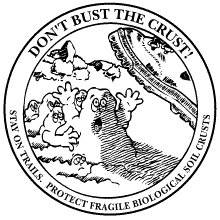
Don't bust the cryptogamic crust logo
Blue-green algae contribute to the bulk of the algal tissue. Biological crusts grow on and within soils and other substrates, modifying these surfaces in significant ways. The blue-green algae fix atmospheric nitrogen and thus enhance the nutrient status of the soil.

Cryptogamic crusts retard erosion by wind and water, help retain soil moisture during dry periods, slow evaporation rates, and enhance seedling establishment. These living crusts are extremely fragile and one footprint can set back development for decades.

For more information on Biological Soil Crusts visit this USGS Soilcrust website.  
GRAND CANYON TRILOBITE  

Did You Know?
The Cambrian seas of the Grand Canyon were home to several kinds of trilobite, whose closest living relative is the modern horsehoe crab. They left their fossil record in the mud of the Bright Angel Shale over 500 million years ago.

Last Updated: January 18, 2007 at 20:26 EST