
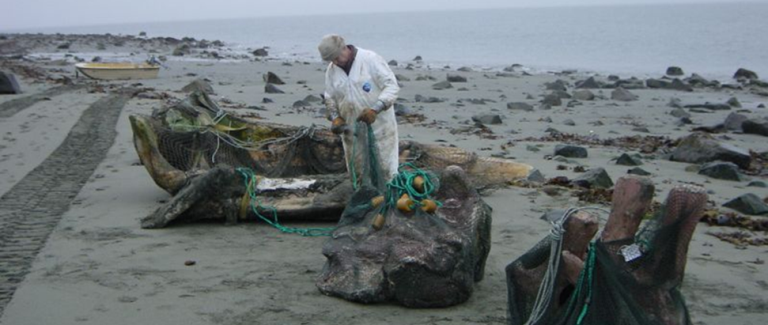
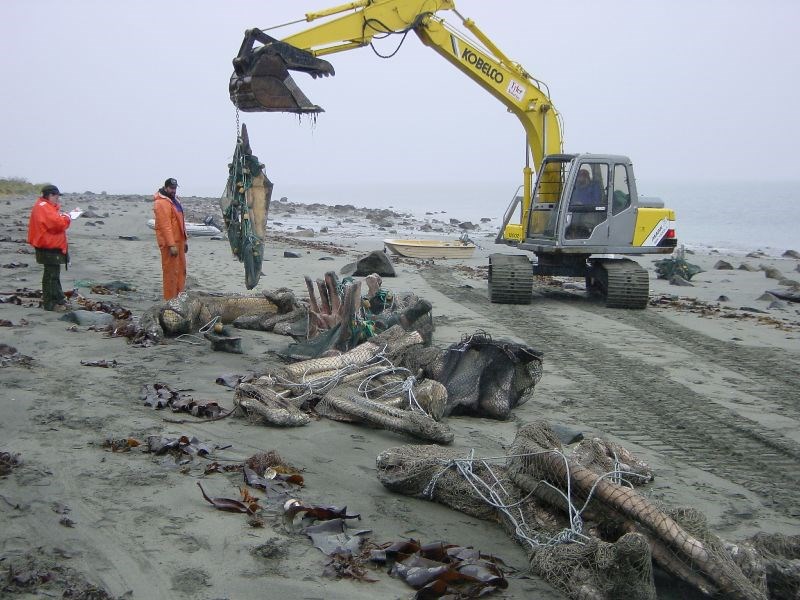
NPS Photo Preserving the Bones Not long after Snow was towed to the beach, the park decided to protect and preserve her skeleton for a future interpretive exhibit. Over the next year, park staff and volunteers monitored the decomposing carcass and periodically retrieved bones that came loose or were in danger of being lost. The skeleton remained on the beach for 15 months until park staff hired a boat and heavy equipment to transport the bones back to Bartlett Cove. This event took place with the help of over a dozen volunteers who laboriously separated and bundled hundreds of stinky, oily whale bones.
Park Service Log, October 14, 2002
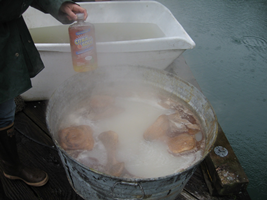
NPS Photo Cleaning the Bones Over the next 10 years, park staff and community volunteers spent over one thousand hours cleaning Snow's greasy bones in anticipation of articulation and display. As per suggestions from experts in the field, namely Lee Post, and Mike deRoos, various methods of cleaning were tried. Some attempts were more successful than others. Bones were soaked in saltwater, buried in compost, pressure washed, submersed in gasoline, boiled in metal stock tanks, and bleached in the sun. Each bone had its own prescribed treatment. Park Service Log, October 11, 2005
After many attempts to remove stubborn oils, the bones were finally left to dry in a heated storage container. 
Preparing the bones In July, 2010, the Park requested the services of well known Alaska Articulation Specialist, Lee Post. In order to prepare for future articulation, Glacier Bay needed a complete inventory of Snow's skeleton. As a result of her injuries and postmortum trauma, some of her bones were in great need of repair - many were chipped, broken, or even missing. Within two days of arrival, Lee conducted a complete inventory of the skeleton and created a detailed report that would later become an essential document for the articulation project. Check out Lee's work at: http://theboneman.com Despite years of effort, many of Snow's bones could not be cleaned enough on site to satisfy the requirements for an outdoor exhibit in Glacier Bay. Every bone had to be oil free and odorless so as not to attract small rodents and/or large mammals. Many bones needed repair and several vertebrae were missing. In order to move forward with the project, the park realized that the final cleaning and articulation of a 45 1/2 foot humpback whale skeleton would require not only hiring an "outside" expert, but someone who could manage the project at Glacier Bay. In April, 2012, a two-year term position was created to oversee all aspects of contract management and education/outreach. Then, in September 2012, the ball started rolling on the project. Glacier Bay contracted with Whale Articulation Specialist, Dan DenDanto of Whales and Nails, located in Seal Cove, Maine, to prepare Snow's skeleton for an outdoor exhibit. Dan's knowledge of whale anatomy and his extensive experience in the field gave him the extraordinary ability to work on this unique and extremely challenging National Park Service Project. To learn more about Dan DenDanto and Whales and Nails, go to: www.whalesandnails.com. In the end, the project would require a team of park staff, engineers, articulation specialists, artists, and builders a little over two years to complete the job. To learn more about how the Whales and Nails team prepared the skeleton, go to: Articulation - Phase I. 
Learn more about Whale 68: |
Last updated: August 16, 2023