
 |
 |
  |
|
|
|
 |
 |
| | |
The Grandest Fort on the Upper Missouri
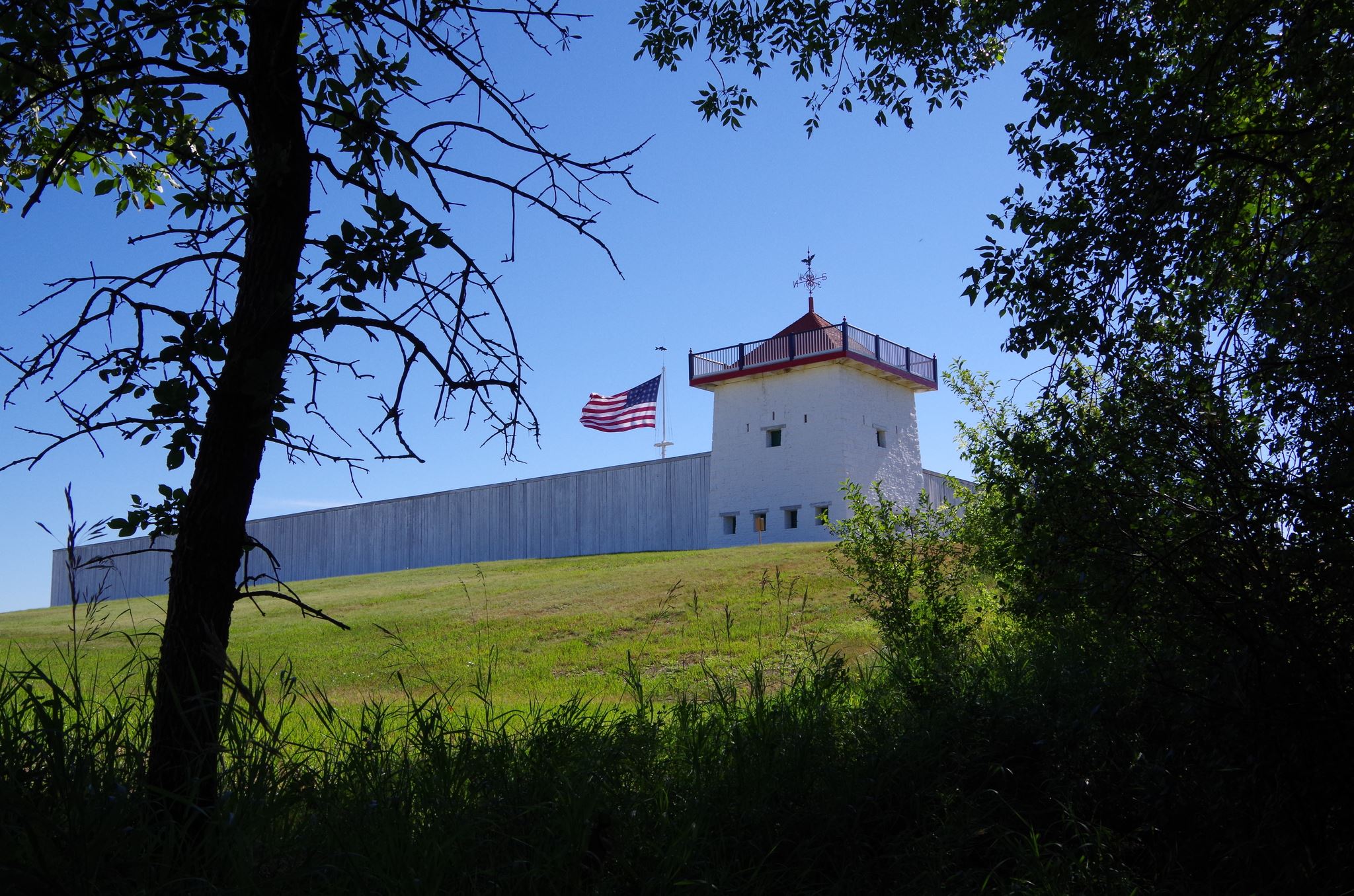
Fort Union Trading Post was the most important fur trading post on the upper Missouri from 1828 to 1867. At this post, the Assiniboine, Crow, Cree, Ojibway, Blackfeet, Hidatsa, and other tribes traded buffalo robes and other furs for trade goods such as beads, guns, blankets, knives, cookware, and cloth.
| | | | |
|
|
 |
Explore the reconstructed trading post
This partial reconstructed trading post serves as a stage for living history interpretation. During the summer various fur trade personnel are portrayed within the courtyard of the trading post.
|
 |
|
|
 |
Visit the Trade House
Between the fort gates through the south entrance is the Trade House. Historically when tribes came to trade, the main trading sessions were done here. Come learn the stories and history of this unique place.
|
 |
|
|
 |
Ranger Talks
Fort Union in partnership with James Memorial Art Center in Williston ND and Mondak Heritage Center in Sidney MT will sponsor Ranger Talks.
The program talks will be given on selected days with a Saturday morning hands on program that takes place the following Saturday. Follow link or contact visitor center for details.
|
 |
|
|
 |
Indian Arts Showcase Panel Discussion
Indian Arts Showcase Special event: The 1837 Smallpox Epidemic In 1837, smallpox came upriver on the St. Peter, a steamboat similar to this one. In 1837, the St. Peter, a steamboat operated by the American Fur Company, took fatal trip upriver, unwittingly transporting passengers infected with smallpox. The result was catastrophic for all Indian tribes on the Upper Missouri. Some tribes, such as the Mandan, were decimated. Among others, the Assiniboine and the Blackfeet lost as many as 50 percent of their people to the killer disease. On August 9, as part of Indian Arts Showcase weekend, "The Smallpox Epidemic of 1837," with all its controversy, is the topic of discussion by a blue-ribbon panel of experts. The discussion begins at 7 p.m. at Williston State College in Stevens Hall, Room 216 E. All are invited. Panel members include Gerard Baker, Superintendent of Mount Rushmore National Memorial, and a member of the Mandan/Hidatsa nation; Raymond DeMallie, Ph.D., noted Indian studies expert from Indiana University; Jim Hanson, Ph.D., fur trade scholar based in Chadron, Neb., and Santa Fe, N.M.; Alice Spotted Bear, Ph.D., English professor at Fort Berthold Community College; and Richard Stenberg, M.A., assistant professor of history, Williston State College. Greg Hennessey, president of Friends of Fort Union/Fort Buford, will moderate the panel discussion.
|
 |
| | |
|
Write to
Fort Union Trading Post NHS 15550 Hwy 1804
Williston, North Dakota 58801
E-mail Us
Phone
Visitor Information (701) 572-9083
Fax
(701) 572-7321
|
 |
Climate
Summer weather starting in June usually runs 80-95, with late July to mid-August 85-100 degrees F., overnight in the low 60s. Winter tempertures beginning mid-October to mid-March range from low 40s to -20s degrees F. The extreme lows coming between late December to early February.
|
 |
 |
|
|
 |
|
|
|
|
 |
|
Did You Know?
Did you know that the North Country National Scenic Trail passes through three National Parks, eight National Forests, and one National Grassland?
|
|
|
|
Last Updated: July 21, 2008 at 12:14 EST |