



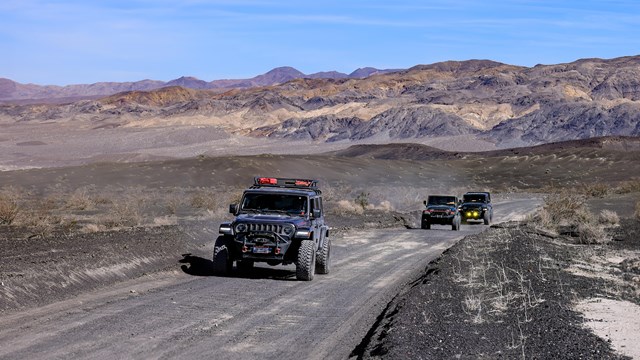
Park Roads & Current Conditions
Current information about roads and other current conditions, delays, and closures in the park. 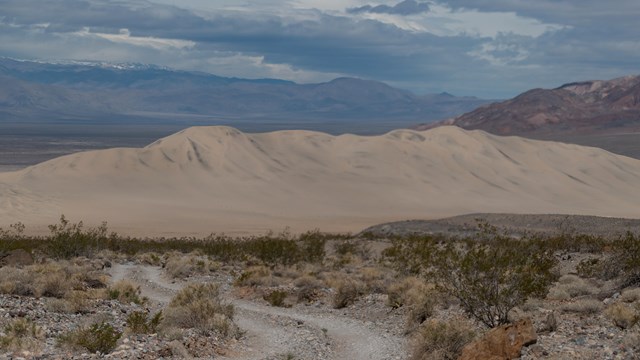
Backcountry & Wilderness Access Map
Start your backcountry trip planning today. This map will help you decide where you can legally camp, which roads to take, and more! 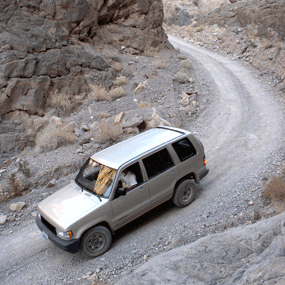
Death Valley has more miles of roads than any other national park. Though over 93% of the park's 3.4 + million acres are protected in roadless Wilderness areas, nearly one thousand miles of paved and dirt roads provide ample opportunities for recreation and exploration! Check out the Backcountry & Wilderness Access Map for trip planning information. This is remote territory. Using the following tools and doing your homework before venturing out into the wilderness could save your life. Don't rely on GPS, instead take a map. Detailed maps are available from the Death Valley Natural History Association. Warning: Weather changes the road conditions regularly. Check the currently known conditions before your trip. Travel Prepared to SurviveThings can go wrong quickly in the backcountry. Pre-trip planning could save your life. Bring basic tools, a shovel, extra water, and food with you. In the higher elevations, snow and ice conditions may require tire chains. Top off your gas tank before starting a trip. Flat tires are a common problem for backcountry visitors due to rough road conditions or from having unsuitable tires. Make sure your vehicle is equipped with "off-road" tires rather than highway or street tires. Carry at least one inflated spare tire (preferably two), a can of fix-a-flat or tire plug kit, a 12-volt air-compressor, a lugwrench, and be sure all parts of your jack are on hand. Know how to use your equipment before you head out. Bring water If your vehicle breaks down Be a good road neighbor Safety in numbers Don't expect road signs
RegulationsStay on established roads Vehicles
Bicycles Wilderness Rental VehiclesMost vehicle rental agreements restrict vehicles to paved roads. Check your contract and be aware that the rental company can charge you for damage to the vehicle outside of the contract agreement specifications. Farabee's Jeep Rentals now have an outlet located in Furnace Creek. These jeeps are outfitted for rugged backcountry road use. |
Last updated: April 1, 2025