

© D.J. Reiser The Cuyahoga RiverThe Cuyahoga River is the central natural feature of Cuyahoga Valley National Park. Twenty-five of its 100 miles run the length of the park from south to north. The river is fed by more than 190 miles of perennial (permanent) and ephemeral (temporary) streams. Smaller StreamsPark streams, tributaries to the Cuyahoga, are diverse in character. Some are so small they flow only in times of heavy precipitation and remain unnamed to this day. Many are gently flowing streams wandering through forested ravines. Others are more assertive, flowing rapidly toward the Cuyahoga and sometimes dropping suddenly over scenic waterfalls. At over 28 miles, Tinkers Creek is the longest of the Cuyahoga River’s tributaries. Visit the Cuyahoga RiverOpportunities to canoe and kayak grow each year. The National Park Service is among the partners who manage the Cuyahoga River Water Trail along the length of the river. Visit our paddling page to learn more about recreating on the river. 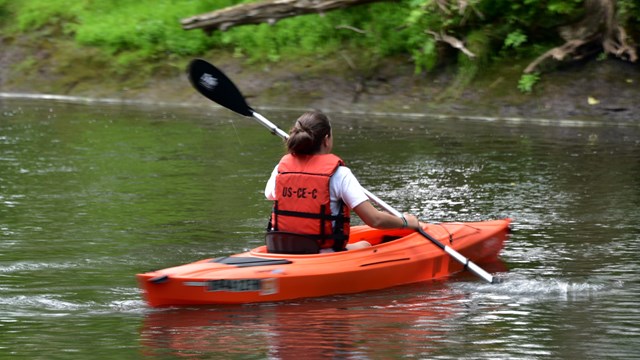
Paddling the River
Learn more about canoeing and kayaking on the Cuyahoga River. 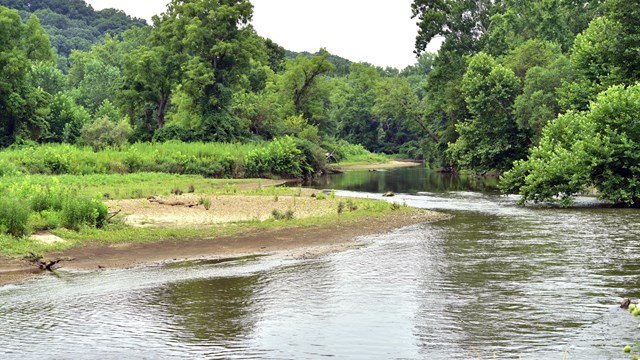
Cuyahoga River Water Trail
Get involved in river-wide efforts to create and improve the Cuyahoga River Water Trail. 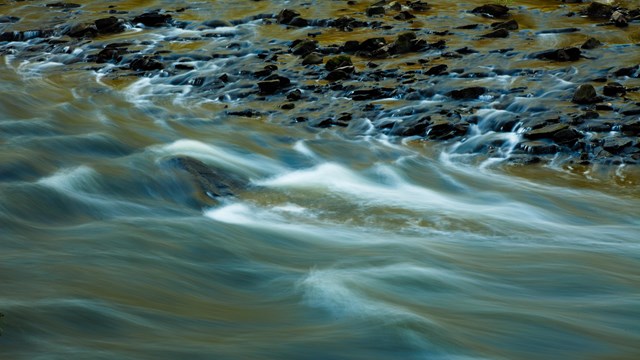
Water Quality
Cuyahoga River water quality is not always good. Check the current status to plan a safe visit. 
The Towpath Trail
Historically, the Ohio & Erie Canal drew water from the Cuyahoga River. Today, you can view the river from many locations along the trail. 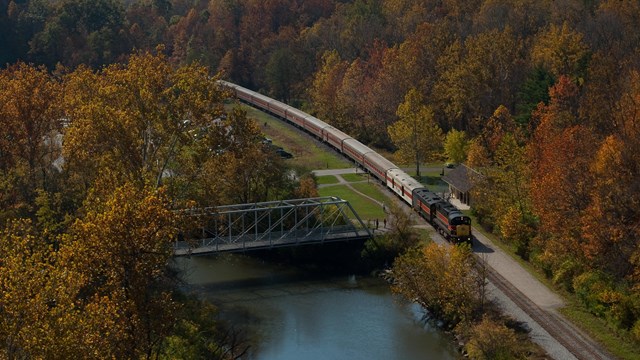
Cuyahoga Valley Scenic Railroad
Cuyahoga Valley Scenic Railroad runs adjacent to the river. Plan a trip aboard the train for views of the river from the window. 
Fishing
The Cuyahoga River and numerous park ponds are open for fishing. |
 |
|
Last updated: November 22, 2023