

NPS/Kekoa Rosehill Birds are perhaps the most conspicuous and easily observed of the Cape Cod National Seashore’s wildlife. The fascinating diversity, behaviors, and life cycles of birds have inspired awe for generations and often put birds at the forefront of conservation efforts. Although some birds are nocturnal, secretive, or well camouflaged, many species are active and out in the open during daylight hours, visible to even the most casual observer. The seashore’s 46,000 acres of fresh water, marine, and uplands provide a wide range of critical habitat for the roughly 370 species of birds that occur here. About 80 of these birds nest and raise their young during the spring and summer months. The remaining, non-breeding birds use the seashore during migration and to overwinter. Species Profiles
Migratory birds visiting the seashore commonly travel north and south along the Atlantic Flyway between breeding and wintering grounds, for some species as far north as the Arctic and as far south as the Antarctic. Cape Cod’s array of habitats and geographic position (being at mid-latitudes and jutting into the Atlantic) make the national seashore a prime “staging” (or resting and feeding) area for many migratory birds during the spring and fall months.
Whether it’s watching an egret hunt for a fish in the salt marsh or a hawk keying into prey, we urge visitors to grab a pair of binoculars and to take advantage of the ever changing and diverse assortment of birds that rely on the Seashore to nest, feed and rest. Some great places to watch birds include Fort Hill, Nauset Marsh, Pilgrim Heights, Beech Forest, and Hatches Harbor, to name a few. Checklists and field guides can be obtained at the bookstore at Salt Pond Visitor Center. Visiting Beaches While Nesting Shorebirds Are PresentThese guidelines pertain primarily to groups visiting Cape Cod National Seashore beaches from April through July. We suggest that group leaders stop at Salt Pond or Province Lands Visitor Centers to ask about the locations of nesting shorebirds and any regulations currently in place. The objective is to reduce stress on the birds caused by disturbance by visitors.General rules to reduce disturbance:
Source: Data Store Collection 6601. To search for additional information, visit the Data Store. Cape Cod National Seashore Waterbird Reports are available below. These large (8+ megabyte) pdf files are screen reader compatible for those who are blind or have low vision. Source: Data Store Collection 8018. To search for additional information, visit the Data Store. Frequently Asked Questions about Shorebird Management Activities Cape Cod National Seashore (Seashore) is home to several species of shorebirds that use beaches for breeding, nesting, feeding, and resting during migrations. They are a key component of the Cape Cod ecosystem and contribute to the beach experience enjoyed by millions of visitors. Piping plover, least tern, American oystercatcher, roseate tern, and red knot shorebirds are considered endangered, threatened, or species of special concern by federal and state governments. The seashore works with other federal agencies (especially US Fish and Wildlife Service (USFWS) and United States Geological Survey (USGS)) and local partners to conserve the birds under the requirements of the Endangered Species Act (ESA) and other laws, policies, and regulations.
Cape Cod National Seashore’s Shorebird Management Plan was finalized in 2019 and a formal consultation with the USFWS resulted in a Biological Opinion being administered in July 2021. These documents enable the Seashore to conserve these birds while continuing to provide access and public enjoyment of beaches. The plan, developed through a formal Environmental Assessment, resulted from a complex eight-year process that involved many agencies and the public -- including local residents, the recreation community, visitors, wildlife organizations, and other stakeholders. The plan and Biological Opinion, which has a term of ten years (2031), inform the seashore’s approach to monitoring and managing shorebirds. These activities include scientific monitoring of birds during the breeding season, the placement of physical barriers to separate nesting birds from people and pets, steps to reduce predation on birds and eggs through lethal (this has not been implemented yet) and non-lethal methods and providing current information to visitors. NPS staff, local residents, partners, and visitors regularly see signs of shorebird management activities from spring through fall. This document aims to provide information and answer questions about Cape Cod National Seashore’s Shorebird Management Program. Shorebird Management FAQ Document Shorebirds are essential parts of the Cape Cod ecosystem that the NPS manages. For many complex reasons -- including unregulated hunting, women’s hat fashions, habitat loss, and unregulated recreation in breeding areas – shorebird populations declined over decades to the point where many species are now designated as either threatened or endangered. The Seashore is legally required under the ESA to protect the birds and their breeding habitat in an effort to increase their population sizes. Staff conduct and apply science to understand these birds and make management decisions.
Shorebird protection in the seashore uses four primary activities: research and monitoring, fencing and signage, pet restrictions and non-lethal and lethal predator management.
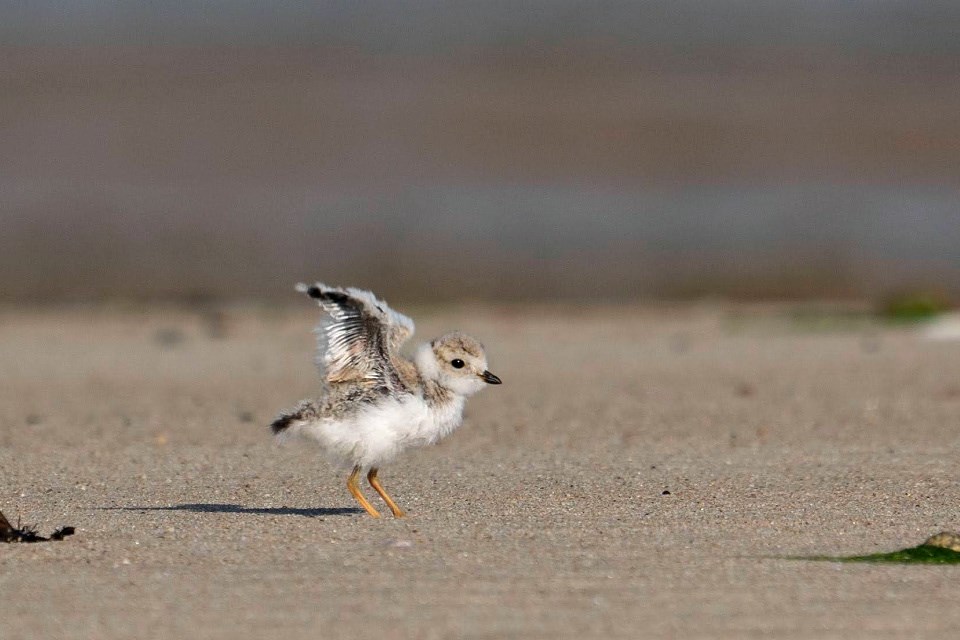
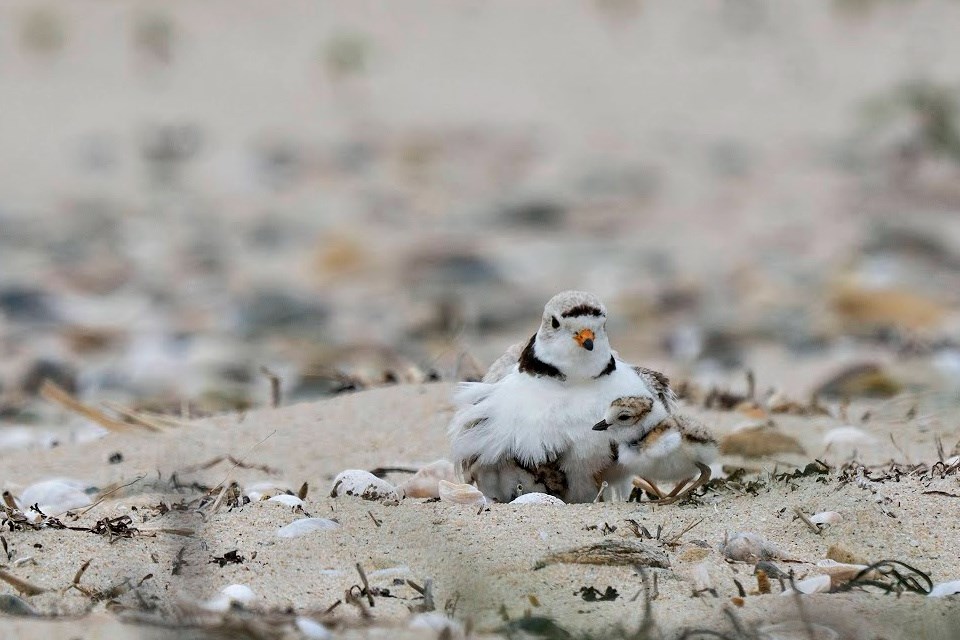
Piping PloverA species of particular management concern is the piping plover. The piping plover is small, sandy-colored shorebird that was once abundant on Cape Cod beaches and throughout their range. The adults, eggs and chicks blend into the pale background of open, sandy habitat on outer beaches where they feed and nest. By the 1940’s, habitat loss and an increase in recreational use on beaches cause the population to decline dramatically. Because of this, it was listed as a protected species under the Endangered Species Act in 1986. Although the population has increased since its listing, presently there are less than 2000 pairs along the Atlantic Coast and it is designated as threatened, which means that the population would be likely to decline if not protected. Least TernLeast terns are colonial nesters, meaning they build their nests together in large groups on the beach. They are also relatively long-lived, meaning the effect of poor productivity on population status is delayed. Thus, annual reproductive success (i.e. the number of least terns that fledge each year) is as critical an indicator of least tern’s population stability as annual numbers of individuals counted. Least tern breeding pairs were down in 2022 with approximately 195 pairs observed in 16 different nest colonies at 12 park beaches (compared to approximately 270 pairs at 17 different nest colonies in 2021). The number of pairs from 2021 were the most observed since 2004. The number of chicks fledged in 2022 increased to 49 compared to only 24 chicks fledged in 2021. This year equates to an average productivity of only 0.25 chicks per pair. Decline in productivity continues to be a concern. Common TernCommon terns nest in Massachusetts with the largest populations occuring on Cape Cod and in Buzzards Bay. They arrive in April and May to begin breeding. They depart from their breeding colonies in July and August where they will begin concentrating in "staging areas" around Cape Cod to feed before beginning their southward migratory journeys. In 2022, there was one common tern nest at Jeremy Point that hatched 2 chicks, but they were lost soon after hatching. This is the first-time common terns have been confirmed nesting on park beaches since 2011. American OystercatcherAmerican oystercatchers are a long-lived species that benefits from high annual adult survival and annual productivity. American oystercatchers were first recorded nesting on seashore beaches in 2002. Since then, 1-5 pairs have nested in the southern beaches each year. Between 2010-2022, productivity fluctuated from zero to 1.5 chicks fledged per breeding pair. In 2021, two chicks were fledged, resulting in a productivity number of 1.00 chicks fledged per breeding pair. In 2022, at Jeremy Point three pairs laid six nest attempts. One nest successfully hatched chicks but they were lost soon after. Jeremy Point is a highly dynamic environment with regular over wash events throughout the breeding season due to the low-lying nature of the sand spit it consists of. There is also very little cover in the area, therefore eggs and chicks can become an easy target for predators like coyotes and crows. Fortunately, American oystercatchers are long lived species and can sustain their population numbers with generally low productivity with occasional high productivity once every 7 to 10 years. Natural Resource and Science staff and interns are out on the beaches every day collecting data on birds and nests, breeding behaviors, egg counts, chick movement, hatching and fledging successes and failures, predation. They also work with law enforcement rangers to set up, maintain, and move fencing, signs, and exclosures to protect birds and to provide visitors with beach. Fencing and signage may be moved often to allow additional access if birds are no longer in the immediate area. Shorebird staff will talk with visitors and park staff (including lifeguards and fee collectors) to answer questions about shorebirds, nest sites, and closures or other restrictions. With over 40 miles of beach to patrol from Wood End/ Long Point in Provincetown to Coast Guard Beach in Eastham, their focus is on the birds.
Beachgoers are important partners in our conservation effort. The fencing, which utilizes wooden posts and string, and signs help to inform beachgoers about which areas to avoid due to nesting birds. The five-foot-high wire exclosures that surround individual nests reinforce that important message. Exclosures also help protect the nests from pets and from predators like coyotes and crows. The exclosures are effective. In 2021, 85% of piping plover nests not surrounded by exclosures were taken by predators (mostly crows). Of the exclosed nests that were lost, most losses were due to impacts from overwash events, where tides inundate the nests.
Beachgoers should avoid entering the fencing as their presence can disturb the birds and potentially lead to reduced productivity. Beachgoers should also refrain from using the fencing to hang or deposit anything on. Damage or breaking of the string could lead to wildlife entanglements. Under the Shorebird Management Plan, shorebird populations will be managed with the goal of improving productivity to meet recovery goals, while balancing increased protection efforts with the need to maintain access. The specific elements of the Shorebird Management Plan and Biological Opinion are: Symbolic Fencing (wooden posts and string)Lifeguarded Beaches: Flexible ManagementFlexible management is a tool the park may use to reduce or eliminate protective measures like symbolic fencing around piping plover nests, in specific high- visitation areas to support and maintain visitor access. The park can use flexible management for up to five (5) pairs of birds each season. The use of flexible management is at the discretion of park management at all these high use areas:
Under the current Biological Opinion provided by USFWS, Cape Cod National Seashore can flexibly manage or “take” up to five (5) pairs of piping plovers. Any pair subjected to flexible management or “take” is estimated to suffer from a 50% reduction in productivity.
Closures and use restrictions (pedestrian, pets, boats) have been implemented to provide enhanced protection for courting, scraping, nesting activities, and for staging and migratory shorebirds. This has resulted in substantial pet closures/restrictions throughout the park starting April 1. Leashed pets will be allowed in areas where no birds are present. Except for specific areas with annual seasonal closures, these areas will be opened and closed often to protect birds and allow for visitor access when possible. Visitors, particularly those accessing the ORV Corridor, should be aware that pet restrictions have increased and should plan carefully before arriving with pets. Pedestrian Restrictions“Area Closed” signs are installed throughout the marsh at Hatches Harbor spit and Herring Cove (to the right of the parking lots when facing the ocean) closing the areas to pedestrian access from July through October 15 to protect staging/migrating shorebirds. Pet RestrictionsShorebirds are especially sensitive to the presence of dogs as they closely resemble one of their primary predators, the coyote. They are more readily disturbed when a dog is approaching than when only people are approaching. This instinctive reaction causes the birds to leave their nest, interrupting incubation and exposing eggs to either extreme hot or cold temperatures. Research has determined that just the presence of pets disturbs piping plovers far more than people alone. Even when they are on leashes, dogs can frighten, harm, or even kill birds.Accordingly, the following areas will be closed to pets from April 1 through October 15:
Additional pet restrictions are implemented during the breeding season to protect nesting birds. Boat RestrictionsA portion of the tip of Coast Guard Spit in Eastham will remain open for boat landings, unless future information indicates that a total closure is warranted. Predator ControlNon-lethal management methods, including predator exclosures, trash management, and education will continue to be used. Data on predator presence and abundance is being gathered each season. Lethal measures are not being implemented at this time. When beaches are closed to pets where can I walk my dog?Visitors are welcome to walk their dog on park beaches (outside of the lifeguarded protected beach) when shorebirds are not breeding in the area. If shorebirds are present, pet closure signs will be installed, and the park website updated to reflect the closed areas. Some shorebird species -- like the endangered roseate terns -- may not use Cape Cod National Seashore beaches for breeding but stop here in the fall during their migration to wintering grounds in the Southern Caribbean and South America. The time they spend on seashore beaches is critically important to their survival because they must forage and build up energy reserves for long flights (thousands of miles in some cases). Recreational activities, pets, vehicles, and other disturbances that cause stress, reduce foraging activity, or unnecessary escape flights reduce their energy stores.
The shorebird team constantly adjusts fencing and signage throughout the seashore based on the movement of shorebirds to protect birds and to allow for the greatest visitor access. The latest information is provided weekly to staff at visitor centers and fee booths. Check for updated information posted on the Cape Cod National Seashore webpage, at visitor centers, and at beaches.
Kites and other aerial objects, which can resemble predatory birds, can disrupt and cause stress to breeding birds and chicks. The seashore has designated an area of the outer beach for use by kitesurfers. This area of the outer beach between Nauset Light Beach and Coastguard Beach has little shorebird activity. Kite flying is prohibited at certain beaches. You should leave all shorebirds alone, even if they appear to be injured. Shorebirds are wild animals and respond poorly to direct human contact. This often results in further injuring the shorebird.
For the birds to thrive, reducing predation risk is just as important as reducing disturbance by human activities. The Shorebird Management Plan and its associated Environmental Assessment includes both non-lethal and lethal methods. The seashore relies on non-lethal methods like managing food waste, communicating with the public about not attracting predators and about keeping pets on leashes, and installing exclosures without nests so predators learn not to associate them with prey. The park is not currently implementing lethal methods.
Lethal methods in the future will be used only on targeted individual animals known to pose threats to nesting birds and eggs. Approved methods are outlined in the Environmental Assessment and will only be employed in coordination with professionals from the United States Department of Agriculture, Animal and Plant Health Inspection Services, Wildlife Service division. |
Last updated: January 8, 2024