
-
Park Closure
A short term closure (less than one day) of Frijoles Canyon will be required as the park works to move park operations back to normalcy after last years flood events. The expected closure date is either May 22 or 23. Call 505-672-3861 x 517 for info.
-
Access to Frijoles Canyon Will Be Limited
Starting June 1, 2012 all access to the most visited part of the park, Frijoles Canyon, will be via a shuttle bus from the nearby community of White Rock. This is to alleviate a parking shortage created by the Las Conchas Fire. More details to follow.
An Open Book of Human History
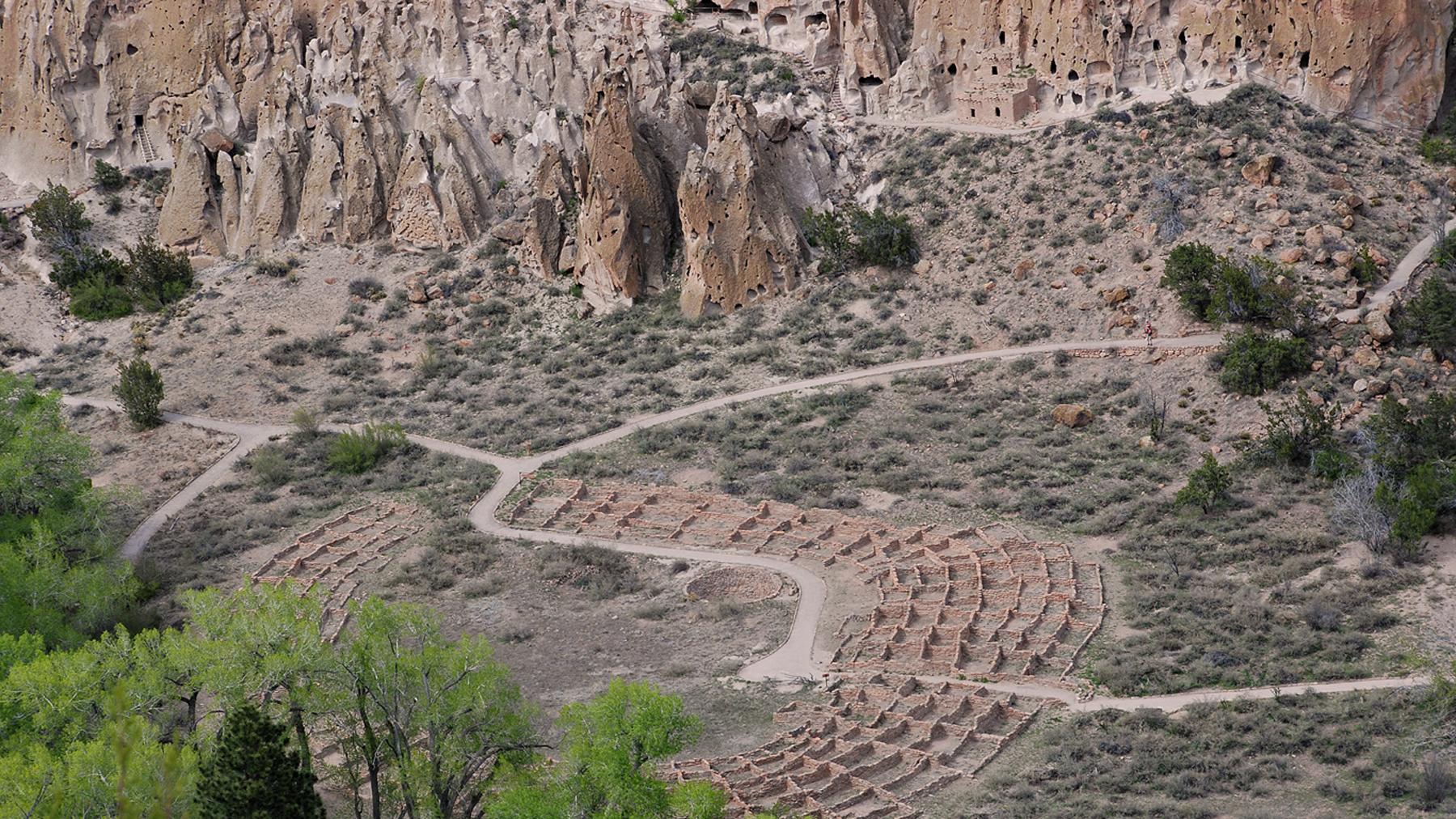
Bandelier National Monument protects over 33,000 acres of rugged but beautiful canyon and mesa country as well as evidence of a human presence here going back over 11,000 years. Petroglyphs, dwellings carved into the soft rock cliffs, and standing masonry walls pay tribute to the early days of a culture that still survives in the surrounding communities.
Read MoreFeatures
-
Visiting Bandelier in 2012
Bandelier National Monument is still a great place to visit but things have changed a bit since the fire/floods in the summer of 2011.
Read More -
Protecting History - A Tsankawi Management Plan
A plan for Tsankawi is needed to provide visitor amenities that would enhance the visitor experience while increasing resource protection.
Read More -
Spectacular Solar Show
Bandelier National Monument, located in Northern New Mexico, will offer an amazing opportunity to witness a solar eclipse on May 20, 2012.
Read More -
The Effects of Las Conchas Fire
On June 26, 2011 the Las Conchas Fire began just west of the park. It grew into the largest fire in New Mexico history and burned >60% of the park.
Read More -
Las Conchas Fire: It Could Have Been Worse
Las Conchas Fire affected Bandelier NM, nearby towns, the National Laboratory, and burned homes but could have been worse. Find out what helped.
Read More -
American Pika: At Bandelier?
You might not expect to find this cute little relative of the rabbit in Bandelier but they are found in the park's highest elevations.
Read More
Did You Know?
Mule deer fawns only keep their spots for the first several months of life. These spots provide camouflage for the young animals when their mothers must leave them to feed.