
-
New Operating Hours for the National Prisoner of War Museum
Beginning Monday, May 13, 2013, the National Prisoner of War Museum will adopt new operating hours of 9:00 a.m. to 4:30 p.m. daily. More »
Victory From Within: Exploring the Stories of Prisoners of War
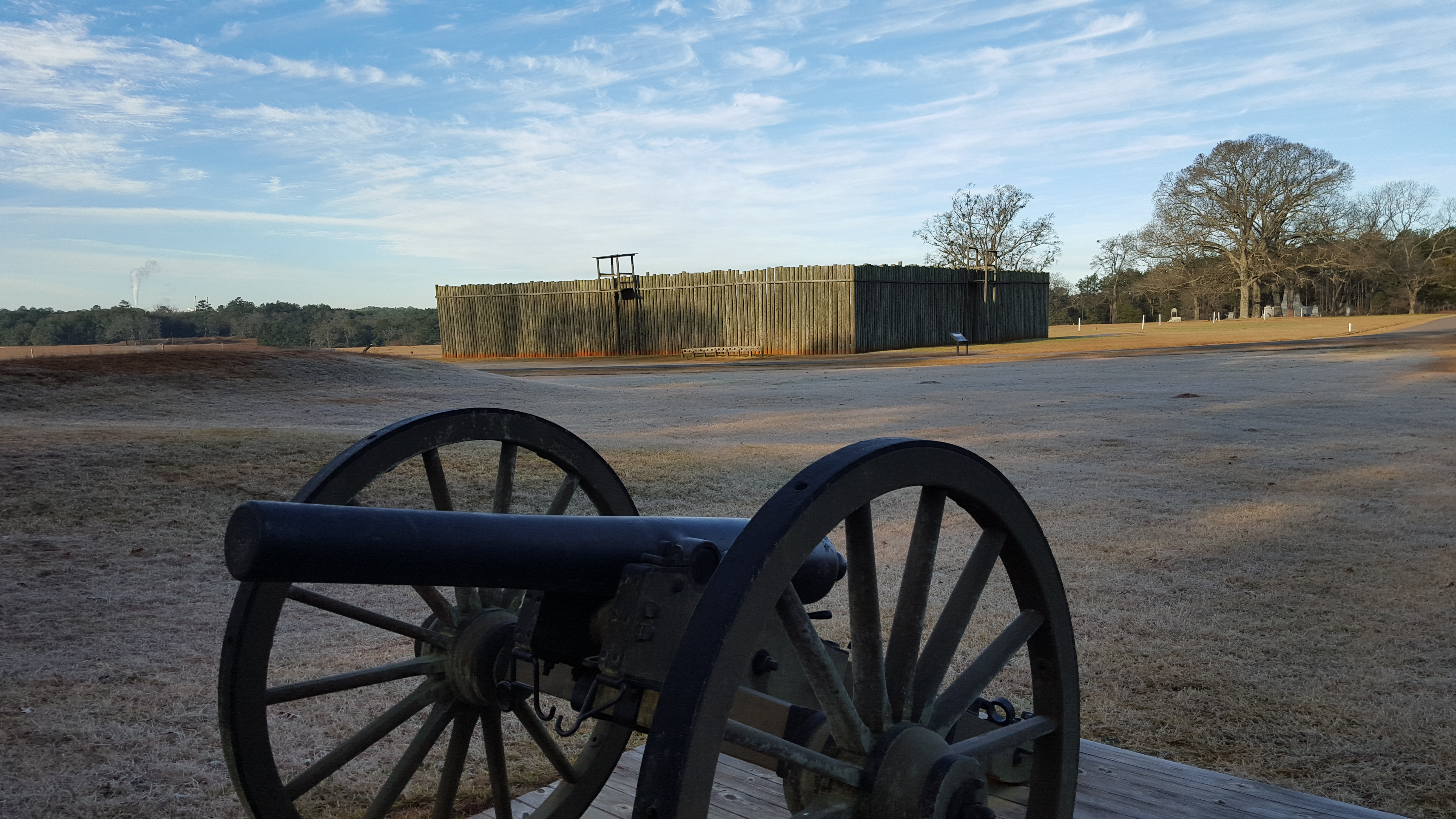
The Camp Sumter military prison at Andersonville was one of the largest Confederate military prisons during the Civil War. During the 14 months the prison existed, more than 45,000 Union soldiers were confined here. Of these, almost 13,000 died here. Today, Andersonville National Historic Site is a memorial to all American prisoners of war throughout the nation's history.
Read MoreFeatures
-
Memorial Day at Andersonville
Each year the park hosts a series of activities to commemorate the Memorial Day Holiday. Join us to remember.
Read More -
Andersonville National Cemetery
The burying ground for those who died here is now a National Cemetery, connecting the past to the present, still serving modern-day veterans.
Read More -
Researching Andersonville Prisoners and Guards
Documenting the lives of the prisoners held at Andersonville, and preserving their experiences, is an important and ongoing process.
Read More -
Andersonville (Camp Sumter Military Prison)
The Camp Sumter military prison was the largest prison established by the Confederacy during the American Civil War.
Read More -
Trading Cards for Kids
Discover more than 500 stories about America’s journey from the Civil War to Civil Rights. View online or visit this park to collect your own.
Read More -
Commemorating the Civil War Sesquicentennial
Join us to explore how the story of Andersonville fits into the larger Civil War experience during the 150th anniversary of the American Civil War.
Read More -
Monuments and Remembering
Since 1899 monuments have been placed at Andersonville to remember the men who suffered and died here, as well as POWs from other conflicts.
Read More
Did You Know?
Most visitors exploring Andersonville National Cemetery are unaware that the New York monument has an image sculpted on the reverse side of the memorial. The image on the reverse depicts two Andersonville prisoners. One is seen as dejected while the other appears hopeful. An angel approaches the prisoners carrying an olive branch, the symbol of peace, which was used to represent the reconciliation between the North and the South.