



Last updated: October 8, 2026
Thing to Do
Ring the Bell: A Symbolic Marker of Freedom
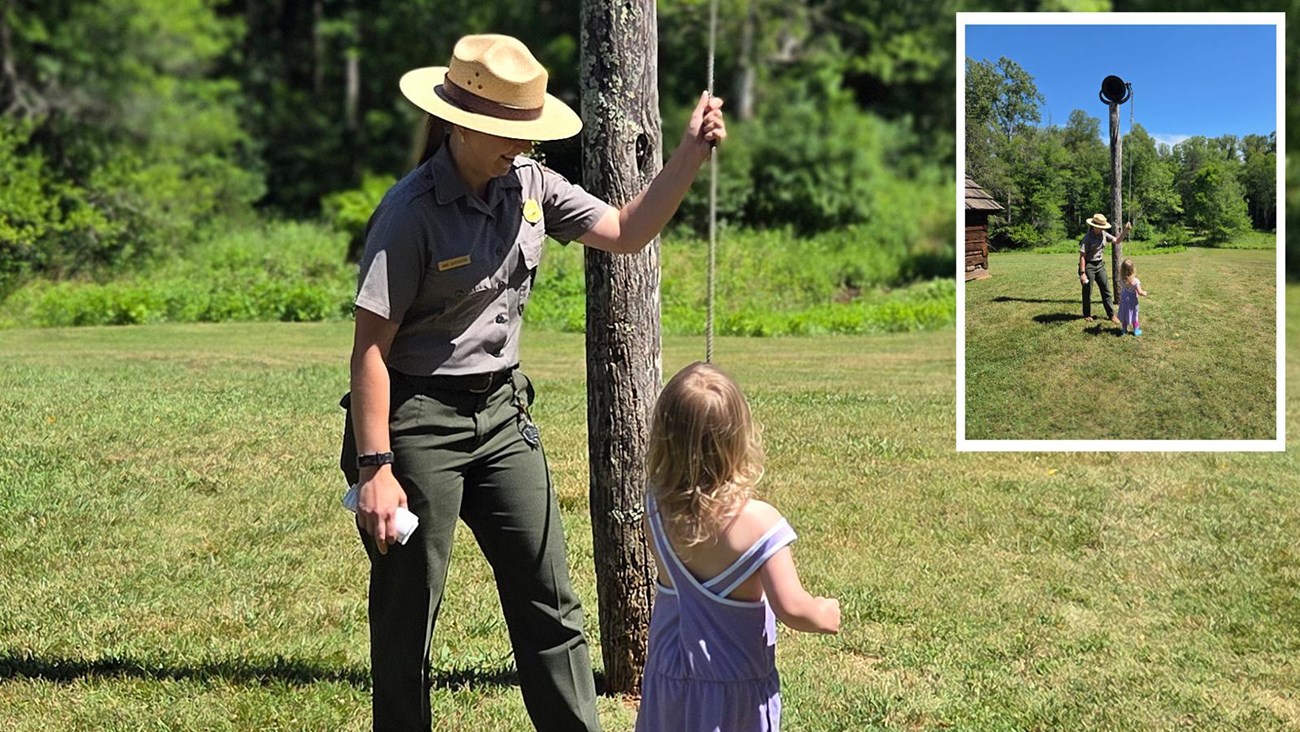
NPS/Linda Coldiron
Booker T. Washington and his family were among the four million enslaved individuals emancipated throughout the South in 1865, following the arrival of Union troops at the Burroughs Plantation in Hale’s Ford, Franklin County. Washington’s mother, Jane, served as the plantation cook, and the family, consisting of Booker, his brother John, sister Amanda, and their mother, lived in a small cabin on the property.
When a federal soldier arrived to announce emancipation to the enslaved people on the plantation, the sound of a bell may have resonated across the property. Although historical records do not confirm whether Union troops or formerly enslaved individuals rang the bell, Booker T. Washington National Monument recognizes it as a symbolic marker of freedom and remembrance for the Washington family and other enslaved individuals on the Burroughs property.
In his memoir “Up from Slavery”, Washington recalled that at the age of eight or nine, he joined other enslaved individuals to hear their freedom announced by a Union officer, describing the experience as a time when “freedom was in the air.” The symbolic act of ringing a bell, whether performed on the day of emancipation or later commemorated by visitors, is now an integral element of the site’s Juneteenth observance.
Details
Duration
5-10 Minutes
Activity
Cultural Demonstrations
Participating in the Juneteenth bell-ringing at the monument has become an important commemorative tradition for visitors. Booker T. Washington National Monument recognizes it as a symbolic marker of freedom and remembrance for the Washington family and others on the plantation.
Pets Allowed
Yes
Activity Fee
No
Entrance fees may apply, see Fees & Passes information.
Location
The bell at the Burroughs home site
The bell is located at the Burroughs home site in the historic core.
Reservations
No
Season
Year Round
Accessibility Information
The route to the origional homesite begins on the paved walkway located behind the visitor center. The path increases to a 14% incline near the main barn and pig pens, then levels out by the original homesite.