



Last updated: June 10, 2026
Lesson Plan
Be an Ethnographer - Exploring Culture
Download Lesson Plan
35KB
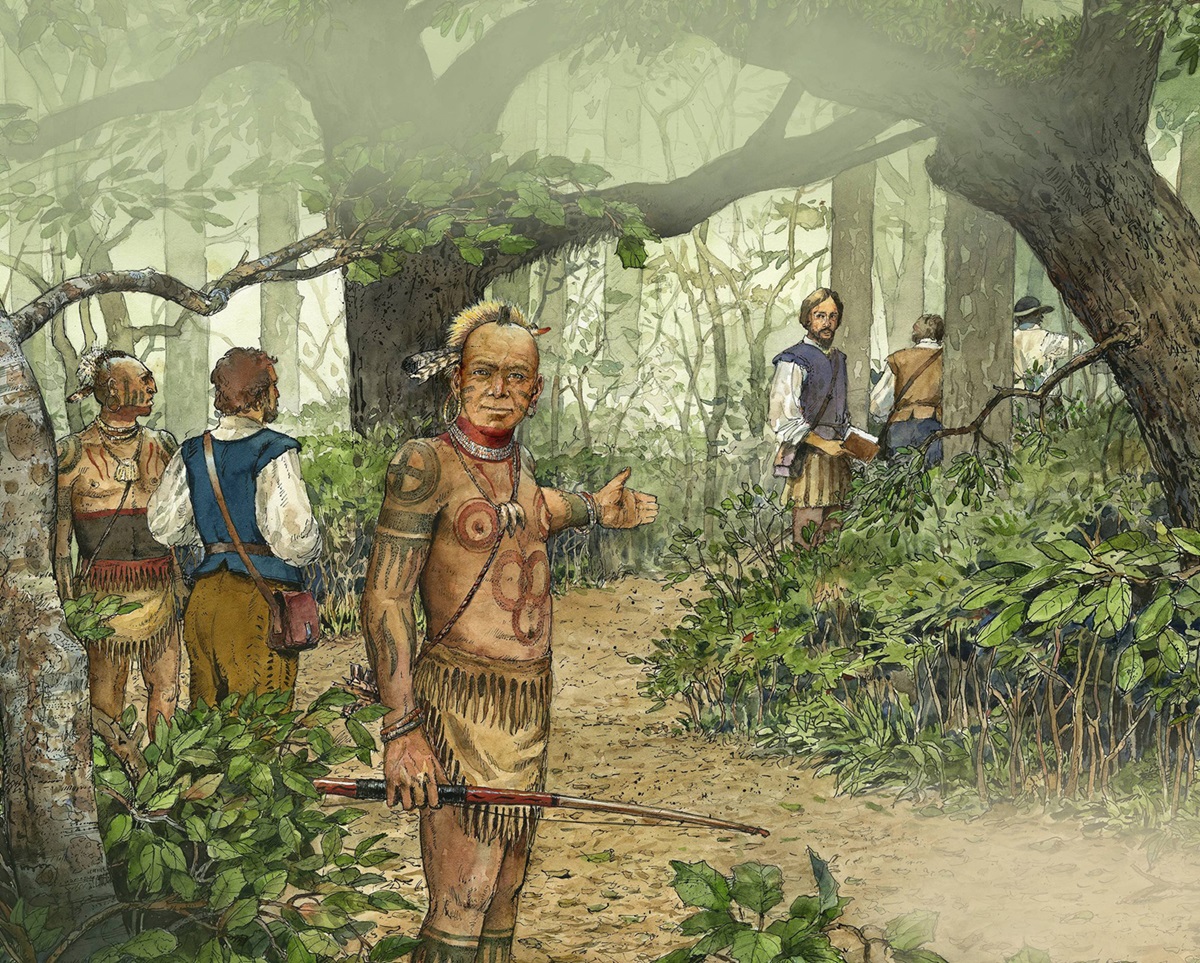
Explore the cultures in the artwork of English and Algonquian-speaking people
Richard Schlecht - NPS Photo
- Grade Level:
- Upper Elementary: Third Grade through Fifth Grade
- Subject:
- Social Studies
- Lesson Duration:
- 60 Minutes
- State Standards:
- • Visual Art: 4.V.1.3, 4.V.2.2, 4.V.3.2, 4.CX.1.2, 4.CX.1.1,
• Social Studies: 4.H.1.1, 4.H.1.5 - Thinking Skills:
- Remembering: Recalling or recognizing information ideas, and principles. Understanding: Understand the main idea of material heard, viewed, or read. Interpret or summarize the ideas in own words. Applying: Apply an abstract idea in a concrete situation to solve a problem or relate it to a prior experience. Analyzing: Break down a concept or idea into parts and show the relationships among the parts. Evaluating: Make informed judgements about the value of ideas or materials. Use standards and criteria to support opinions and views.
Essential Question
How can you identify parts of cultures through artwork?
Objective
Students will be able to: 1. Identify parts of the Algonquian culture in John White’s watercolor images, 2. Identify parts of culture in English portraits from the time of the Lost Colony, and 3. Identify parts of their own culture in images from their own school.
Background
An ethnographer is a person who studies culture by being involved in the culture directly. Governor of the Lost Colony, John White, was an artist who first came to the new world to paint the people, places, animals, and plants along the journey. In his many watercolors, he painted Algonquian people and their villages in the Outer Banks. He captured part of their culture in his paintings, such as their clothing, food sources, artwork, and more. Many of the same parts of culture can be seen in paintings by Europeans at the same time. Food, clothing, and other cultural aspects are found throughout artwork across the world.
Preparation
Teachers will need to print off the artworks for the student groups. Teachers can group students in groups of 2 or 4 to work together. They will also need to print off the 2-5 Matching Sheet for the students.
Alternatively, teachers can display each of the artworks for the class instead of printing them out for each group.
Materials
This sheet is for the students to match the artworks to the list cultural ideas.
Download Matching Sheet for Students
This sheet is the answer key for the matching section of the lesson plan
Download Matching Sheet Rubric
The collection of artworks for the lesson
Download All artworks for the Lesson
Lesson Hook/Preview
John White painted Algonquian people and villages while he was here, and his paintings provide a valuable look at the culture of the Algonquian people of North Carolina in the 1500s. Many of the same parts of culture can be found in paintings by Europeans from the same time period. Using Bloom's Taxonomy, use the paintings of Algonquian people and European people to see the various parts of culture present across the world captured through artwork.
Procedure
Break the students into groups of two or four; even numbers work best. Pass out the artworks of the Algonquian and European peoples and the instructions page to the students. Students will explore the artwork of John White and Europeans through three different methods:
Identify: First, they will be given the first image of each category, 1A and 1E, with the blanks on the page. They are tasked with filling in the blanks of the parts of culture that the blanks are pointing to in the artwork. They can be given a list of parts of culture to assist them in filling in the blanks. Once they have filled out the blanks in each artwork, they will move on to part two.
Comparing: Second, students will look at the group of four artworks from each culture, 2-5 Algonquian and #2-5 European. They will also have a Matching Sheet, which contains 8 lists of cultural items found in one of the artworks. They will compare the artworks and determine which list matches the artwork. They will label each list with the correct number and cultural group. After they finish matching up the lists and artwork, they’ll move onto the last paintings.
Applying: The students will be given #6 Algonquian and #6 European artworks. The students will have to analyze the artworks and determine which aspects of culture they find in the paintings. On the board, the teacher will divide with the left for Algonquian and the right for European. The students will explain which pieces of culture they found in Algonquian artwork, and they will be written on the board. Then they will say which parts of culture the European artwork has. They will then be asked to compare the types of culture found in each group and will see that while culture will be different among people, most people all use the same aspects of culture, and they can be found in artwork.
Analyzing: After comparing the parts of culture across both cultures, ask the students to think about what parts of culture that they did not find in any of the artworks. Ask them the following questions to spur their analysis.
- Does the absence of these parts of culture from the artwork mean these people did not have that in their culture, or are they hard to show in artwork?
- What parts of culture do you have that are not shown in the artwork?
Vocabulary
Ethnographer: A person who studies culture by immersing oneself in the culture itself.
Algonquian: Native people who range from Canada down to North Carolina, including many of the Native people of the Outer Banks.
Culture: The customs, arts, social institutions, and achievements of a particular nation, people, or other social group.
Rubric/Answer Key
For #1A and #1E, the following are to fill in the blanks
- 1A (from top to bottom)
- Weaponry/Tools (spears)
- Clothing
- Food (fish)
- Transportation (canoe)
- 1E
- Fashion (clothing/jewelry)
- Family/Marriage (wedding ring)
- Pets
2A
- Weaponry/Tools
- Art/Tattoos
- Clothing
- Transportation
- Architecture
- Religion
- Family
- Food
- Clothing
- Weaponry
- Clothing/Fashion
- Architecture/Shelter
- Food/Agriculture
- Weaponry/Tools
- Community
- Food
- Fashion/Clothing
- Government/Royalty
- Dance
- Art
- Fashion
- Dance
- Clothing
- Pets
- Music
- Architecture/Shelter
- Dance
- Agriculture/Food
- Community
- Clothing/Fashion
- Architecture
- Clothing
- Pets
- Food
- Transportation
Supports for Struggling Learners
For struggling learners, display the part of culture list for them to choose from, helping them to become familiar with them. They can also be given just the 2-5 of the Algonquian images or 2-5 of European instead of mixing them all together.
Enrichment Activities
An enrichment activity is using modern day artwork to talk about the culture present in artwork from other eras and challenge the students to find the cultural parts. The North Carolina Museum of Art has rotating exhibitions, as does the Smithsonian Museum and National Gallery.
Additional Resources
John White's Artwork Collection
North Carolina Museum of Art
Smithsonian American Art Museum
National Gallery of Art