


Last updated: September 23, 2026
Place
Winter Quarters Complex
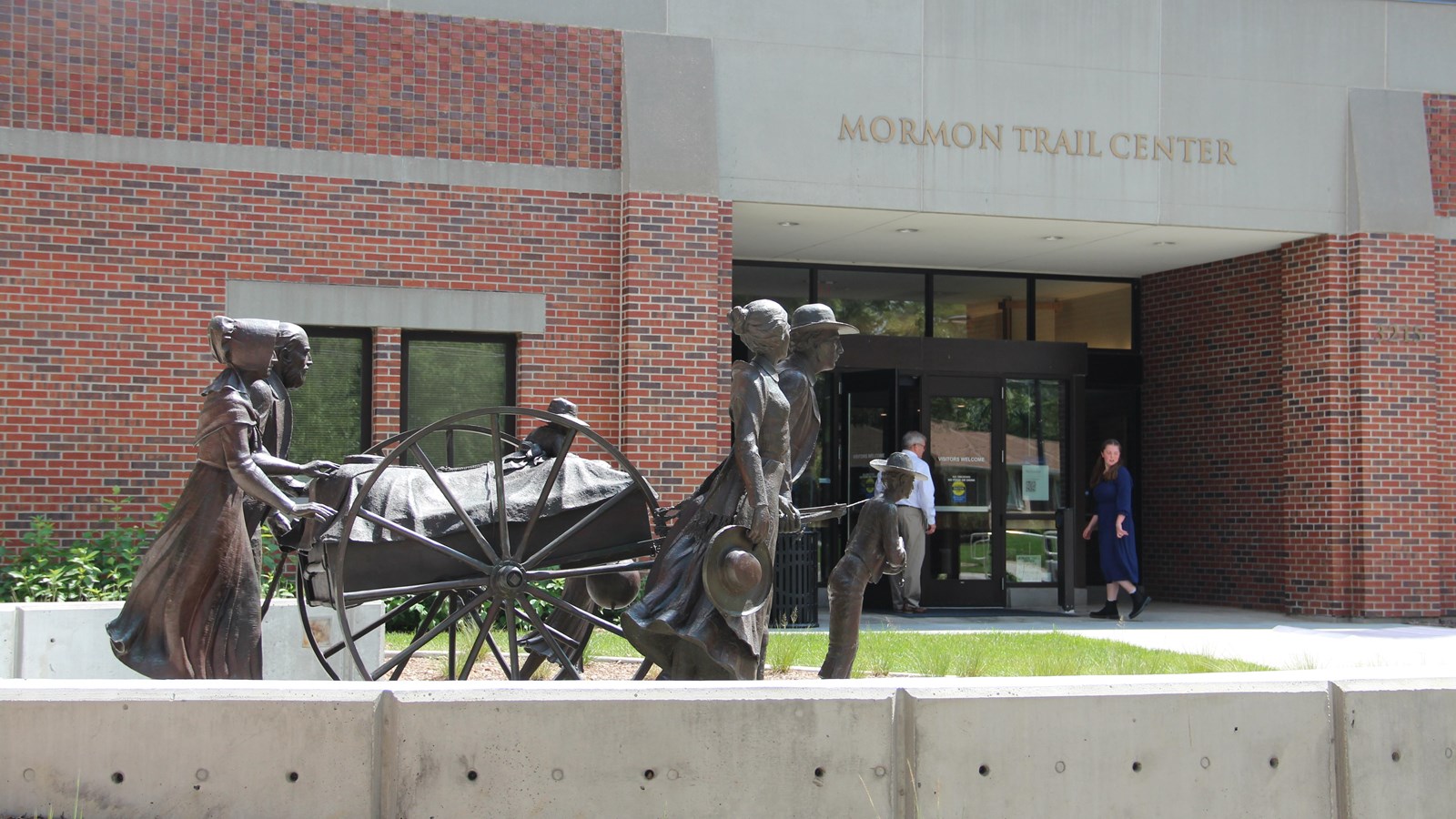
Photo/L. Kreutzer
Quick Facts
Location:
Mormon Trail Center 3215 State Street Omaha, NE. GPS 41.335030 -95.965154; Mormon Pioneer Cemetery 3300 State Street, Omaha, NE. GPS 41.335077 -95.966047; Florence Mill/Weber Mill/Winter Quarters Mill Museum 9102 S 30th Street, Omaha, NE GPS 41.3434907 -95.9626984; Florence Park 3015 State Street, Omaha, NE GPS 41.335613 -95.960916
Significance:
Around 3,500 Latter-day Saints from Nauvoo sheltered at Winter Quarters (present North Omaha, NE) the winter of 1846-1847 before resuming the trek to the Valley of the Great Salt Lake. Many emigrants died there during those months, and most of them were laid to rest in the pioneer cemetery near the Mormon Trail Center.
Designation:
Historic site on the Mormon Pioneer National Historic Trail.
MANAGED BY:
Mormon Trail Center, Mormon Pioneer Cemetery - The Church of Jesus Christ of Latter-day Saints; Weber Mill/Florence Mill/Winter Quarters Mill Museum- Private Florence Park: City of Omaha
Amenities
10 listed
Accessible Rooms, Benches/Seating, Cellular Signal, Gifts/Souvenirs/Books, Historical/Interpretive Information/Exhibits, Parking - Auto, Picnic Shelter/Pavilion, Picnic Table, Playground, Restroom
Upon leaving Cutler’s Park in October 1846, several thousand Latter-day Saints emigrants shifted camp to a site nearer the Missouri River, in present North Omaha. Under a church-negotiated agreement with the Omaha Tribe, they began building a new camp called Winter Quarters. However, private tribal negotiations and incursions on Indian lands were illegal under federal law, so the Office of Indian Affairs ordered Brigham Young to continue west or move his people to the east side of the Missouri River.
These officials were not persecuting the Latter-day Saints or trying to snarl them in red tape; rather, they were protecting destitute Indian tribes whose survival depended on full use of their lands and resources. But Young’s people were destitute, too. He could not move them farther west at that time, nor could he agree to haul thousands of men, women, and children with their wagons and livestock back across the Missouri River to start building anew. While continuing to argue their case in Washington, D.C., with help from their politically connected friend Thomas Kane, the Latter-day Saints dug in at Winter Quarters. They platted blocks, lots, and streets, built 621 cabins and dugouts, and constructed a council house, several stores and blacksmith shops, schools, and a gristmill (Florence Mill).
The temporary settlement took on a “look of permanence” that alarmed the Indian Affairs office, but the government made no move to physically evict the Latter-day Saints. The situation was delicate from the perspectives of both the Latter-day Saints and the US government. Neither side wished to provoke bloodshed. By Christmas, 3,483 emigrants sheltered at Winter Quarters, and thousands more wintered in camps scattered across Iowa. The winter turned harsh.
People at Winter Quarters suffered from scurvy, malaria, measles, and other diseases, and Thomas Kane reported that “burial parties could not keep up with the deaths.” The dead were buried on a hill overlooking the valley. Mormon Pioneer Cemetery, located today at State Street and Northridge Drive in North Omaha, was laid out in a carefully defined area with each grave measured and plotted. Although cemetery records have been lost, researchers suggest that up to 600 individuals may be buried there.
Meanwhile, conflict with the Omaha increased, and Indian Affairs continued to press the Latter-day Saints to leave tribal lands. Some emigrants moved on to the Valley of the Great Salt Lake over the summer of 1847, but many would be unable to go until 1848. Pressured by the tribe and the federal government, church leaders decided to abandon Winter Quarters and move operations back across the river, where they established Kanesville (Council Bluffs, IA) in spring 1848.
Little is left of the original Winter Quarters settlement, but the Church-operated Mormon Trail Center, Mormon Pioneer Cemetery, Florence Park, and Florence Mill—the only surviving building from the pioneer era—are open to visitors.
Site Information
Location (Mormon Trail Center 3215 State Street Omaha, NE. GPS 41.335030 -95.965154;
Mormon Pioneer Cemetery 3300 State Street, Omaha, NE. GPS 41.335077 -95.966047;
Florence Mill/Weber Mill/Winter Quarters Mill Museum 9102 S 30th Street, Omaha, NE GPS 41.3434907 -95.9626984;
Florence Park 3015 State Street, Omaha, NE GPS 41.335613 -95.960916.)