



Last updated: August 21, 2026
Place
St. Joseph Ferry Landing & Riverwalk
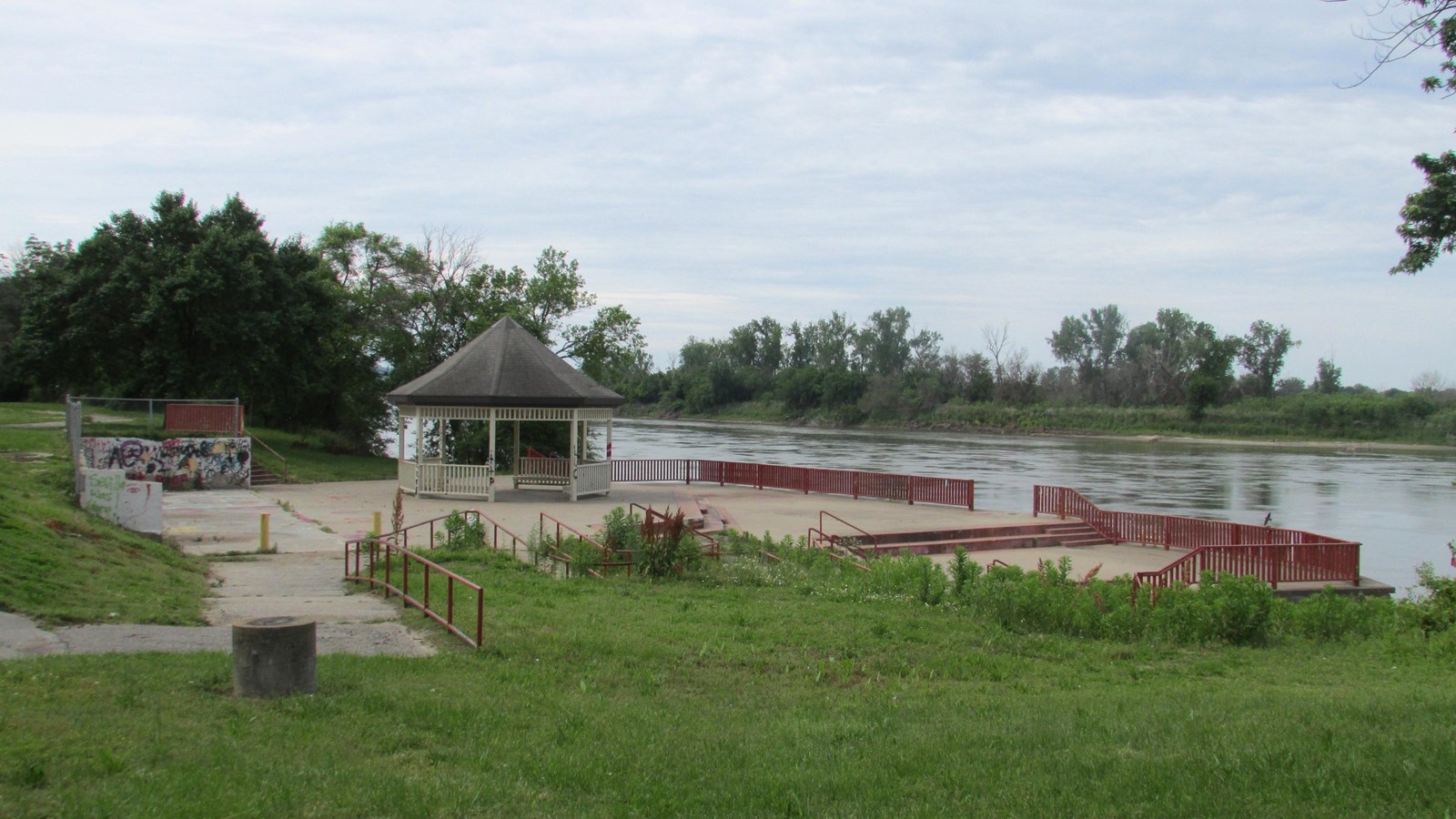
Photo/Chris Light
Quick Facts
Location:
South end of St. Joseph Riverwalk, at the end of Francis Street between the Missouri River and I-229 viaduct. Riverwalk trail continues 2.3 miles to the north to Remington Nature Center (1502 McArthur Dr) at the north end of the trail. GPS trail monument: 39.766357 -94.860772 GPS riverboat/ferry landing 39.765933 -94.860772 GPS Remington Nature Center 39.779068 -94.874106
Significance:
Ferries and riverboats used landings on this stretch of the Missouri River at St. Joseph from 1849 through 1955 to deliver passengers between St. Joseph and Ellwood, Kansas. Pony Express riders crossed the river here in both directions during 1860-1861.
Designation:
Historic site on the California and Pony Express National Historic Trails.
MANAGED BY:
Various, Public
Amenities
9 listed
Benches/Seating, Cellular Signal, Dock/Pier, Historical/Interpretive Information/Exhibits, Parking - Auto, Picnic Shelter/Pavilion, Scenic View/Photo Spot, Trailhead, Wheelchair Accessible
The Missouri River at St. Joseph was too deep, swift, and full of snags for wagons to ford. Pony Express riders and thousands of westbound emigrants instead boarded commercial ferries to reach the Kansas side of the channel. Today, beneath the I-229 viaduct near the foot of Francis St, visitors can stand on a concrete viewing platform close to where these vessels once docked. From there, a paved trail with monuments and markers follows the river north for 2.3 miles to the Remington Nature Center.
In 1852, California-bound John H. Clark journeyed up the “turbid and troubled waters” of the Missouri to St. Joseph. “One could hardly imagine a more uncomfortable looking stream than this to navigate. Never had I seen so many snags or more terrible ones to look at,” he wrote, also noting the wrecks of 2 steamboats destroyed by boiler explosions.
Landing at St. Joseph, Clark found “such a crowd of wagons rammed, jammed, and locked together [as] I never before saw. . . . It seemed as though the salvation of every man depended on his getting his wagon over first.” His party joined the end of the ferry line.
Hoping to bypass the crowd, Clark’s group rented a rickety flatboat to transport their mules. But, he recounted, “no sooner did we get one on board and our attention drawn towards another than the first would jump overboard and swim ashore to the great delight of the crowd which thronged the river’s bank.” After several attempts, the men tried driving the mules aboard all together, which worked until the animals shifted to one side of the deck, tipping the boat. Panicked, they all leaped overboard again, drawing loud cheers from onlookers. After repeated attempts, the men finally managed to get their mules across the “Big Muddy” to the Kansas side, where their overland journey at last began.
The April 3, 1860, launch of the Pony Express was a matter of national attention, but the first departure from St. Joseph did not go as planned. The train delivering express mail from the East arrived 2 hours behind schedule, after dark, and the Missouri River ferries normally ran only during daylight hours. On this important occasion, though, the steamer Ebenezer held at the landing while workers hurriedly packed the late mail into the mochila. Horse and rider boarded at 7:20 p.m. to the cheers of an excited crowd, and the ferry delivered them safely to the western landing below Elwood, Kansas, 15 minutes later. Two other steam ferries also reportedly carried Pony Express riders across the Missouri to Elwood and Bellemont, Kansas, during 1860-1861.
To visit the landing site, drive west on Francis St in St. Joseph and park beneath the I-229 viaduct. The monuments and modern platform—flooding long ago destroyed the original landing—stand at the riverbank. From there, walk, bike, or skate the St. Joseph Riverwalk trail north to the Remington Nature Center, which features exhibits about Native American culture, regional plants and wildlife, and a 7,000-gallon aquarium.
Site Information
Location (South end of St. Joseph Riverwalk, at the end of Francis Street between the Missouri River and I-229 viaduct. Riverwalk trail continues 2.3 miles to the north to Remington Nature Center (1502 McArthur Dr) at the north end of the trail. GPS trail monument: 39.766357 -94.860772 GPS riverboat/ferry landing 39.765933 -94.860772 GPS Remington Nature Center 39.779068 -94.874106)