



Last updated: August 6, 2026
Place
Patee House Museum
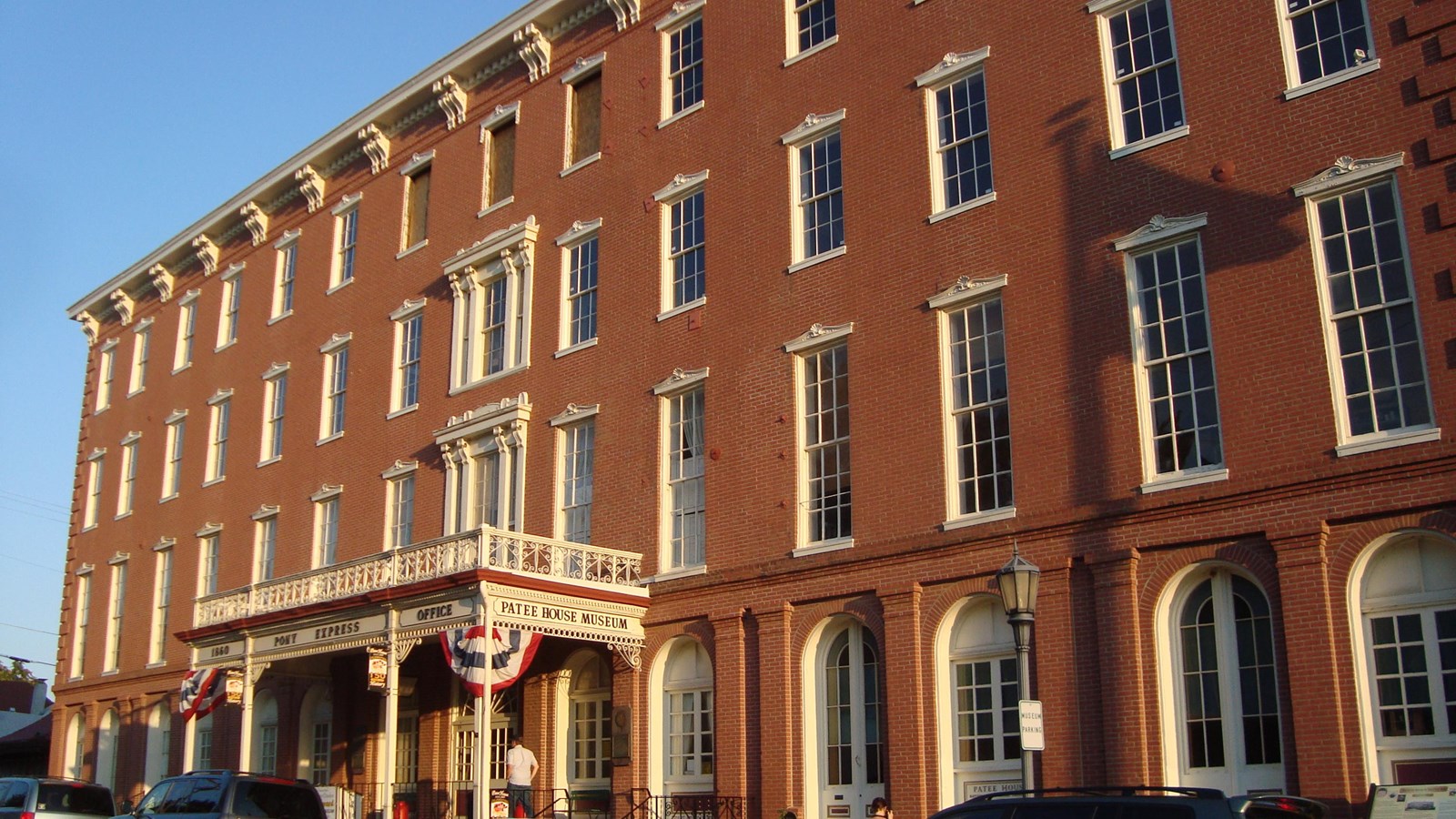
NPS Photo
Quick Facts
Location:
1202 Penn St, St. Joseph, MO. GPS 39.756177 -94.845091
Significance:
Patee House, a National Historic Landmark, was the finest luxury hotel west of the Mississippi River upon its construction in 1858. In 1860-1861, Patee House served as the eastern terminus of the Pony Express Trail, where riders lodged, received the westbound mochilas, and delivered the eastbound mochilas.
Designation:
Historic site on the Pony Express National Historic Trail.
MANAGED BY:
Amenities
7 listed
Cellular Signal, Elevator, Gifts/Souvenirs/Books, Historical/Interpretive Information/Exhibits, Information - Ranger/Staff Member Present, Parking - Auto, Restroom
Patee House Museum occupies the 1858 Patee House hotel, a National Historic Landmark and eastern terminus of the Pony Express, at 1202 Penn St, St. Joseph, Missouri. Built in 1858 by businessman John Patee (pronounced PAY-tee), the 4-story brick building was considered the most luxurious hotel west of the Mississippi River, filling an entire block between 12th and 13th streets. It featured hot and cold running water, indoor bathrooms with flush toilets, gas lighting, and a cupola-based ventilation system that kept rooms cool. The dining room used steam tables, and thick red carpeting covered the floors.
Some 30 Pony Express riders lodged here at company expense. Russell, Majors & Waddell, parent company of the Pony Express, maintained offices on the ground floor, where staff sorted, cancelled, and packed letters in the mochila—a leather saddle cover with lockable mail pockets. Riders entered the offices on horseback to pick up or deliver mochilas.
The first Pony Express departure from St. Joseph drew an excited, cheering crowd of hundreds, who gathered in the street in front of Patee House. The mayor delivered a rousing speech from the hotel porch as members of the crowd jostled for a chance to pluck a hair from the pony’s tail to take home as a memento of the event.
"This is a great day in the history of St. Joseph,” the mayor proclaimed. “For more than a decade she has been the portal through which passed the wagon trains for the great west. . . .Now she is to become the connecting link between the extremes of the continents. For the first time in the history of America, mail will go by an overland route from east to west. . . . Citizens of St. Joseph, I bid you three cheers for the Pony Express!"
Although the incoming mail train with letters from the East arrived 2 hours late, a ceremonial cannon blast in front of Patee House finally signaled the start. Rider Johnson William “Billy” Richardson spurred his horse toward the riverfront, boarded a ferry to Elwood, Kansas, and began the westbound run.
Today, the National Pony Express Association conducts annual horseback retracements along the Pony Express Trail. In even-numbered years in June, riders gallop west from Patee House to the cheers of modern crowds, carrying a mochila bound for Sacramento. In odd numbered years they ride east from Sacramento and deliver the mochila to Patee House.
Over time, Patee House served other roles: headquarters for Union troops during the Civil War, home to 2 women’s colleges, and a shirt-and-overall factory for nearly 80 years. Threatened with demolition, it was saved in 1963 by the Pony Express Historical Association, which restored the building and opened the museum. Exhibits span 3 floors and include vehicles, radios, a 1901 carousel, a train engine, a replica Pony Express office, and other Americana. On the museum grounds stands the small house, moved from a block north, where outlaw Jesse James was assassinated in 1882.
Site Information
Location (1202 Penn St, Saint Joseph, MO 64503)