


Last updated: September 12, 2026
Place
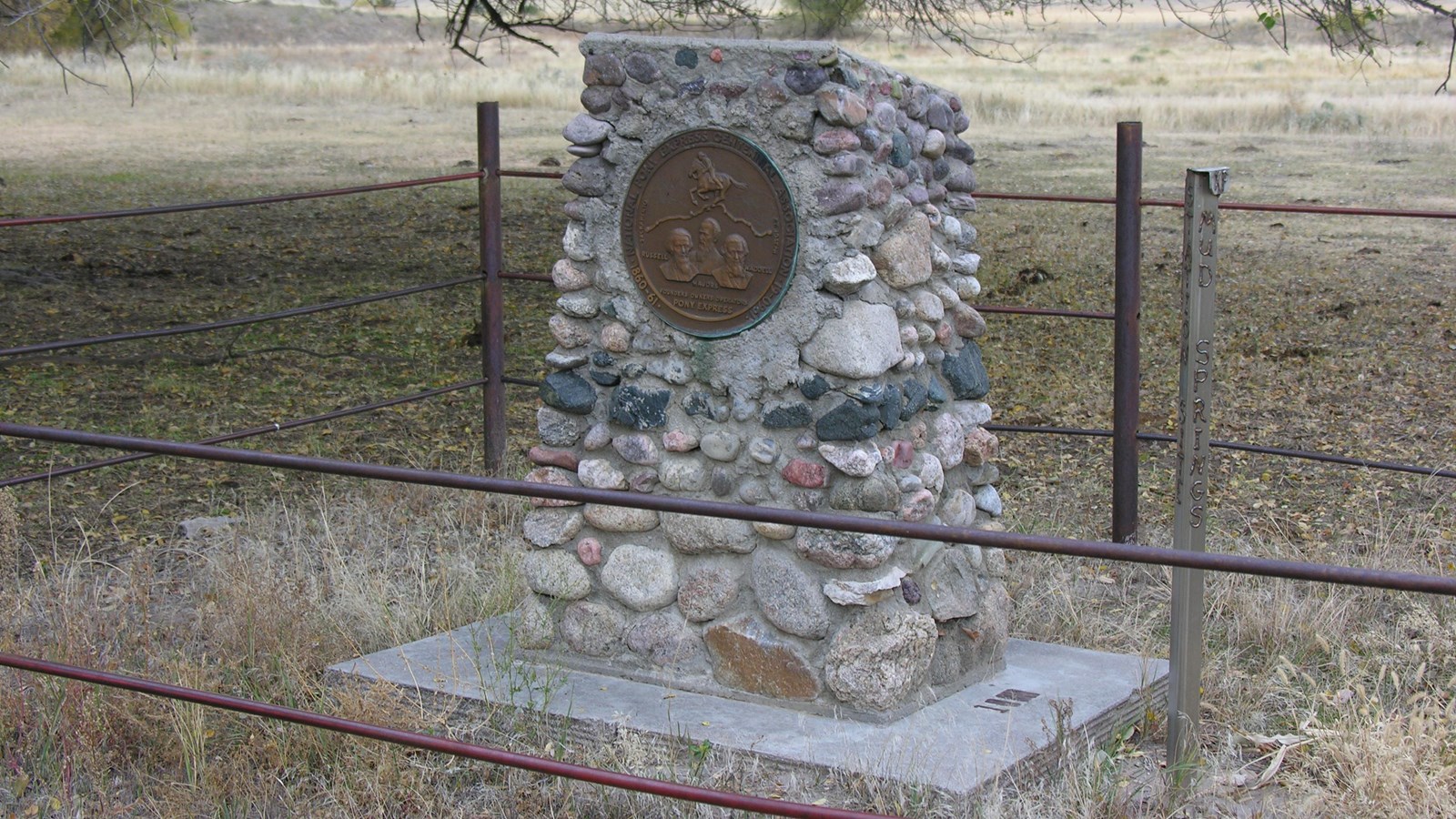
Mud Springs Station
NPS Photo
Quick Facts
Location:
The site of Mud Springs Station is about 12 miles southwest from Broadwater, Nebraska, on Mud Springs Rd. GPS 41.4844722222, -103.0172222222 From Broadwater, follow NE-92 west for 8 miles then turn left (south) on US-385 and continue for 8 miles. Turn right (west) onto unpaved Rd 68/107 and drive 1.5 miles. Turn left (west) on Mud Springs Rd and follow it about 0.3 mile to the site. A Nebraska State Historical sign for Mud Springs, on US-385 between Rd 72 and Rd 68, is less than 2 miles from the site. GPS 41.4911388889, -102.9837222222
Significance:
Mud Springs was a Pony Express and stage station on the “Jules Cutoff,” which was also used by Oregon-and California-bound emigrants. It was also the site of an Indian attack, successfully rebuffed by the US Army, in 1865.
Designation:
Historic site on the California and Pony Express National Historic Trails.
Amenities
3 listed
Historical/Interpretive Information/Exhibits, Parking - Auto, Scenic View/Photo Spot
Mud Springs Station has been described as one of Nebraska’s “least-known and least-visited historic properties,” yet this historically significant and easily accessible site is well worth visiting for anyone interested in the Pony Express or the Plains Wars of the 1860s.
Mud Springs lay along the “Jules Cutoff,” an alternate route that branched off the primary Oregon-California Trail at O’Fallon’s Bluff, followed the South Platte River to Julesburg, Colorado, and rejoined the primary corridor near Courthouse Rock, Nebraska. Stagecoaches began using this route in the late 1850s because it offered a direct connection to Denver City during the Pike’s Peak Gold Rush. Some Oregon- and California-bound emigrants also chose this route to avoid difficult terrain on the main trail. Because Mud Springs was the only water source on the dry stretch between Lodgepole Creek and the North Platte River, it became a natural location for a stage station and an emigrant campground.
The Pony Express established a home station at Mud Springs in 1860, and a relay office for the transcontinental telegraph began operating there in 1861. The Pony Express, rendered obsolete, shut down that same year, but daily stage service and emigrant travel continued.
In late 1864, amid widespread attacks by Plains Indian war parties across Nebraska and Colorado, the US Army stationed about a dozen troops at Mud Springs to protect travelers and the telegraph line. The site’s surrounding hills and ravines provided ample cover for close-range attacks, making it a difficult place to defend.
On the morning of February 4, 1865, Ft. Laramie (105 miles west of Mud Springs) and Ft. Mitchell (55 miles west) received urgent telegram messages: Mud Springs Station was under threat from Lakota Sioux, Cheyenne, and Arapaho warriors returning from their successful attack on Julesburg. Over the next 2 days, detachments from both forts reached the station, bringing the total number of defenders to about 170 men facing an estimated 500 to 1,000 warriors. After several intense skirmishes, the warriors withdrew on February 7, taking captured army horses and cattle. One soldier died and 8 were wounded in the Battle of Mud Springs. The army reported about 30 warrior fatalities, though a Cheyenne participant later stated that none were killed.
Mud Springs Station was abandoned by 1869 with the completion of the transcontinental railroad. No visible remains of the station survive today, but the surrounding landscape still closely resembles its appearance in the mid-1800s. Please be mindful that the land surrounding the monument is private property.
A Nebraska state historical sign for Mud Springs Station stands at a nearby turnout on US-385, between Rd 75 and Rd 68.
Site Information
Location (The site of Mud Springs Station is about 12 miles southwest from Broadwater, Nebraska, on Mud Springs Rd. GPS 41.4844722222, -103.0172222222 From Broadwater, follow NE-92 west for 8 miles then turn left (south) on US-385 and continue for 8 miles. Turn right (west) onto unpaved Rd 68/107 and drive 1.5 miles. Turn left (west) on Mud Springs Rd and follow it about 0.3 mile to the site. A Nebraska State Historical sign for Mud Springs, on US-385 between Rd 72 and Rd 68, is less than 2 miles from the site. GPS 41.4911388889, -102.9837222222)