



Last updated: July 25, 2026
Place
Columbus Loop Ferry
NPS Photo
Quick Facts
Location:
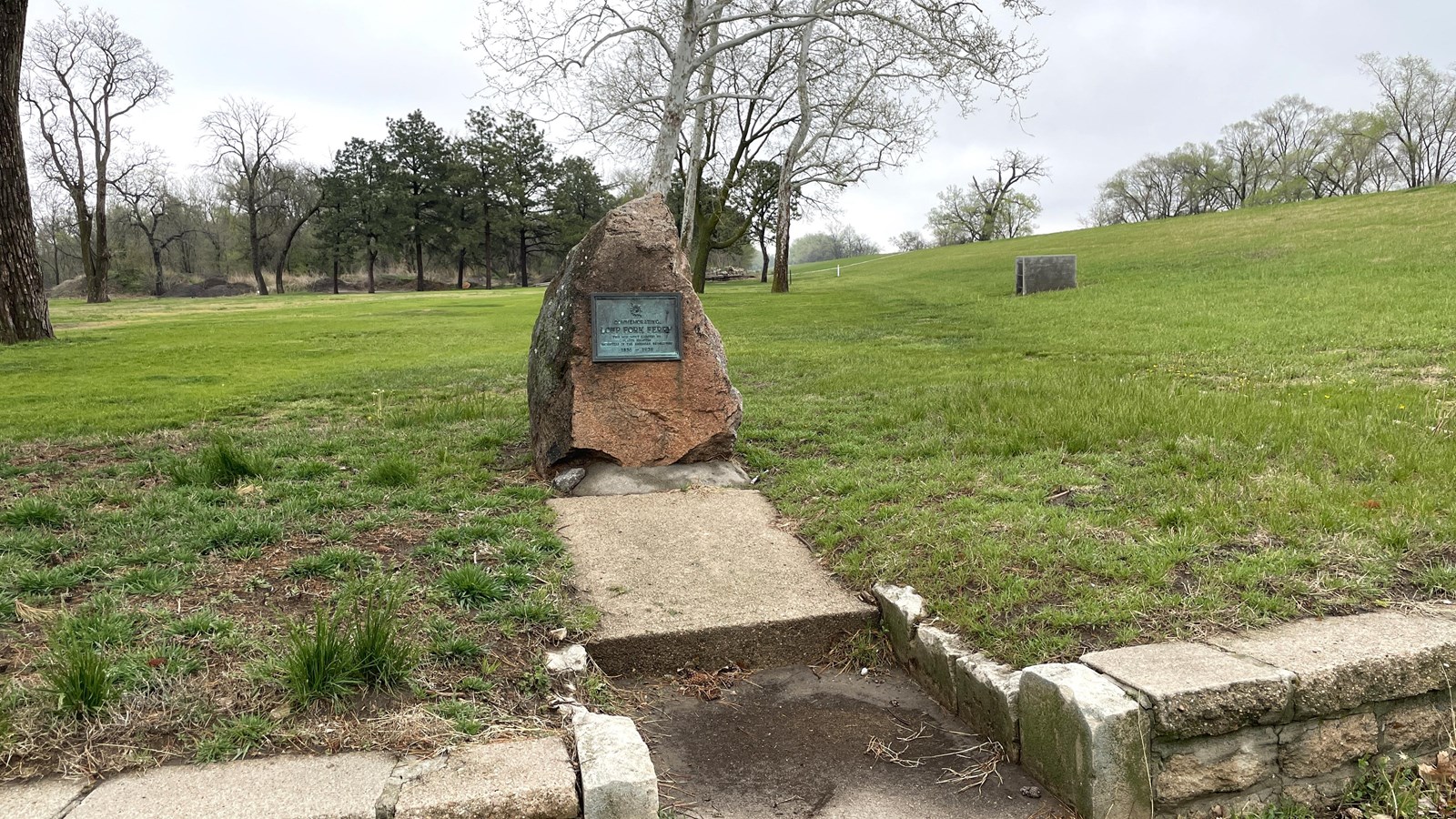
DAR marker on South Dr., SE of East Skatepark above Loup River, Pawnee Park, Columbus, NE GPS 41.41823333 -97.36158333
Significance:
In 1847, Brigham Young’s vanguard of Latter-day Saints reached the Loup Fork in this area and decided to follow the river upstream to find a suitable ford—a decision that took them on a 50-mile detour. The permanent ferry established on the Loup River at Columbus, NE, in 1858, provided emigrants with a more direct route west.
Designation:
Historic site on the California and Mormon Pioneer National Historic Trails.
MANAGED BY:
City of Columbus Parks and Recreation
Amenities
10 listed
Accessible Sites, Benches/Seating, Cellular Signal, Historical/Interpretive Information/Exhibits, Parking - Auto, Parking - Bus/RV, Picnic Shelter/Pavilion, Picnic Table, Playground, Restroom
From Liberty Pole Camp (present Fremont, NE), the 1847 Latter-day Saints vanguard traveled along the north side of the Platte River until reaching the mouth of the Loup Fork, a tributary that drains into the Platte from the northwest. French traders called the river Loup (meaning “wolf”) after the Skidi Pawnee, or Wolf People, who lived along its banks. To continue along the Platte, the emigrants needed to cross the Loup—but that stream, with its marshes, soft banks, and quicksand bottom, presented a serious hazard to wagons and livestock. The vanguard company decided to continue up the Loup, rolling through the south end of present-day Columbus, to find a safer place to ford. This decision would take them on a 50-mile detour.
Later travelers on the north side of the Platte followed their trail but found other places to ford or ferry the Loup River, depending on conditions the year of their travel. Many of the ferries were rafts created from wagon boxes or cottonwood logs for immediate or short-term use. In 1858, at the recommendation of the US Army, a permanent ferry was established on the Loup River south Columbus. This ferry became popular because it allowed travelers to continue along the Platte River uninterrupted, saving them many unnecessary miles. A granite monument erected by Daughters of the American Revolution at the south end of Pawnee Park in Columbus commemorates this crossing.
At least one temporary ferry, likely run by Latter-day Saints, operated in this area before 1858. The 1856 Ellsworth Handcart Company—the first emigrant handcart brigade to cross the plains to Utah—reported using a ferry in this vicinity. On the evening of July 26, shortly after the handcart emigrants had completed their crossing to the south side of the Loup, a “most terrific storm of thunder and lightning” pounced upon the company’s camp. Huddled on the open prairie without tents or other shelter, these people lay exposed to the elements. Lightning struck and killed a 58-year-old man, burned a boy (he survived), and knocked down 2 other adults. The man who died left behind a wife and children. Another emigrant, John Kettle, remarked mildly of the event in his journal: “all well then for it is the work of the Lord.”
Site Information
Location (DAR marker on South Dr., SE of East Skatepark above Loup River, Pawnee Park, Columbus, NE GPS 41.41823333 -97.36158333)