



Last updated: December 29, 2025
Lesson Plan
Honorable Duty- Grades 10 - 11
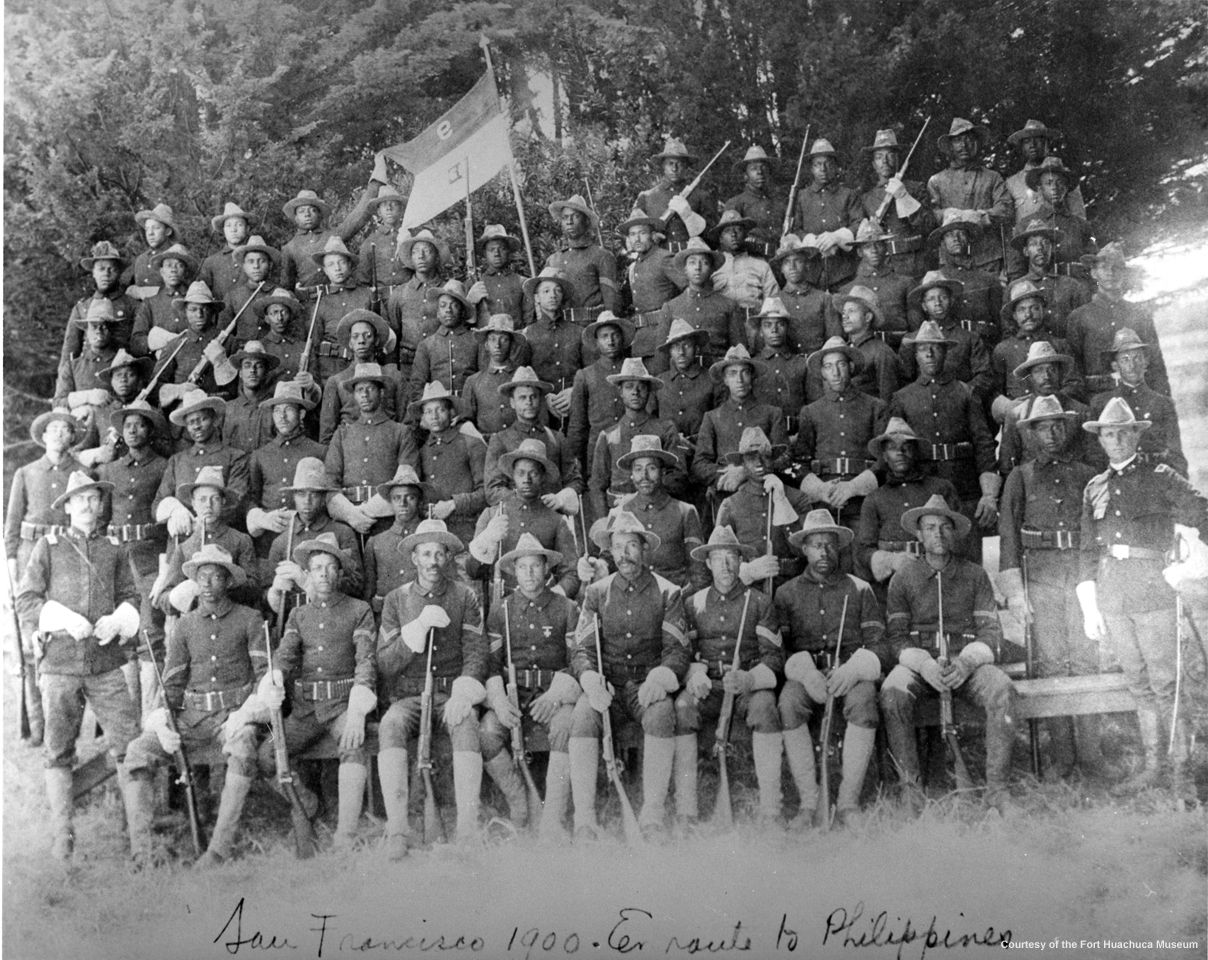
Troop embarking to the Philippines during the Philippine-American War
GGNRA Park Archives
- Grade Level:
- High School: Ninth Grade through Twelfth Grade
- Subject:
- Social Studies
- Lesson Duration:
- 60 Minutes
- Common Core Standards:
- 11-12.RH.1, 11-12.RH.2
- State Standards:
- California History Social Studies Standards
HSS-10.4.3
HHS- 11.4
Essential Question
In what ways did the exemplary military service of the Buffalo Soldiers enable the doctrine of White Supremacy?
Objective
Students will use historical analysis and critical thinking skills as they consider expansionism through the eyes of the African American soldiers and press. Using these resources, students also can conduct research into primary and secondary sources that continue the story of African Americans in the 20th century, as well as the national debate on the quest by other racial, cultural, and sexual minorities to obtain full citizenship through military enlistment.
Background
Honorable Duty is designed to supplement your unit on the Spanish American War, the War for Independence in the Philippines, and American Expansionism in the Pacific. It also can be utilized for studies of civil rights and racism during the early 20th century. Resources in this packet introduce students to the African American soldiers who served in segregated army units during the early 1900s.
Preparation
Materials
-
CD with narrative
-
Buffalo Soldiers in the Philippine-American War Handout
-
Inquiry based questions in regards to the narrative and reading
-
Quotes from the viewpoints of Buffalo Soldiers for and against the war, imperialists, anti-imperialists, and Filipinos against the war.
-
Student notebooks
Materials
Lesson Hook/Preview
Students interpret issues of expansionism in the Philippines through the eyes of the Black soldiers and their community. Using the radio play with re-enactments from soldiers and newspapers articles, as well as a series of written quotes published during the war in the Philippines, students begin to understand imperialism from the viewpoints of the African American community, as well as the viewpoints of imperialists, anti-imperialists and Filipinos.
Procedure
-
Teacher posts the essential questions for the CD with narrative; 1) identify two of 4 locations outside of mainland America where the Buffalo Soldiers served. 2) What did the Filipino person in the radio-play have to say to the Buffalo Soldiers? 3) According to the radio-play, the war in the Philippines lasted three years. Is this correct? 4) Why was Ida B. Wells mentioned in the radio-play? 5) How many Buffalo soldiers made their home in the Philippines after the war? 6) Was it appropriate for African Americans to serve in the Army while their communities were being terrorized and their families subjected to unfair treatment and a denial of full citizenship?
-
The entire class listens to the cd and record their answers in their notebooks. Students then divide into their small groups and each receives a handout along with a quote from either the Buffalo Soldiers viewpoint, imperialist viewpoint, anti imperialist viewpoint or the Filipino viewpoint, of the Philippine American War.
-
Each group reads the handout and then discuss and come to an agreement on the meaning of their quote.
-
Each group selects a spokesperson that will give a short presentation (1-2 minutes) on the viewpoint of their quote.
-
The class then generates two or three key questions they have about the Buffalo Soldiers. These questions are posted in the classroom.