



News Release
DOI photo
News Release Date: September 1, 2026
Initial assessments indicate that 60% to 80% of Santa Rosa Island's iconic Torrey pines may perish as a result of the largest wildfire in Channel Islands National Park history.
In response, park officials have initiated urgent measures to stabilize this rare forest before the fall rainy season threatens its prospects for long-term recovery.
The Santa Rosa Island Fire burned 18,379 acres, almost two-fifths of the island, between May 15 and June 4, 2026. While many of the island's grasslands and shrubs are expected to recover naturally, the fire severely impacted the island's globally rare Torrey pine grove, one of only two naturally occurring Torrey pine populations in the world, and the only location for the island subspecies.
The most recent inventory, conducted in 2014, documented more than 24,000 Torrey pines of all ages on Santa Rosa Island, including approximately 3,000 mature, cone-producing trees.
Erosion-control crews are working to stabilize burned slopes while another team is already preparing for the forest's future.
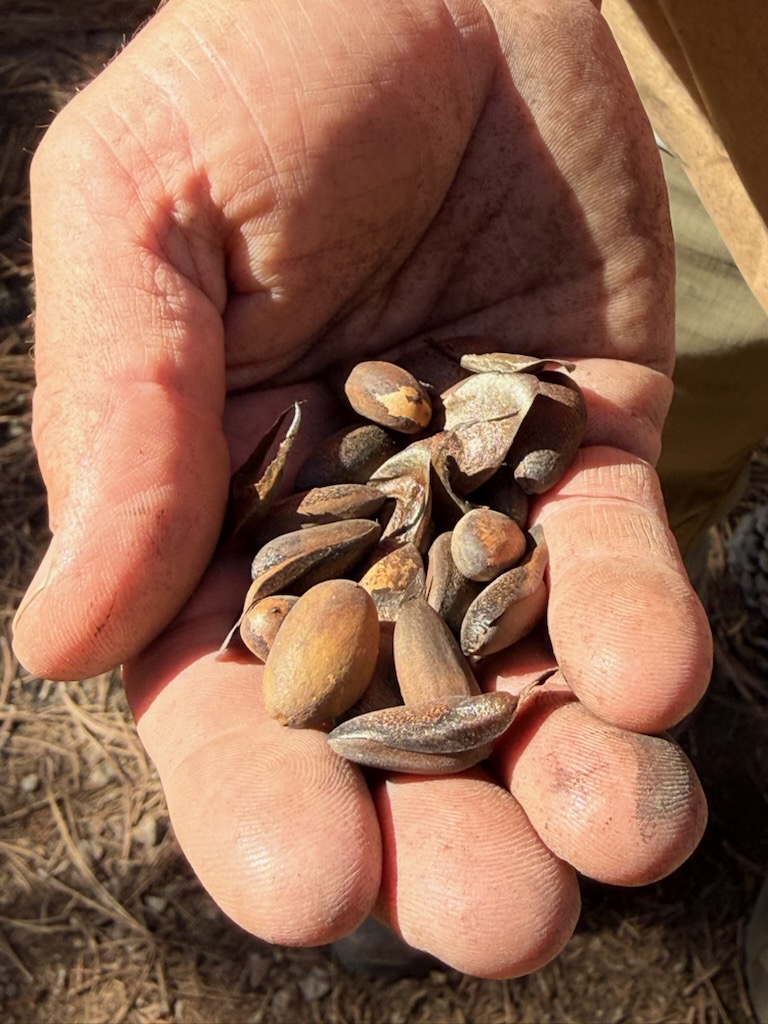
Park staff and cooperators have collected more than 14,000 Torrey pine seeds released from cones after the fire. Viable seeds will be propagated in an island nursery and grown into seedlings that will eventually be planted in key locations within the burned grove. The remaining viable seeds will be broadcast and placed in a seed bank.
Under the park's Emergency Stabilization and Rehabilitation Plan, approximately 300 to 500 seedlings could be planted each year across a 15-acre restoration area.
Burned hillsides within the Torrey pine grove are highly vulnerable to erosion, and intense winter storms could wash away the fragile topsoil needed for future restoration.
"The potential loss of so many mature Torrey pines is heartbreaking," said Channel Islands National Park Superintendent Ethan McKinley. "But we must resolve ourselves to focus on what we can save, and the next few months are critical. The fire may be over, but we're now in a race against time. Protecting these slopes before winter storms arrive gives us the best opportunity to restore this extraordinary landscape for future generations."
Crews and volunteers are beginning emergency work to stabilize burned hillsides by installing wattles, long tubes made of natural fibers that slow rainwater and help keep soil from washing away. These treatments are designed to hold soil and seeds in place until native vegetation begins to recover naturally.
About 250 wattles (over 4,500 linear feet) have already been rolled.
While many mature trees cannot be saved, biologists say the soil beneath them can. If heavy winter rains wash away the remaining topsoil, it could significantly reduce the success of future reforestation efforts.
A recently completed Burned Area Emergency Response (BAER) assessment identified protecting the Torrey pine grove as one of the park's highest priorities before the onset of winter weather.
Based on those findings, the park's Emergency Stabilization and Rehabilitation Plan recommends cleaning culverts to protect the island's road system, reducing flood risks around Water Canyon Campground, stabilizing vulnerable archeological sites, repairing damaged trails, and monitoring and treating invasive plants that could spread following the fire.
The park is drawing on more than 15 years of restoration experience on Santa Rosa Island. National Park Service staff, the United States Geological Survey, California Institute of Environmental Studies, and other partners have developed techniques to restore the island's rare cloud forest, reversing decades of erosion and habitat loss. Many of the same restoration techniques, from erosion control to native plant propagation, will now be used to help recover the Torrey pine forest.
The National Park Service will work with numerous partners throughout the recovery, including the Santa Ynez Band of Chumash Indians, whose members have played an important role in the stewardship of Santa Rosa Island's native ecosystems and are expected to assist with future restoration efforts.
Visitors will begin seeing restoration work immediately, but full recovery of the Torrey pine forest will take generations.
For more information related to the Burned Area Emergency Response, visit the Santa Rosa Island Fire website.
Last updated: September 2, 2026