



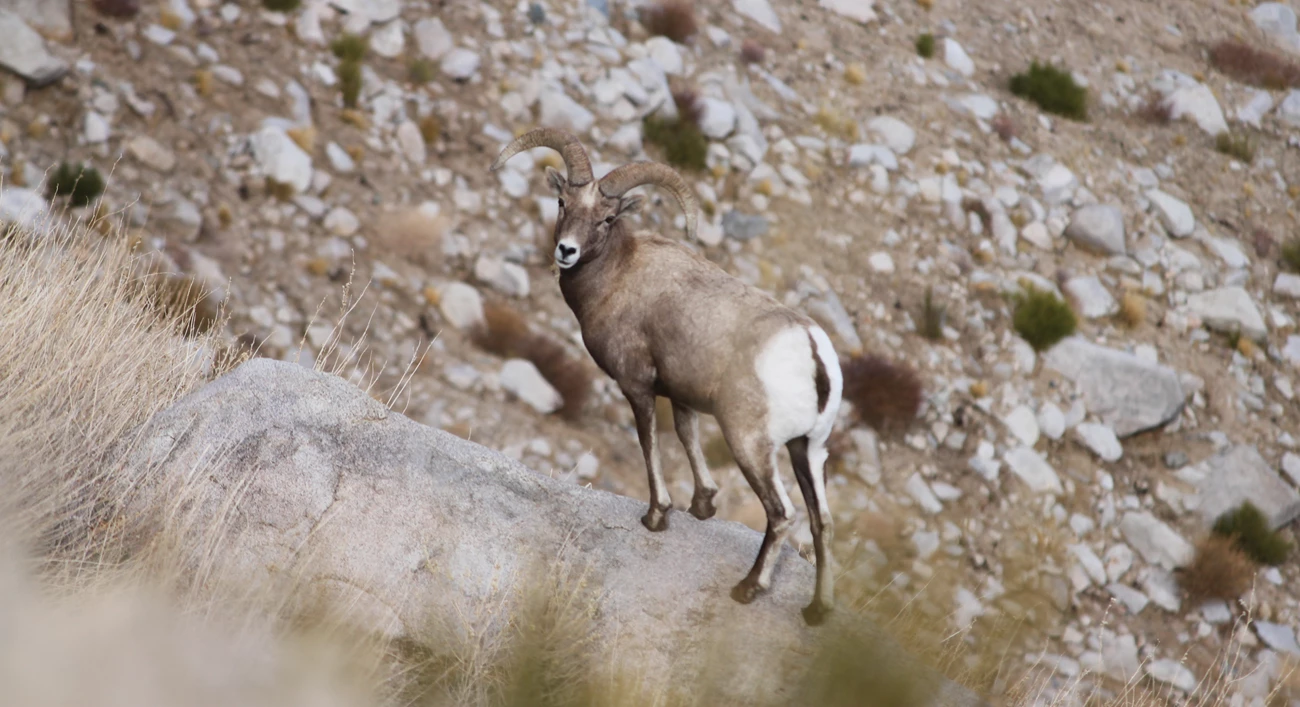
Steve Yeager Sierra Nevada bighorn sheep are once again at home in Yosemite National Park’s supremely beautiful Cathedral Range after an absence of over 100 years. John Muir’s “bravest of all Sierra Mountaineers” are now thriving across much of Yosemite’s high country–both along the crest of the Sierra and within the heart of Yosemite’s wilderness. The bighorns’ return speaks to the inherent value of wilderness lands made whole again by the graceful presence of a creature whose very life, now saved from extinction, embodies the wilderness ideal. Believing in the tenets of the wilderness ideal, extraordinary individuals used this idea to shape policy and practice with a clear goal of saving the Sierra Nevada bighorn sheep from imminent extinction. Acting while little time remained, the initial Yosemite bighorn restoration in 1986 relocated 27 of the remaining Sierra Nevada bighorns to the alpine crest of the Sierra at the Yosemite National Park-Inyo National Forest border. Known as the Yosemite Herd, the relocated bighorns suffered severe setbacks due to mountain lion predation and extreme winter weather. Despite the loss, an important precedent had been set and the building blocks for further attempts were in place. By the late 1990s, Californians faced the reality of a mere 125 total Sierra Nevada bighorns alive in the Sierra, with 20 individuals in the Yosemite Herd among those fragile numbers. The fervor and concern expressed by California citizens over the desperate plight of the Sierra Nevada bighorns reaped significant results: U.S. Fish and Wildlife Service reacted by listing the Sierra Nevada bighorn sheep as endangered and the California legislature, with a rare four-fifths majority vote, approved funding for a Sierra Nevada bighorn recovery plan that proved highly effective in stopping the unthinkable extinction of the Sierra Nevada bighorn sheep. 
Ryan Kelly A committed leadership team that cared deeply for the fate of the Sierra Nevada bighorn, took ownership of the Sierra Nevada Bighorn Sheep Recovery Program, applying scientific methodology and the use of GPS satellite tracking to their successful relocation efforts. The Sierra Nevada bighorn sheep restored to Yosemite’s Cathedral Range in March 2015 are now among the 600 bighorns who today, in John Muir’s words, are “leaping unscathed from crag to crag…and developing from generation to generation in perfect strength and beauty” in the High Sierra. If there was ever an alpine mountain that needed the wild presence of the Sierra Nevada bighorns to become complete once again, it had to be Yosemite’s Cathedral Range. Sarah Stock, a Yosemite National Park wildlife biologist who supervised the Cathedral herd’s restoration, expressed the sentiments of many with these words: “It has been a century since Sierra Nevada bighorn sheep disappeared from the Cathedral Range, so it is remarkable to have them back in the heart of the park’s wilderness. Not only is the animal restored to its ancestral habitat, but we are restoring our personal connection with wilderness and what it means to be in a wild place."
Visit our keyboard shortcuts docs for details
Sierra Nevada bighorn sheep are the rarest mountain sheep in North America. After the population dropped to around 100 animals in 1995, this unique sub-species was listed as an endangered species. In the spring of 2015, these charismatic animals were released into the heart of Yosemite for the first time in over 100 years. |
Last updated: October 1, 2024