



Yosemite is home to a small variety of amphibians as compared to more temperate or tropical climates. This may be due in part to past glacial activity, and in part the park's Mediterranean climate which includes hot, dry summers and cold, wet winters. 
Ben Lehman 
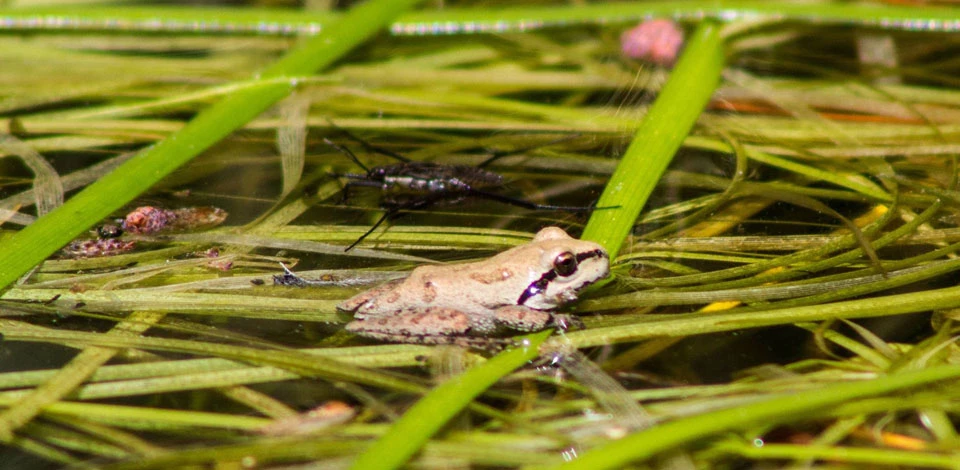
The diminutive Pacific treefrog is Yosemite's most common frog species. You can find them throughout the park, at all elevations and in nearly all habitats. Treefrogs are even found in cracks on the face of El Capitan.You are most likely to hear treefrogs calling in meadows and ponds during the spring. 

The Yosemite toad has also experienced serious declines, losing at least 50% of their populations. This once common wet meadow species is rarely encountered by the public today; however, its uniquely different coloration between the sexes, musical call, and stately toad behavior is a treat for those fortunate enough to encounter them. Visitors to Yosemite's high-country have described the Yosemite toad's call as a strikingly clear, high-pitched trill with its mellow notes being a "pleasing addition to the chorus of bird songs just after the snow leaves." 
The nonnative bullfrog is a voracious predator that has been implicated in the decline of many native animals. Bullfrogs eat anything they can get their mouth around including: native frogs, toads, salamanders, small mammals, snakes, turtles, even birds and bats. Bullfrogs likely played a part in the loss of populations of western pond turtles and California red-legged frogs in the park. Because bullfrogs have a huge impact on the native wildlife, we have been eradicating them from Yosemite Valley. 
Al Golub The California red-legged frog was made famous by Mark Twain in his story the “Celebrated Jumping Frog of Calaveras Country.” It is 2-5 inches long and is the largest native frog in the western United States. For fifty years however, the California red-legged frog was absent from Yosemite National Park. The disappearance of the red-legged frog from Yosemite is the result of a variety of decisions made over nearly a century. As specific conditions in Yosemite Valley improved over time, we were able to focus on bringing this frog species home. We began a collaborative project to re-introduce these frogs to Yosemite in 2016 with the first frogs released in 2017. We will continue to monitor and manage the species to enhance their surivival in their natural habitat. More Information
References Scientists published two papers on the effects of chytrid fungus on the mountain yellow-legged frog species complex, which includes the Sierra Nevada yellow-legged frog (Rana sierrae), and the Sierra Madre yellow-legged frog (Rana muscosa). The Sierra Nevada yellow-legged frog can be found in Yosemite.
|
Last updated: November 19, 2024