National Park Service LogoU.S. Department of the InteriorNational Park ServiceNational Park Service
National Park Service:  U.S. Department of the InteriorNational Park Service Arrowhead
Tumacácori National Historical Park San Cayetano
view map
text size: largest larger normal
printer friendly
Tumacácori National Historical Park
Natural Features & Ecosystems
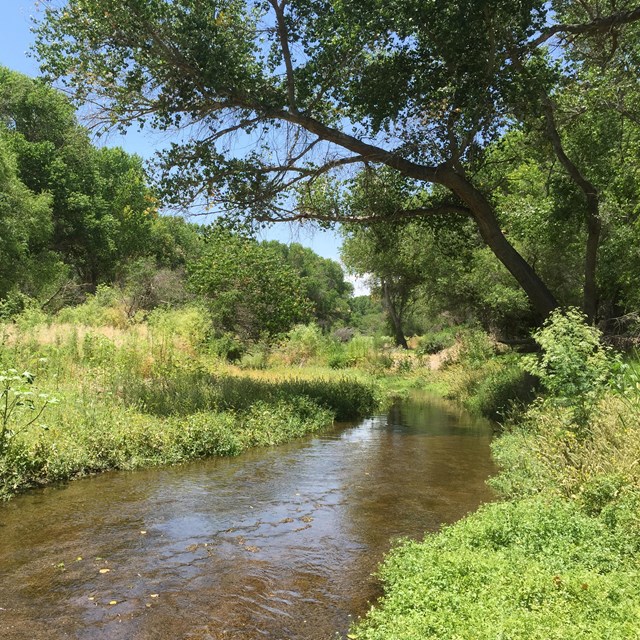
Santa Cruz River riparian environment

Photo by Don Garate

Santa Cruz River riparian environment

Cottonwood – Willow Riparian Environment

The Tumacácori Mission unit of Tumacácori NHP protects a mile of the Santa Cruz River and its rare southwest cottonwood-willow riparian (streamside) environment, one of the most endangered ecosystems in the United States. A “riparian” area is the lush corridor of water – loving plants growing along the banks of a river.  These ecosystems are essential habitat for many plants, birds, and other animals which could not otherwise live in the surrounding desert and scrub environments.

 
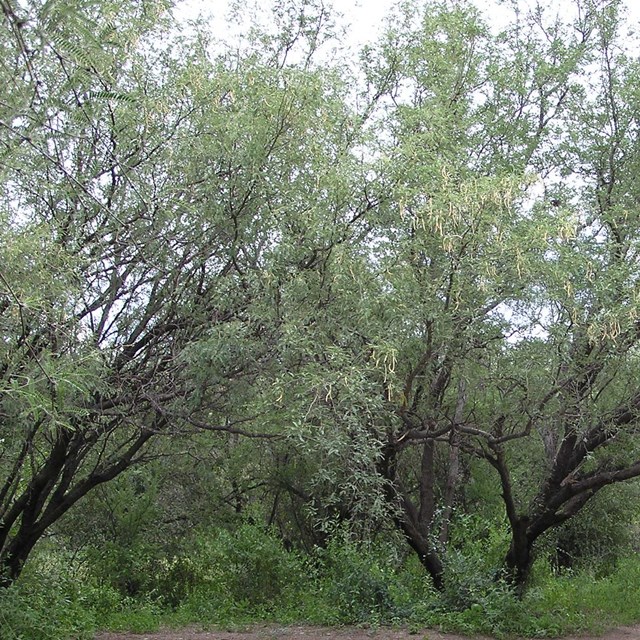
Mesquite bosque

NPS Photo

Mesquite bosque

Mesquite Bosque Environment

Away from the riverside, the land in Tumacácori is covered with mesquite bosque (forest). Hackberry, ash, and Mexican elderberry mix with mesquite, acacia and palo verde trees near the riparian corridor.

 
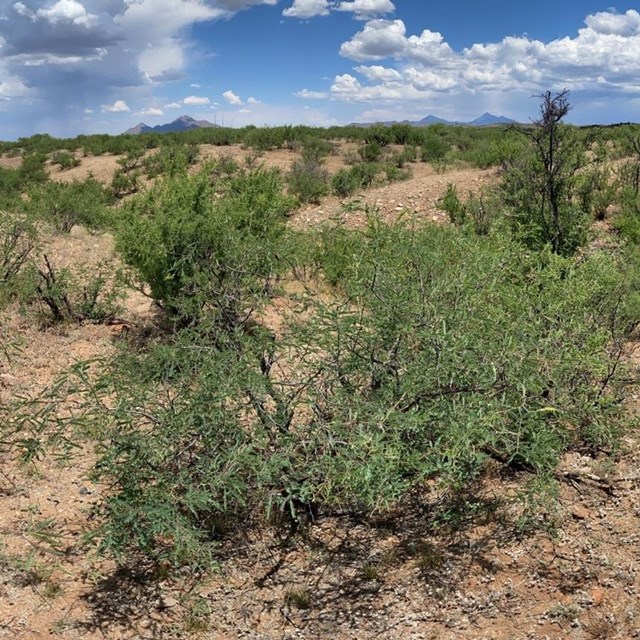
Mesquite scrublands

Mesquite scrub environment

Mesquite Scrub

Farther from the river in the hills around Tumacácori, as well as at the Calabazas and Guevavi Mission units, the land is drier. The shade of the lowland mesquite bosque environment gives way to primarily mesquite and acacia, with the addition of cholla and barrel cacti. 

You are exiting the National Park Service website

Thank you for visiting our site.

You will now be redirected to:

We hope your visit was informative and enjoyable.

Last Updated: June 04, 2011 at 16:59 MST