



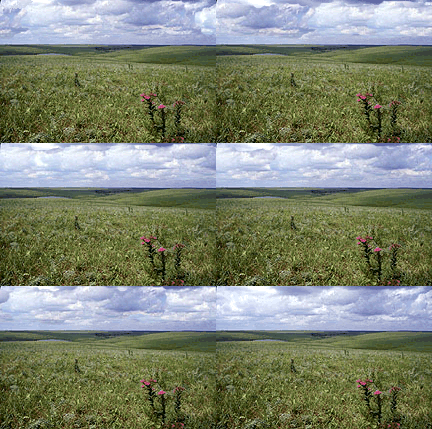
NPS Image "We shall never achieve harmony with land, any more than we shall achieve absolute justice or liberty for people. In these higher aspirations the important thing is not to achieve, but to strive." -Aldo Leopold (Born in Iowa, 1887) Tallgrass Prairie National Preserve, established November 12, 1996, is the only unit of the National Park System dedicated to the rich natural and cultural history of the tallgrass prairie ecosystem. This 10,894 acre portion of the once vast tallgrass prairie is being preserved as a critical resource for the benefit, education, and enjoyment of this and future generations. It is a unique public/private partnership between the National Park Service and The Nature Conservancy. The National Park Service's Heartland Inventory and Monitoring Network monitors the plants, animals, and natural features in the preserve over time. Monitoring these natural resources and how they might be changing can help park managers protect the preserve's special tallgrass prairie communities. A SEA OF GRASSTallgrass prairie once covered more than 170 million acres of the United States, from Indiana to Kansas and from Canada to Texas. Nearly all of it is gone, plowed under for agriculture or urban development. An ancient past survives in the irreplaceable Flint Hills tallgrass. It takes all season for the grasses to reach their maximum heights. The phrase "Tall in the Fall" is one to remember when visiting the preserve. Like everything in nature, they start out small. By early October the grasses reach their limits and turn golden brown. This sea of grass was once a shallow sea of water. Between 200 and 300 million years ago, the gray and white limestone and steel tough flint began to form on the Permian Sea floor. The resulting Flint Hills geology was too shallow and rocky for plowing but excellent for pasture. The natural prairie cycle of weather, fires and animal grazing has sustained the diverse tallgrass ecosystem ever since. The list of local species found include over 500 plants, nearly 150 birds, 39 reptiles and amphibians, and 31 mammals. The threatened and endangered Topeka Shiner is a minnow that dwells here and in other prairie streams. Much of the prairie flora and fauna are too small to see from a passing car. Take the time to stop and look closer. A subtle world of special beauty and natural wonder is waiting. 
Save the Monarch Migration One Butterfly at a TimeMonarch butterflies and many pollinators are declining in number. The widespread planting of herbicide tolerant corn and soybean lines, intensive farming, and the ethanol mandate have led to a rapid loss of habitats for monarchs, many species of bees, and other pollinators. This loss of habitat threatens the monarch migration and all the species dependent on the services of pollinators to provide the fruits, nuts, seeds, and foliage they feed on. Monarchs and pollinators need our help. Planting milkweeds provides monarch caterpillars with host plants. Nectar plants help adult monarchs and other pollinators. Help maintain the monarch migration and sustain the pollinators whose services maintain our ecosystems. Learn more about what you can do to help Bring Back the Monarchs program at MonarchWatch.org. You can even build a Monarch Waystation in your backyard. * Did you know over 70% of our native plants and more than 30% of our crops are pollinated by insects? 
NPS Photo Experience the PrairieNature TrailsThree pet-friendly trails are open 24 hours all year. Nature trails have deeper soil yielding taller plants during the fall. Great for stretching your legs if you feel like a half mile to 6 mile trek. Backcountry TrailsExplore deeper into the prairie 24/7. Cautiously walk through the upland vistas with roving bison. The further you get from the visitor center, the more the landscape surrounds you. Over 40 miles of trails branch off from 4 parking areas. Enough to explore at least twice! Prairie ToursThe prairie has a long history of ecology and culture. Check out the podcasts, cellular tours, and virtual tours of the preserve, schoolhouse and historic ranch. Ranger tours are also available by reservation. Learn About Recent Natural Resource IssuesWhite Nose Bat Syndrome : the bat-killing fungus spreading across North America. Read More About Heartland Network Monitoring on the Preserve |
Last updated: March 6, 2022