People have lived in the Blue Ridge Mountains for at least 9,000 years. American Indians hunted and gathered game, fruit, nuts, and berries on the upland slopes. Some constructed permanent villages at the lowest elevations in the Piedmont and Shenandoah Valley outside the Park.
The earliest European settlers moved into the foothills by the 1750s. These settlers moved upwards in a constant search for land on which to farm, graze livestock, and tend to orchards. In the mid to late 1800s people purchased mountain land for the extraction of resources: copper, lumber, bark for leather tanning, and water for powering mill operations. Others early saw the beauty of the Blue Ridge as a commercial product in itself, and built resorts catering to visitors from the cities.
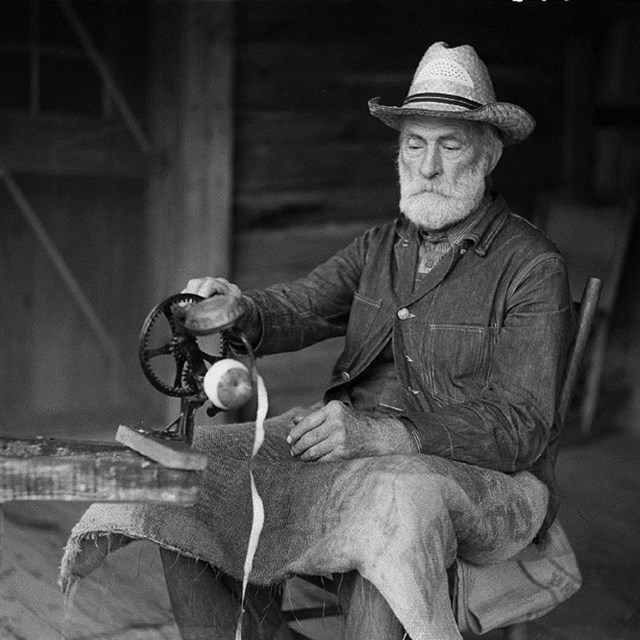
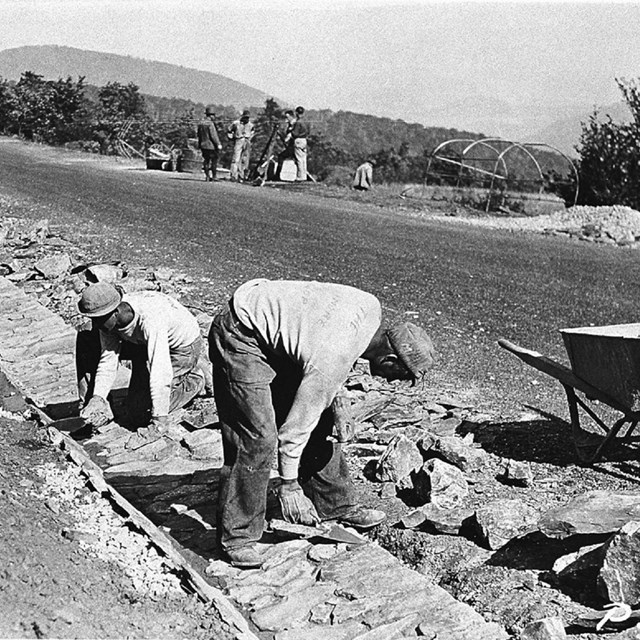
There are some groups and individuals that have left a significant mark on Shenandoah National Park. The several hundred mountain residents who lived on the land that became the Park left behind their homes and communities, forced to start anew. The Civilian Conservation Corps employed hundreds of young men to build roads and trails, to re-establish wilderness and create a park that people would come to see.
George Freeman Pollock saw a business opportunity in the clean air and mountain views and established Skyland Resort, a getaway from the industrial cities nearby. Herbert and Lou Henry Hoover built their own getaway here, Rapidan Camp, as a retreat during Hoover’s often tumultuous Presidency. Park managers and visitors have played a role in Shenandoah National Park’s history. Park managers initially established segregated facilities. Black visitors could picnic and camp in Lewis Mountain, but nowhere else. Desegregation occurred officially in 1950, yet the impact of separate facilities did not vanish overnight.
People from Shenandoah’s past can be found all around. If you pay close attention you may walk past the foundations of an old home site or through a cluster of apple trees that were once an orchard. You may stop at an overlook and stand on a rock wall that a young man from the CCC built years ago. Every trail and campground, every overlook and bend on Skyline Drive has been travelled before.
You, our visitors today, decide what Shenandoah National Park will become for people who have yet to visit this enchanting place.