National Park Service LogoU.S. Department of the InteriorNational Park ServiceNational Park Service
National Park Service:  U.S. Department of the InteriorNational Park Service Arrowhead
Saguaro National Park Students Using Radio Telemetry to Track Tortoises
view map
text size: largest larger normal
printer friendly
Saguaro National Park
Guided Programs
The desert provides food, medicine, materials, and more

To see a monthly listing of programs offered at Saguaro National Park, click on the link below:

Interpretive Programs Feb. - Rincon Mountain District (East) Monthly Schedules

Interpretive Programs Feb. - Tucson Mountain District (West) Monthly Schedules

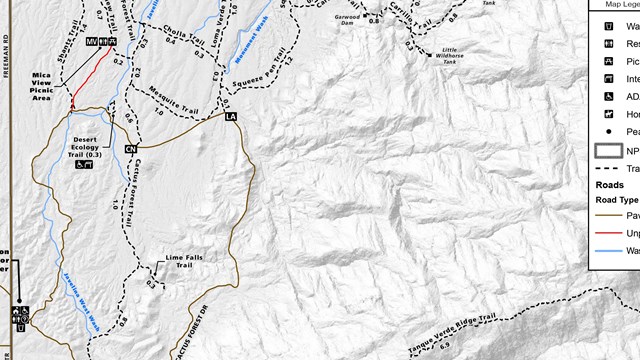
For a map of Saguaro National Park's two districts, click here...

For information about park entrance fees and federal passes that are available and accepted at Saguaro National Park, go to the park's Fee Information page.

 
Birding @ Saguaro National Park (East)

Come see the birds here at Saguaro National Park (East District).

Saguaro National Park (East Districts) is a true Tucson treasure. The park's cacti and other provide a unique haven for some of the United States' rarest birds, including Vermilion Flycatcher, Whiskered Screech Owl, roadrunners, Gila Woodpecker and Gambel's Quail. Other birds found in the park are the Northern Goshawk, Yellow-eyed Junco, Mexican Jay, and Anna's Hummingbird, Cactus Wren, Common Raven, Curve-billed Thrasher, Elf Owl, Harris's Hawk, Phainopepla, Pyrrhuloxia, Verdin, White-winged Dove and more.


February 3, 10, 24                8:30 a.m.        Desert Bird Walk       
Easy 1 Mile Walk

Join our naturalist, Vicki Powers for an easy 2-hour walk in search of desert birds. Wear comfortable shoes and bring water. We will meet at the Visitor Center at the Rincon Moutain District (East) 3693 S Old Spansih Trail, Tucson, AZ 85730. Call for additional details 520.733.5153

 
Tucson Desert sunset

"I've never seen anything as majestic as the desert at sunset." ~ Jamie Trevillyan

Desert Seasons


Saguaro National Park is divided by the City of Tucson, the only major city located in the Arizona Upland. It is always interesting to hear new residents and visitors protest about the lack of seasons here in the desert. Interestingly, this part of the Sonoran Desert actually has five seasons. Learn more about the Desert Seasons

Winter Season - Late Fall to Early Spring Programs
With daytime temperature from the low 50's to the high 70's, Saguaro National Park is the perfect place to join one of our guided walks or informative talks. These activities are offered throughout the busy winter season (November through March). Interpretive programs vary from easy strolls through a cactus garden to strenuous hikes.*  

Summer Season - Late Spring to Early Fall Programs
As we get deeper into the summer season, temperatures will range from mid-80's to low 100's. This is a great time to experience the desert as the day breaks or in the late of the day as the sun disappears behind the surrounding mountain ranges. During the late spring and summer months Saguaro National Park only offers interpretive programs on an intermittent basis.*

*Some interpretive programs are accessible to persons with physical disabilities or require a reservation to participate. This information will be noted on the schedule along with a phone number to make a reservation or get more information. Schedules are subject to change - please call the visitor centers for updates.

You are exiting the National Park Service website

Thank you for visiting our site.

You will now be redirected to:

We hope your visit was informative and enjoyable.

Snow on the spines of a Saguaro Cactus

Did You Know?
Even though the Sonoran Desert is known as very hot and dry place, snow sometimes falls and accumulates on the desert floor of Saguaro National Park. When it does it turns the desert into a winter wonderland.
more...

Last Updated: January 31, 2012 at 15:25 MST