-
High Desert Temperatures
Desert temps are over 100 degrees with extremely low humidity. Drink water before you hit the trails, and during your hike drink a quart of water per hour and some form of electrolytes to replace minerals your body needs. Wear a hat and sunscreen. More »
-
Fire Restrictions in effect for Saguaro National Park
Due to increased fire danger in southern Arizona, Saguaro National Park will implement fire restrictions in both the Rincon and Tucson Mountain Districts, beginning Wednesday, May 22, 2013. More »
-
Tucson Mountain District (west) road re-opened
The Golden Gate Road has been re-opened north of Sendero-Esperanza and is is now rated for high clearance vehicles due to the rough nature of the terrain. More »
Invasive Plants
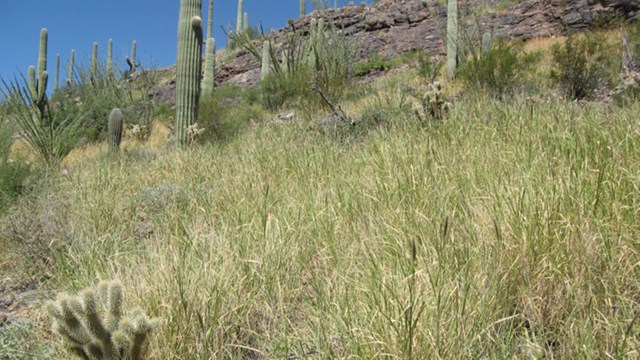
For invasive plant management in the Sonoran Desert, buffelgrass is the arch-enemy. Over 90% of our invasive plant management efforts are directed against buffelgrass Bethany Hontz NPS staff Whether they arrived by wind or water, bird or boots, or were planted intentionally for soil conservation or forage, invasive plants are a threat in
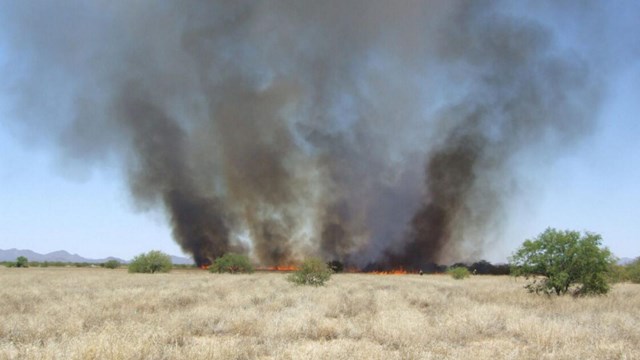
Saguaros and many other native plants and animals didn't evolve with fire and will die from hot intense fires East Valley Tribune Buffelgrass: Wanted Dead and Gone Saguaro
Not all non-native plants are invasive or pose a threat to the desert. The tomato plant couldn't survive here without human assistance. freestockphotos.biz Native, Non-native, and Invasive Plants…What's the Difference? Native plants evolved as part of the ecosystem and have been part of our landscape since before the arrival of Europeans.They have adapted through natural selection to the soil, climate, and other plants and animals of the ecosystem.Non-native plants, also known as "exotics" or "aliens," are recent arrivals from other ecosystems.The diseases, pests, and predators that keep most species in check may not exist for them in our ecosystem, creating a potential for them to become invasive.Not all non-natives are invasive; non-native species such as roses, petunias, and tomatoes, present no threat to our park.Non-native invasive plants spread aggressively and out-compete the native plants, disturbing the natural balance of the ecosystem. Although a few native plants, such as desert broom, may be considered invasive, management efforts at Learn more about our worst invasive plants: -Buffelgrass (Pennisetum ciliare) -Onion weed (Asphodelus fistulosus) -Salt cedar or tamarisk (Tamarix species) -Soft feather pappus grass (Enneapogon cenchroides) - - - Management Strategies at Saguaro National Park Invasive plant management is not a one-size-fits-all type of effort. For our efforts to succeed, we implement species-specific management strategies.
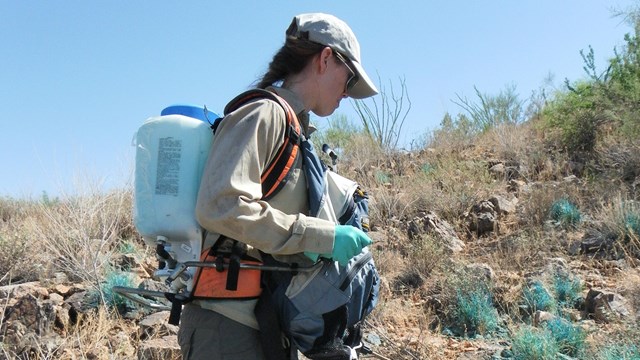
We implement the most appropriate control technique for each species and site, considering the extent of the invasion and the threat it represents. We ensure the control is environmentally safe and supported by research. The methods we use are chiefly manual removal and chemical control. You may have seen teams of hardy buffelgrass removal volunteers, with gloves and tools, digging out the plants. Park Service staff also apply an herbicide containing glyphosate during the growing season, to plants that are over 50% green. Fire control is successfully used in other National Parks to control some of the same invasive plants. However, here at Saguaro National Park, where the native plants are not fire-adapted but the non-natives are, fire is less appropriate as a method of control. Biological controls, introducing another exotic species to control the invasive plant, such as goats to eat the grasses or insects to destroy the seeds, are not in current use. There are opportunities throughout the year to help with buffelgrass management at Saguaro National Park, as well as other areas in and around Tucson. Activities include mapping buffelgrass infestations, participating in the Weed Free Trails program, joining monthly buffelgrass pulls (September-May), as well as education and outreach events. See our Schedule of Special Events or contact the invasives species coordinatior at Sagu_Invasive@nps.gov Learn More… -Want to help? Find out how you can help at home and in the park -Read our Exotic Plant Management Plan and Environmental Assessment -Buffelgrass look-alikes: learn about native grasses commonly mistaken for buffelgrass -Federal Executive Order 13112, 1999 establishes the National Invasive Species Council Additional Resources: Buffelgrass fuel loads in Saguaro NP increase fire danger and threaten native species Southern Arizona Buffelgrass Coordination Center Arizona-Sonora Desert Museum: Invaders of the Sonoran Desert Region - Buffelgrass National Park Service Information and Resources on Invasive SpeciesSouthwest Exotic Plant Information Clearinghouse Plant Assesments |
Did You Know?
Six species of rattlesnakes call the Tucson area their home. They are the Western Diamondback, Tiger, Northern Black-tailed, Mojave, Sidewinder and Arizona Black Rattlesnakes.
Get Involved
Great Grass of Fire