
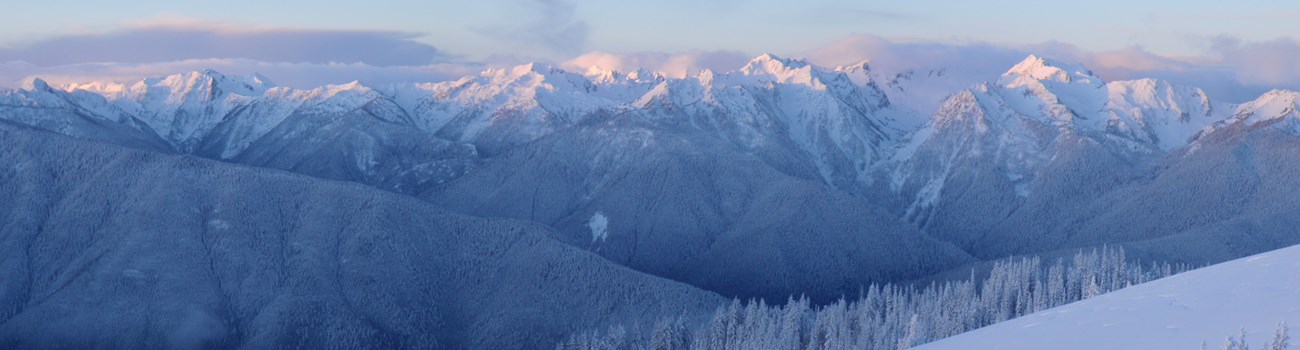
B Bell NPS Photo Weather in Olympic is variable and unpredictable, no matter the time of year. It is common for different weather conditions to exist within the park at the same time. Even in the summer, temperatures may vary from 10-20 degrees, especially along the coast and higher elevations. Always check the current weather forecast or call the park's weather hotline at 360-565-3131 before your visit. Precipitation Map 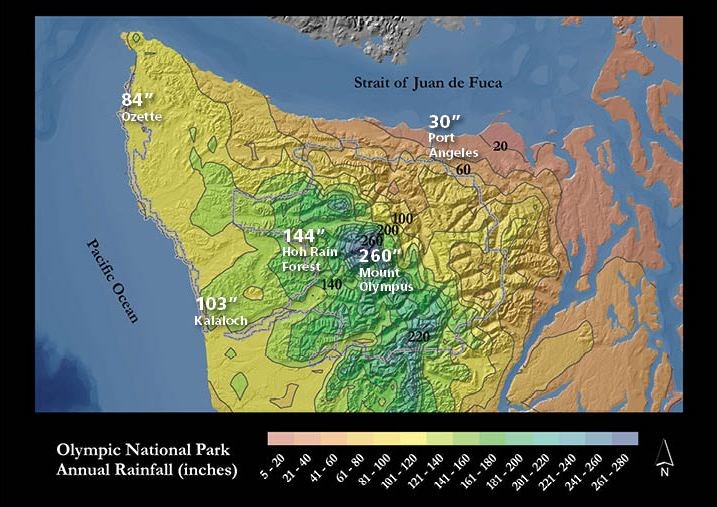
NPS Image/R. Hoffman The Rain Shadow Effect By the time any storm cells pass the Olympic Mountains, most of the moisture has been released. While precipitation still occurs, the amounts are considerably lower. Located in Port Angeles, the Olympic National Park Headquarters only averages 25-30 inches a year. This decrease in rainfall impacts the type of ecosystems present on the east side of the park. While the western sections are dominated by temperate rain forests, the eastern slope possesses dryer lowland forests. Seasonal Weather 
© Ken & Mary Campbell Visiting in Spring 
NPS Photo/B. Baccus Visiting in Summer 
NPS Photo/C. Bubar Visiting in Fall 
NPS Photo/B. Baccus Visiting in Winter At any time of year, visitors should come prepared for a variety of conditions. Check the National Weather Service for up-to-date weather information and forecasts for the Olympic Peninsula.
|
 |
|
Last updated: April 18, 2024