



|
Mountains, valleys, forests, rivers and ocean all define the landscape of Olympic National Park. Located on a peninsula, the rocky and sandy beaches of the ocean surround the layers of towering, lush forests, which surround the scree slopes and glacial terrain of the tallest peaks. This diverse landscape provides habitat for a variety of mammals. Some species can be found throughout the park and others can only be found in specific habitats. Where species live can depend on the season. Some species migrate with the year, leaving mountain meadows behind as the snow falls while others hibernate. Mammals may be seen not just with all four legs on the ground, but scurrying from burrows, clambering through the canopy, resting on the beach, frolicking in the sea, and even soaring through the air. Select a Park:Select a Species Category (optional):
Search results will be displayed here.
Learn More About Specific Species:
Olympic Marmot (endemic)
Learn more about the endemic Olympic Marmot that only occurs in the alpine meadows of the Olympic Peninsula. 
Fisher
Learn about how this species returned to the Olympics after an absence of around 100 years. 
Roosevelt Elk
Learn more about the largest of the elk species, the Roosevelt Elk, the reason behind the formation of the park. 
Black Bear
Learn more about Black Bears which occur through the park 
Cougar (Mountain Lion)
Learn more about cougars and how to stay safe in cougar country. Although elusive, they occur throughout the park. 
Black-tailed deer
Learn more about black-tailed deer, the species of large mammal you are most likely to see. 
River Otter
River otters are common in river systems in the park. 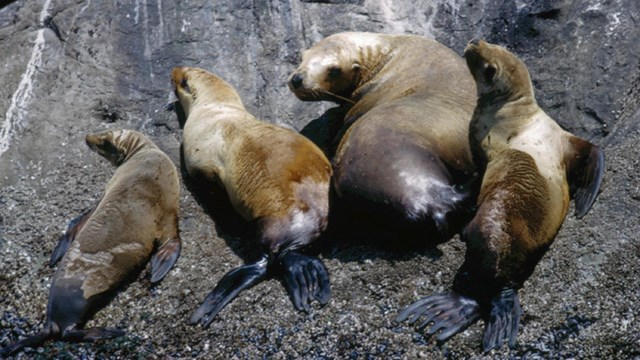
Marine Mammals
The cold northern Pacific Ocean on the Olympic Coast provides a rich feeding ground for several marine mammal species. 
Bat Species
The park has ten species of bats, the only true flying mammal. 
Olympic Chipmunk (endemic)
This commonly seen species can only be found on the Olympic peninsula. 
Snowshoe Hare
Though snowshoe hares are relatively widespread in the forests and subalpine regions of the park, they are quite secretive and nocturnal. 
Mountain Goat
Mountain goats are a non-native, invasive species in the Olympic mountains. Learn more about park management of this species.
|


Last updated: July 3, 2025