
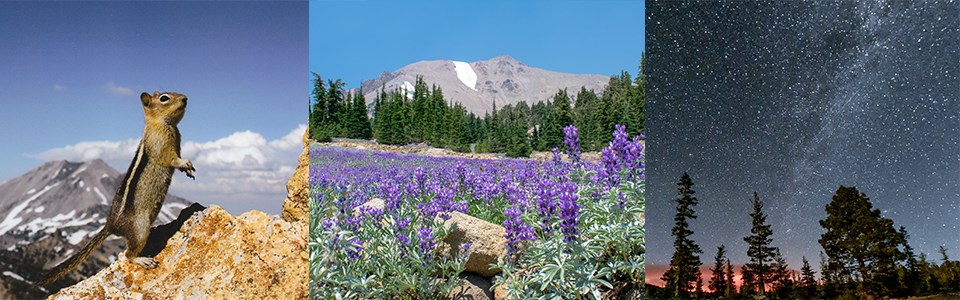
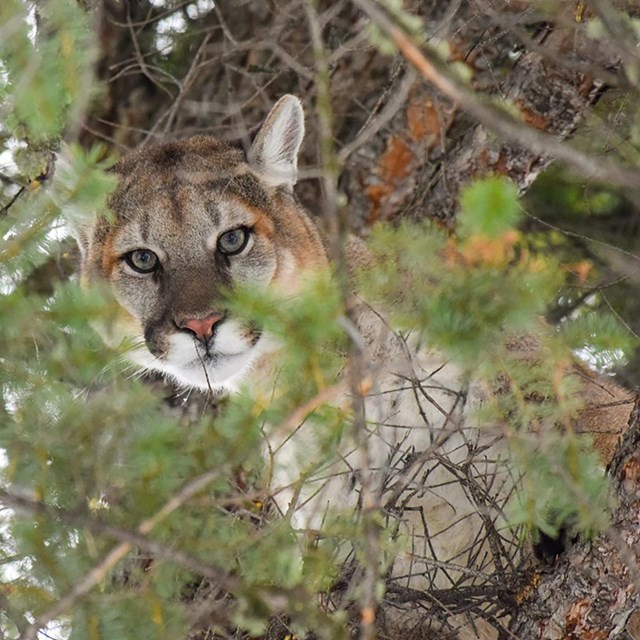
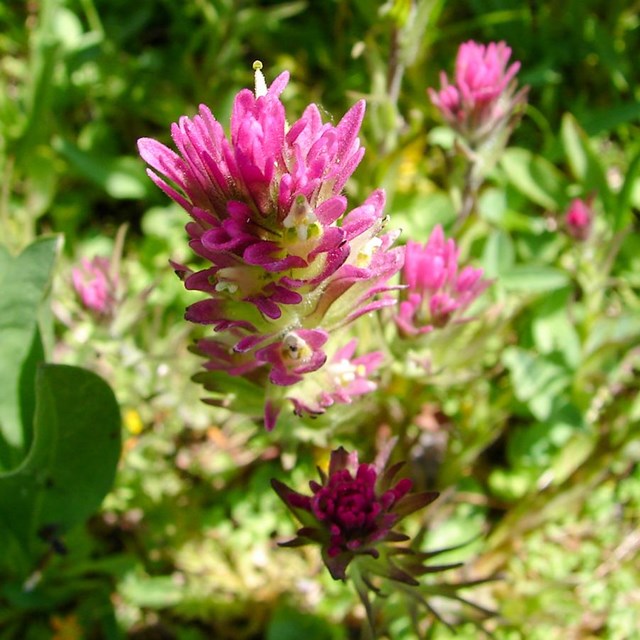
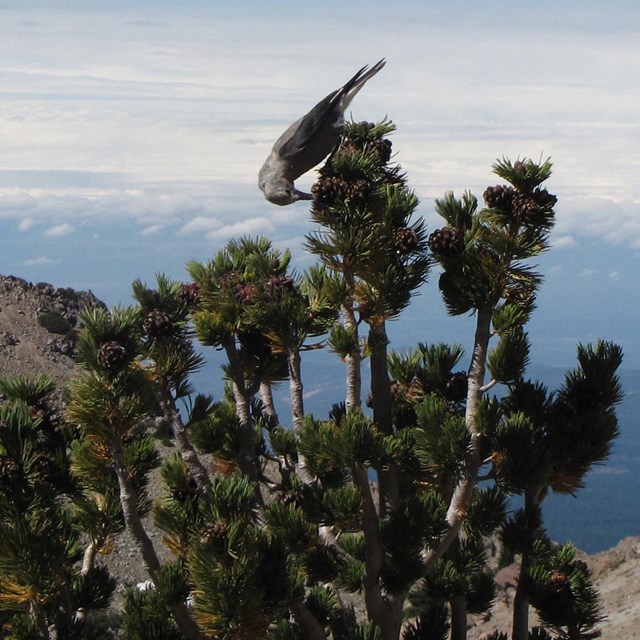
Although Lassen is primarily known for its volcanic geology, the park boasts a rich diversity of plant and animal life. Over 700 flowering plant species grace the park, providing shelter and food for 250 vertebrates as well as a host of invertebrates including insects. This great diversity of life forms is due to two factors: the geographic location of the park and the abundance of habitats that occur there. Situated at the southern end of the Cascade Range geologic province, Lassen Volcanic National Park lies at the crossroads of three great biological provinces: the Cascades range to the north, the Sierra Nevada mountains to the south and the Great Basin desert to the east. The myriad habitats of Lassen Volcanic National Park are produced by variations in environmental conditions such as elevation (5,000 to 10,457 feet), moisture (precipitation is greater on the western than the eastern side of the park), substrate (rock type and soil depth), temperature, insolation (amount of sun) and prior disturbance (both natural and human-caused).
Featured Creatures
Select a Park:Select a Species Category (optional):
Search results will be displayed here.
|
 |
|
Last updated: June 11, 2021