National Park Service LogoU.S. Department of the InteriorNational Park ServiceNational Park Service
National Park Service:  U.S. Department of the InteriorNational Park Service Arrowhead
Isle Royale National ParkRocky shoreline in fog near Blake Point
view map
text size:largestlargernormal
printer friendly
Isle Royale National Park
Natural Features & Ecosystems
Hammerstones were used to extract copper from the bedrock.
This is the first season of my life that father has taken me to the floating island. The trip across Kitchi Gummi (Lake Superior) was calm. The last snows of winter have all but melted. We pull our canoes made of birch bark ashore on red sand beach. Shesheeb ( ducks)  float near by. Many in our party gather large round stones. They carry them over the jagged porous ridges away from the craggy shore and into the forest. I notice something shimmering beneath the waters. It is bright and blinds me when the sun hits it through the rippling waves. I reach for it through the water. I grasp it tightly. It is cold, heavy, and solid, yet nothing like the jagged stones around it. My father rejoices when he see's what I've found . He holds it to the sky shouts in the air "miskwabik!" (The red metal).

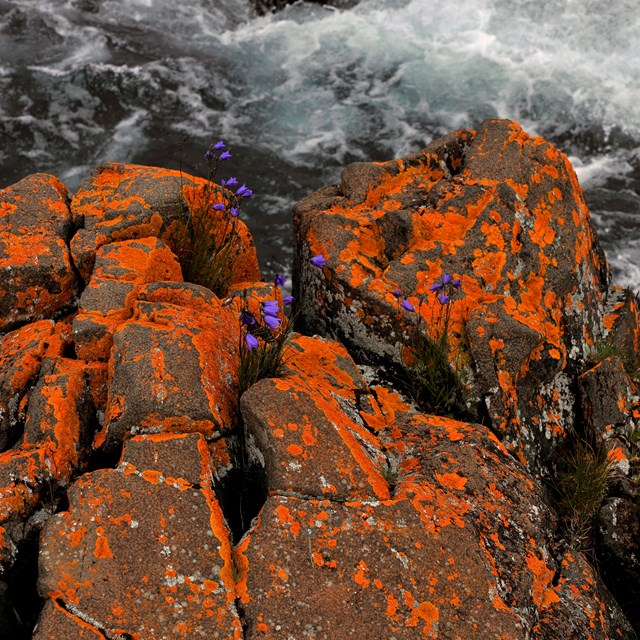
Lake Superior has shaped Isle Royale's rugged rocky shore as well as created its isolation. Crossing Lake Superior was not easy for the Island's first visitors. These were hunter-gatherers that came for copper, game and berries thousands of years ago.

To learn more about Natural Features, click here.
Eastern Gray Wolf portrait.  

Did You Know?
The Ecological Study of Wolves on Isle Royale is the longest running large mammal predator-prey study on earth. The park offers outstanding possibilities for research in a remote, relatively simple ecosystem where overt human influences are limited.

Last Updated: July 25, 2006 at 00:22 EST