An official website of the United States government
Here's how you know
Official websites use .gov A
.gov website belongs to an official government
organization in the United States.
Secure .gov websites use HTTPS A
lock (
) or https:// means you've safely connected to
the .gov website. Share sensitive information only on official,
secure websites.
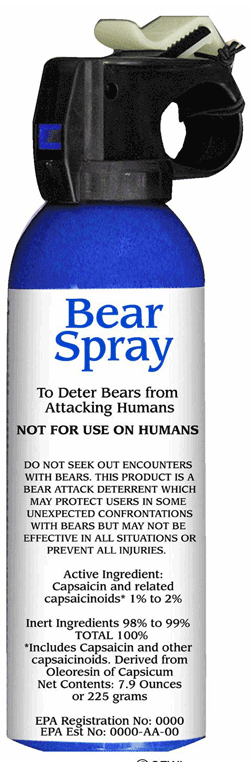
Bear spray has proven to be an effective, non-lethal, bear deterrent capable of stopping aggressive behavior in bears. The proper use of bear spray will reduce human injuries caused by bears as well as the number of grizzly bears killed in self defense. When carrying bear spray, it is important that you select an EPA approved product that is specifically designed to stop aggressive behavior from bears. Personal defense, jogger defense, and law enforcement or military defense spray's may not contain the correct active ingredients or have the proper delivery system to divert or stop a charging or attacking bear.
Selecting A Proper Bear Spray
All bear sprays must be registered with the Environmental Protection Agency (EPA). Only use bear spray products that clearly state "for deterring attacks by bears." The EPA registration number is displayed on the front label.
EPA registered bear sprays, have an active ingredient, clearly shown on the label, of 1% to 2% Capsaicin and related Capsaicinoids. This active ingredient is what affects the bear's eyes, nose, mouth, throat, and lungs.
EPA registered bear sprays have a minimum duration of at least 6 seconds or more to compensate for multiple bears; wind; bears that may zigzag, circle, or charge multiple times; and for the hike out after you have stopped a charging bear.
EPA registered bear sprays shoot a minimum distance of 25 feet or more to reach the bear at a distance sufficient for the bear to react to effects of the active ingredients in time to divert or stop the bear's charge and give the bear time to retreat.
EPA registered bear sprays have a minimum content of 7.6 oz or 215 grams.
Visitors in bear country should carry a can of bear spray in a quickly accessible fashion. Bear spray should also be readily available in the sleeping, cooking, and toilet areas of backcountry camps.
Be sure the expiration date on your bear spray is current.
Safety Tips
Make sure you are carrying EPA approved Bear Spray as your bear deterrent, don't depend on personal defense products to stop a charging bear.
Make sure the canister is immediately available, not in your pack.
Leave the safety clip on the trigger unless you are ready to spray an agressive bear. The spray may accidentally discharge otherwise.
Consider the use of bear spray when affected by wind, rain, cold temperatures and age.
Follow the manufacturer's instructions, know how to use the spray, and be aware of its limitations, including the expiration date
If you use the spray to stop a bear, leave the area immediately.
Bear spray is NOT a repellant! Do not spray it on people, tents or backpacks.
Do NOT store your bear spray in a vehicle. It may explode.
Under no circumstances should bear spray create a false sense of security or serve as a substitute for standard safety precautions in bear county.
Never approach a bear. Never feed a bear. Stay 100 yards (1 football field) from bears at all times.
Last updated: June 13, 2025
Park footer
Contact Info
Mailing Address:
P.O. Box 170
Moose,
WY
83012
Phone:
307-739-3399
Talk to a Ranger? To speak to a Grand Teton National Park ranger call 307–739–3399 for visitor information Monday-Friday during business hours.