
|
Contact: Jackie Skaggs, 307.739.3393
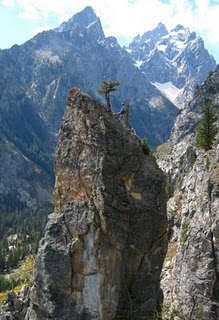
Landon Wiedenman June 24, 2011 11-49 Grand Teton National Park Superintendent Mary Gibson Scott announced that beginning Friday, June 24, Baxter's Pinnacle and its southwest descent gully are closed due to a peregrine falcon aerie. Baxter's Pinnacle is a popular climbing route in Cascade Canyon. This closure is in effect to protect both climbers and the falcons. Peregrines are territorial and aggressive birds especially while nesting. Grand Teton wildlife biologists have received reports, and witnessed near misses, of this peregrine pair dive-bombing climbers on the route and in the descent gully. Baxter's Pinnacle will remain closed until the young birds have fledged or biologists determine there is no longer a risk to either climbers or the falcons. A nearby climb called No Perches Necessary remains open. The peregrine falcon is among the world's fastest birds, flying at 40-55 mph and diving at more than 200 mph while defending territory or striking prey. This poses a safety risk to climbers who could be knocked off the route and injured. Peregrine falcons are particularly sensitive to human disturbance and will abandon their nests to defend their territory. This can lead to nest failure and low reproductive success. The especially aggressive behavior of this falcon pair concerned Grand Teton's wildlife biologists. "The aggressive behavior shows us that this peregrine pair feels threatened by climbers near their nest site," said Grand Teton Wildlife Biologist Sue Wolff. "We want to keep climbers safe and increase the chances for a successful aerie." Peregrines were delisted from the endangered species list in 1999, but remain a species of concern in Grand Teton National Park where only three other nesting pairs exist. Seasonal and temporary closures for wildlife protection are common in Grand Teton to protect both wildlife and park users. Entering a posted wildlife closure is a violation under the code of federal regulations that can result in a citation and fine. |

Last updated: February 24, 2015