
|
Contact: Jackie Skaggs, 307.739.3393
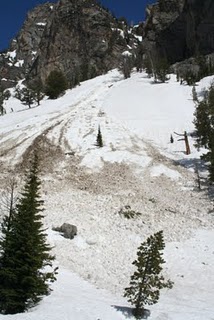
June 17, 2011 11-45 The Teton Range contains an unprecedented amount of snowpack for this time of year. Unusual conditions exist due to an unseasonably cool and wet spring following a record winter snowfall with 732 inches recorded at the Raymer plot on Rendezvous Mountain (elevation 9,300 feet). The normal transition from winter to spring to summer is substantially delayed, and the snowpack has not yet consolidated. Avalanche danger is expected to remain elevated during this slow transition period. As a consequence, Grand Teton National Park rangers advise extreme caution for any backcountry travel (hiking, skiing or climbing), as well as for backcountry camping. Generally by mid June, the snowpack has markedly decreased in the Teton Range and many locations have shed their accumulated winter snow during springtime avalanches. This year, however, several cornices and deep snow pockets remain throughout the mountains. These areas may be prone to releases over the next several weeks, producing potentially large avalanches. The avalanche danger increases rapidly during periods of intense sun, a quick rise in temperature, or during and just after a period of high precipitation. These are the very conditions that may occur as more seasonable weather finally arrives in Jackson Hole. Because of atypical conditions, local residents and park visitors who choose to head into the Teton Range are advised to follow several guidelines to increase their margin of safety. Backcountry hikers and skiers should:
The final avalanche hazard report provided on June 12, 2011 by the Bridger-Teton National Forest Avalanche Center stated, "… At the upper elevations, the new dense snow has accumulated on warm wet old snow surfaces. At the mid elevations the snowpack is rain soaked and unstable. Wet loose and wet slab avalanches are possible on very steep slopes at mid and upper elevations. These wet snow avalanches could release naturally, be triggered by a cornice failure, or by humans. Once triggered these wet slides could entrain large volumes of snow and become destructive." |

Last updated: February 24, 2015