




NPS Photo/J. Bonney Insects are possibly the most important group of animals on the planet by playing key roles in food webs. They pollinate dazzling wildflowers, provide food for many animals, and act as decomposers and nutrient-recyclers. Amazingly, insects outnumber all of the other animals combined. In this region alone, there are over 10,000 different species. Many flowering plants depend on a single insect species for pollination. Dazzling flowers like lupine, yellow-bells, phlox, sunflowers and the delicate Calypso Orchid rely on bees, beetles, and butterflies for survival. Plants use a large amount of energy to attract insects with bright colors and alluring scents to ensure survival. The violet-colored lupine attracts bees in our park. Lupine, a member of the pea family, has a very complex flower structure. The two bottom petals are fused together to form a canoe-shaped pollen protector. When a bee lands, its body pushes the tip of the canoe-like petals down exposing the pollen as if opening a trap door. Pollen sticks to the bee's belly that is then carried to the next lupine. Only bees are the right size to open the hatch and pollinate lupine. 
NPS Photo/J. Bonney Thousands of animals rely on insects for energy and nutrition. Insects are the primary food for lizards, snakes, frogs, trout, and many birds including blue birds, chickadees, woodpeckers, thrushes, wrens, sparrows, dippers, jays, sapsuckers, and a few ducks. Even bears depend on insects. During fall, the massive grizzly feasts on the tiny Army Cutworm Moth. Swarms of cutworm moths migrate from the plains to the alpine to mate in fall. After mating, the moths die and grizzly bears roam the high peaks scooping up moths by the paw-full, an important pre-hibernation protein source. On the forested slopes below, both bear species feast on ant colonies and beetle larvae called grubs. If you see a log on the trail ripped to shreds, it might be where a bear enjoyed a snack. Beetles are true workhorses of the forest acting as construction crews, recycling crews and sanitation crews. Bark beetles bore through conifer bark and chew elaborate tunnels on the wood underneath. Beetles break down woody plant material and recycle nutrients back to the soil. When an animal dies, carrion beetles recycle the valuable minerals in the body. Through tunneling, chewing and feeding beetles mix up the soil playing a major role in decomposition. Their activity helps the next generation of plants and animals to start anew. Insects are fascinating, and you don't even have to drive to a national park to see them. Explore an undiscovered world in your own back yard. 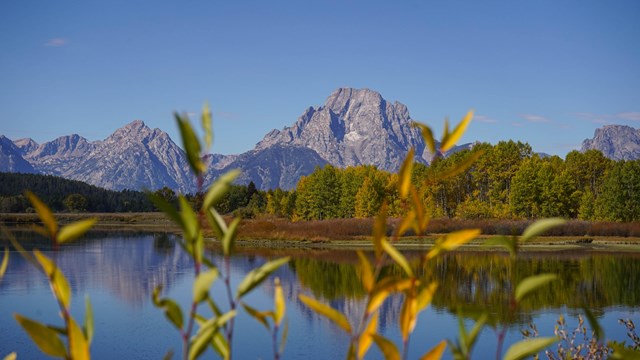
Nature
Learn about nature in Grand Teton. 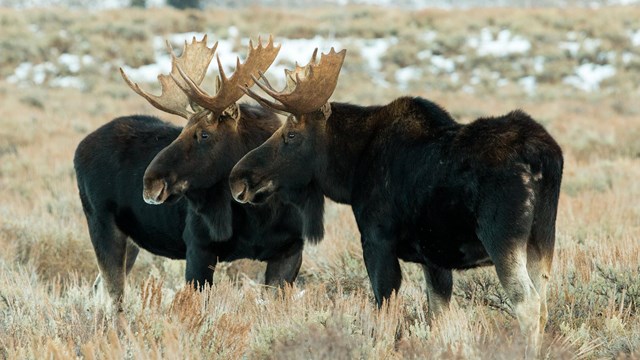
Explore Wildlife
From the tiniest shrew to the largest grizzly bear, wildlife draws visitors from around the world. 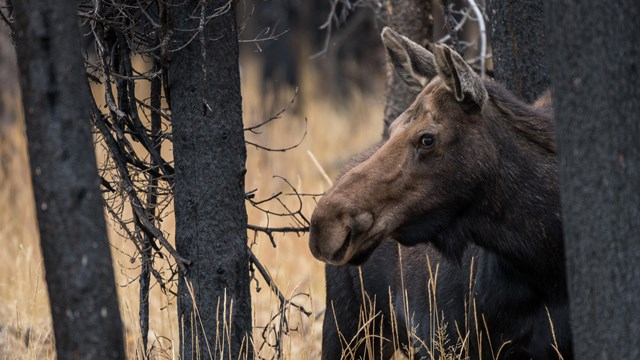
Park Species Lists
Find species lists for mammals, birds, amphibians, fish, reptiles, and plants 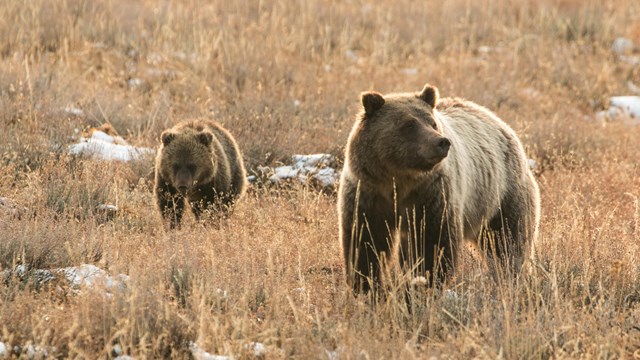
Bear and Wildlife Safety
Learn how to stay safe in bear country. 
Science and Research
Learn about research in Grand Teton. |
 |
|
Last updated: October 18, 2022