

Great Basin National Park offers a variety of opportunities for visitors with disabilities. Much can be learned about Great Basin National Park from your vehicle and from accessible facilities and programs. This wild landscape, rich in natural and cultural history, is a wonderful place to spend the day, a week, or more! Great Basin National Park is constantly striving to improve accessibility for all visitors. If you have any questions or comments about accessibility at Great Basin, e-mail us or call 775-234-7331. FeesAccess Pass holders receive a 50% discount on camping and cave tour fees. While Great Basin does not charge an entrance fee, it will also cover the cost of entrance at all National Park Sites across the United States. InformationBrief tours of the first room of the cave, the Gothic Palace, are available for those unable to negotiate the stairs and narrow passageways of the tour route. Participants join the tour into the first room of the tour route, and are escorted out of the cave by a ranger. Another friend or family member must be available to assist visitors in non-motorized wheelchairs. Please be advised that wheelchairs are not available at the park. First room tours may not be available on every tour, depending on staffing levels. Service animals are allowed in all park facilities, Lehman Caves, and on all park trails. National Park Service policy defines a service animal as a dog that has been individually trained to do work or perform tasks for the benefit of an individual with a disability, including a physical, sensory, psychiatric, intellectual, or other mental disability. The tasks performed by the animal must be directly related to the person’s disability. Emotional support, therapy, comfort or companion animals are not considered service animals.
Call 911 for emergency medical or police assistance or to report accidents or injuries. To access the telephone relay services, please call 1-800-326-6868. The user will be connected to an interpreter and automated system. The voice number in Nevada to reach an interpreter is 1-800-326-6888.
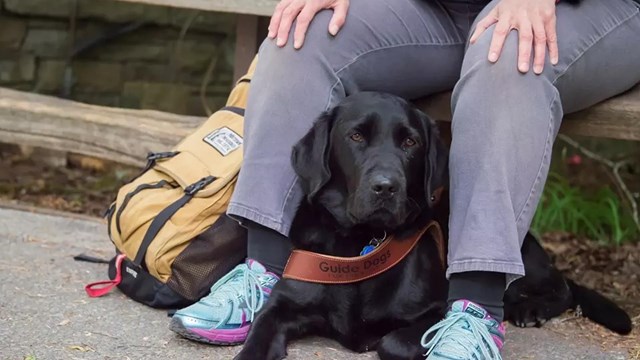
Service Animals
Learn about bringing your service animal to the park 
Physical & Mobility Impairments
Discover options for those with limited mobility or in wheelchairs 
Deafness & Hearing Loss
Find out what options are available for those with difficulty hearing or deafness. 
Blindness & Low Vision
Learn options and alternatives for those with vision impairment |
 |
|
Last updated: December 31, 2022