
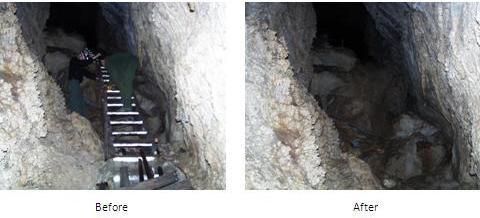
NPS PHOTOS Cave and karst features are extremely fragile ecosystems. In their natural, unaltered state, cave systems are pristine examples of unaltered wilderness. Humans have always been fascinated with caves, and with this fascination comes an urge to explore and experience the unknown of these caves. Humans are not always the most careful creatures, and the exploration and love of caves has led to the damage, destruction and overall wear-and-tear of certain cave features. 
NPS PHOTO 
NPS PHOTO To reduce the everyday wear and tear on the cave, crews must actively clean the cave system. This includes the removal of algae, and tedious process of lint removal, where crews painstakingly remove accumulated lint from the cave formations with nothing more than tweezers and paint brushes. We can all do our part to reduce our impact to all cave systems. Always make sure you stay on the paved trail, and be extra careful not to touch the cave walls or cave formations, even with your clothing. And always remember the caving motto: "Take nothing but pictures, Leave nothing but carefully placed footprints Kill nothing but time" For more information on cave restoration and 'soft caving' please Speleological visit the National Speological Society. |
Last updated: September 1, 2021