




Image credit: NPS 
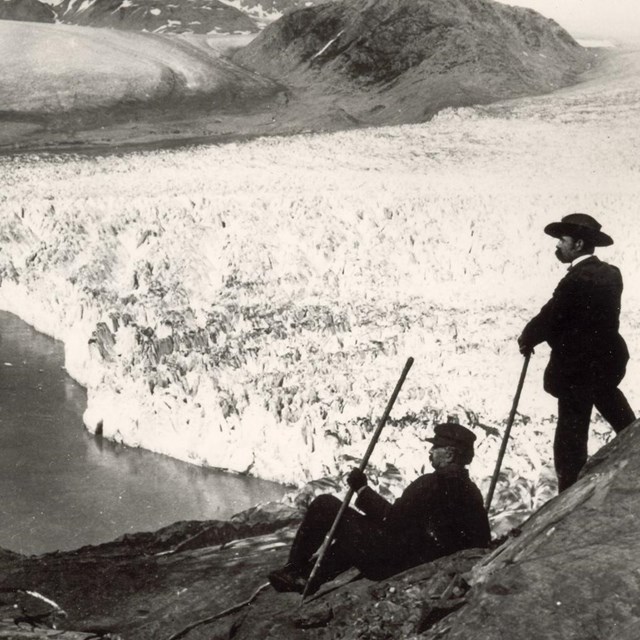
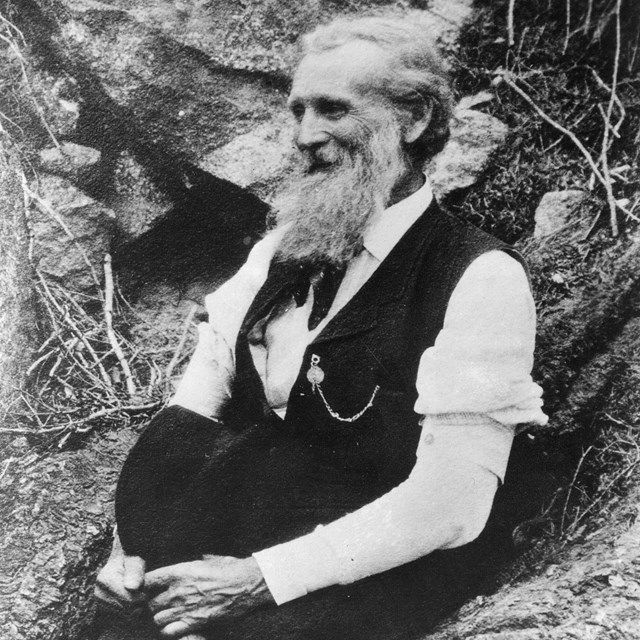
In 1879, John Muir relied on Łingít guides when he first visited Glacier Bay, seeking glaciers, adventure and spiritual enrichment. Muir was the first in a long line of distinguished scientists/naturalists to visit the park, perform research, and bring this remarkable area to the world's attention. Muir was greatly intrigued with the fledgling science of glaciology, and believed that his beloved Yosemite Valley had been carved by ice long ago. He came to Alaska, in part, to witness glaciers in action and substantiate his theory. Largely due to his enthusiastic writings, Glacier Bay became a popular tourist attraction, as well as the focus of scientific inquiries, during the late 1880's and 90's. Muir's last visit to Glacier Bay was in 1899. He had agreed to join the illustrious Harriman Alaska Expedition somewhat reluctantly, as its grandiose style did not suit him. Assembled by the railroad tycoon Edward Harriman, the expedition brought together an impressive collection of scientists, artists, photographers and writers to explore the Alaska coast, from the southeast boundary all the way to the Seward Peninsula. The expedition members spent five days in Glacier Bay, and collected a wealth of data between memorable adventures.
|
Last updated: April 22, 2025