




Image Courtesy of EvergladesPlan.org The CERP was authorized by Congress in 2000 as a plan to "restore, preserve, and protect the south Florida ecosystem while providing for other water-related needs of the region, including water supply and flood protection." At a cost of more than $10.5 billion and with a 35+ year time-line, this is the largest hydrologic restoration project ever undertaken in the United States. A unique Federal / State partnership guides the interagency plan. The South Florida Natural Resources Center (SFNRC) has a critical role to play in this partnership by ensuring that the mission of the National Park Service -- to protect park resources unimpaired for future generations -- remains at the forefront of CERP decision-making. SFNRC involvement in CERP supports Big Cypress National Preserve and Everglades and Biscayne National Parks. SFNRC staff are participating in the Central Everglades Planning Project, a fast-track planning effort for the next generation that will, when authorized by Congress, improve the Central and Southern Everglades by putting more fresh and clean water into the River of Grass. Additional resources Restoring America's Everglades: The Official Website 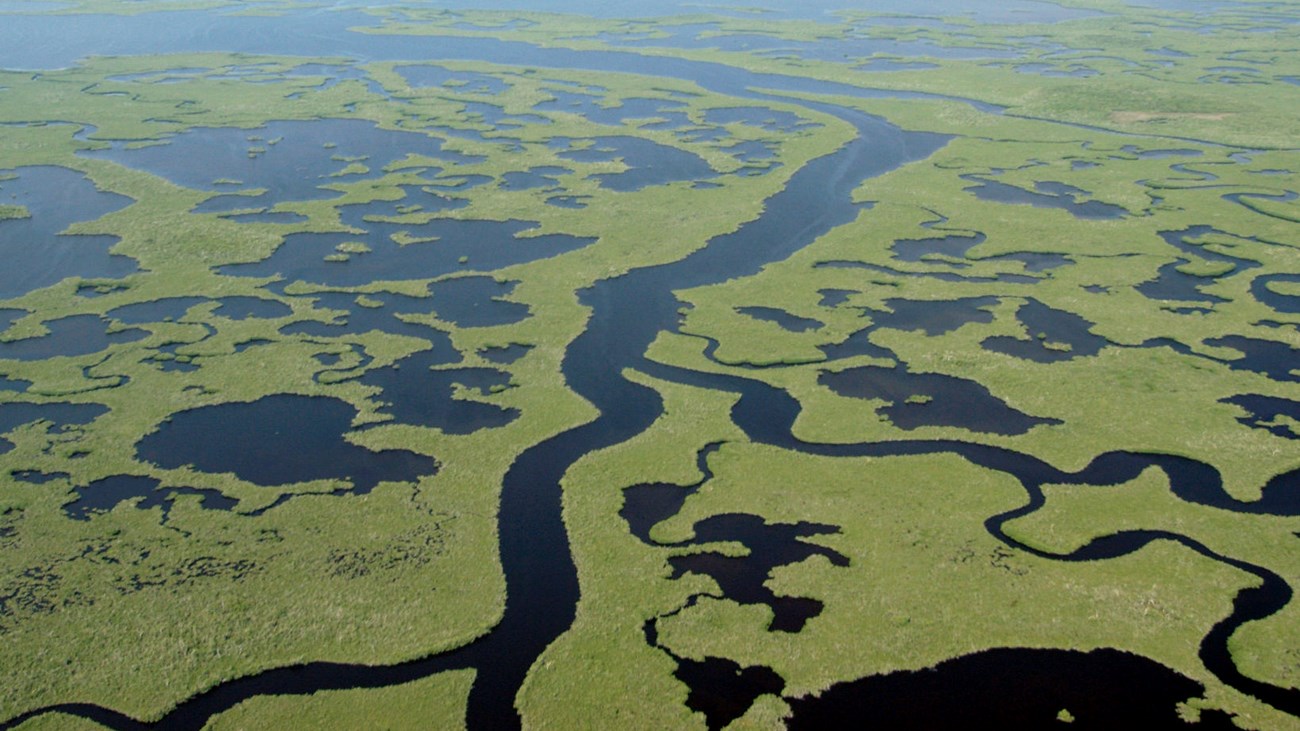
Everglades Restoration Storymap
Check out a storymap that outlines the history and importance of Everglades restoration. |
Last updated: May 19, 2022