National Park Service LogoU.S. Department of the InteriorNational Park ServiceNational Park Service
National Park Service:  U.S. Department of the InteriorNational Park Service Arrowhead
Cuyahoga Valley National ParkAutumn on the Towpath Trail. Photo by Tom Jones.
view map
text size:largestlargernormal
printer friendly
Cuyahoga Valley National Park
Animals
Though usually much more at home in the water, this beaver rests on a fallen log.

©NEIL EVANS

Raccoons are abundant in CVNP.

Surrounded by urban areas, Cuyahoga Valley National Park provides a refuge for wildlife. The park’s 33,000 acres contain forest, field, river, and wetland habitats that offer food, water, shelter, and open space to wild animals. The park’s fragmented configuration and land use history have a strong effect on the types of wildlife found here.

The recovery of the lower Cuyahoga River over the past several decades is not only evident in the improvement in the aquatic assemblages that inhabit the river water, but in the terrestrial wildlife associated with the riparian habitat of the river corridor. Efforts to improve water quality and preserve wetlands have transformed a once heavily polluted river into an attractive place for wildlife. Read the CVNP site bulletin Cuyahoga River Recovers.
 
Bald eagle parent and eaglet in the nest at Pinery Narrows, 2008

©LISA ROMANIUK

Bald eagle parent and eaglet in the nest at Pinery Narrows, 2008

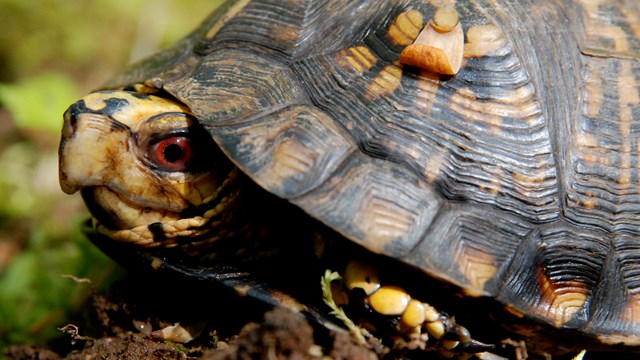
The Cuyahoga River Valley is a refuge for a variety of wildlife species including a number of rare and endangered species of animals. A pair of nesting bald eagles successfully fledged young in 2007 and 2008 from the first nest in Cuyahoga County along the Cuyahoga River in over 70 years. The rebounding fish populations have created an ideal place for eagles to feed and nest. State threatened peregrine falcons attempted to nest beneath a bridge high above the river in 2008. The spotted turtle, a state threatened species, has been recorded in the lower Cuyahoga along with the Blanding’s turtle, a state listed species of concern. The Federally listed endangered Indiana bat, a tree roosting bat dependent on stream corridors and riparian areas, which provide foraging sites, was recorded for the first time in 2002. CVNP Threatened/Endangered Species List.

 
Beaver at the Beaver Marsh

©JOHN CATALANO

Beaver, once extirpated from CVNP, are now abundant.

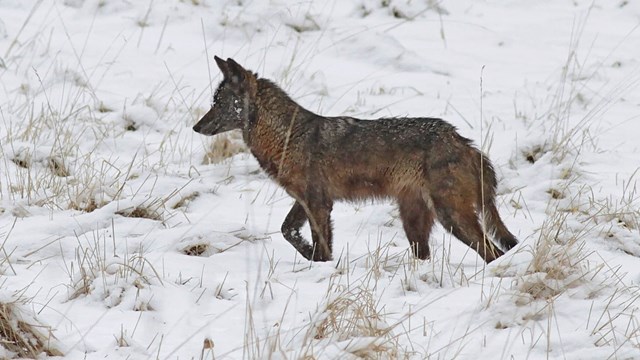
Numerous wildlife species–birds, mammals, amphibians, reptiles and fish populations–depend upon the river’s habitat for shelter, food resources, nesting, and breeding grounds. The success of several inland nesting colonies of great blue herons (from 42 nests and 105 chicks in 1993 to 129 nests and 316 chicks in 2007) in the lower Cuyahoga river valley is a reflection of favorable habitat created by an abundant beaver population, along with protection of the valley by local land management agencies, watershed organizations and individuals. Signs of river otter, animals that prefer unpolluted waters with an abundance of slow moving fish, were recently recorded by Ohio Department of Natural Resources in January 2009. Abundant wildlife populations such as deer, coyote, muskrat, mink and raccoon that use multiple habitat types also use the riparian area of the river for cover, water and food resources. Read the CVNP site bulletin Watership Stewardship.The use of the river and its riparian habitat by a diversity of wildlife species including threatened and endangered and sensitive species is a direct result of improvement in water quality.

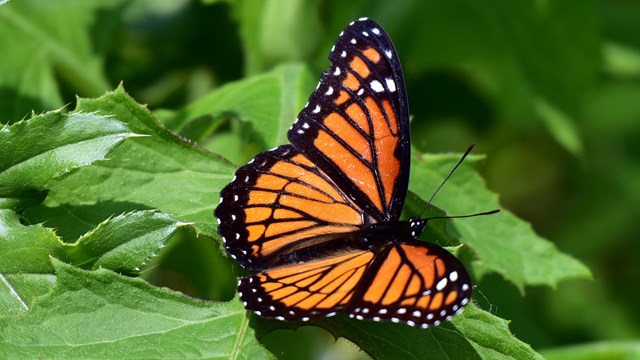
Monarch Butterfly - US Fish and Wildlife Service Photo  

Did You Know?
Early September is the time to watch monarchs feed in Cuyahoga Valley fields rich with goldenrod and New England aster. These places serve as important re-fueling sites for these long distance travelers on their way to oyamel forests near Mexico City more than 2,000 miles away.

Last Updated: May 01, 2009 at 12:13 EST