National Park Service LogoU.S. Department of the InteriorNational Park ServiceNational Park Service
National Park Service:  U.S. Department of the InteriorNational Park Service Arrowhead
Cuyahoga Valley National Park Take a ride on the Cuyahoga Valley Scenic Railroad! Photo by Tom Jones.
view map
text size: largest larger normal
printer friendly
Cuyahoga Valley National Park
Places


Several places in Cuyahoga Valley National Park highlight the cultural and natural history of the valley, including the river itself.


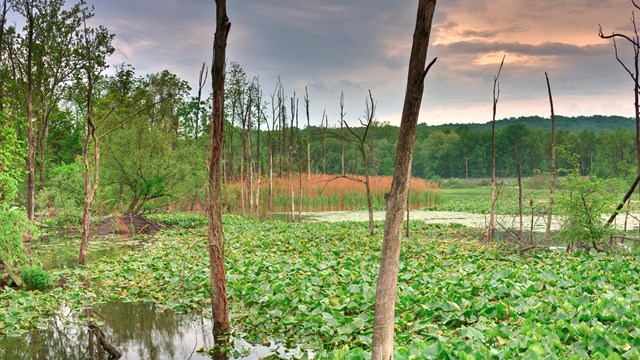
Beaver Marsh

©JOHN CATALANO

Beaver Marsh
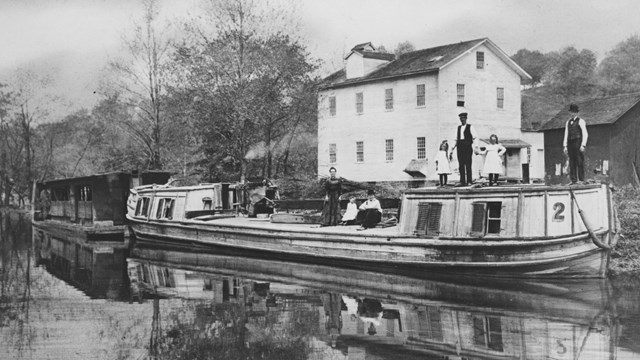
The Beaver Marsh was  created by beavers that moved in along remnants of the Ohio & Erie Canal. The area had been a farm and later a junkyard, which was cleaned up by a community effort. Today the area offers visitors the chance to explore a wetland first-hand and up close by a boardwalk thorugh the marsh.

Read our Beaver Marsh site bulletin to learn more.

Visit our Wetlands, Marshes, and Swamps web page for more information and a photo gallery.

3801 Riverview Road, Cuyahoga Falls 44264 (81° 34.817' W) (41° 11.201' N)


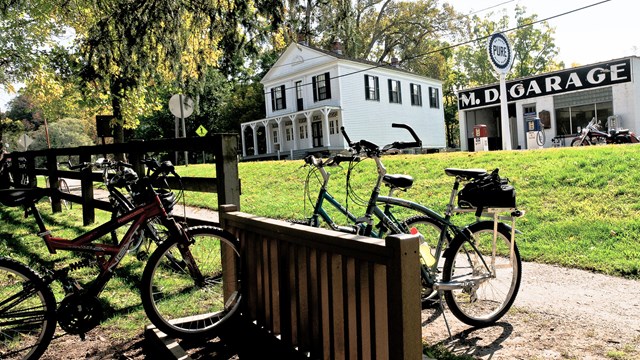
Trail cyclists at Boston Store.

©Sara Guren

Cyclists in front of Boston Store Visitor Center.

Boston Store Visitor Center
Speculating on the rising fortunes of the Ohio & Erie Canal, the Kelley brothers built the Boston Store around 1836. Built as a store (literally to "store" objects, today's warehouse), the building's second floor was a warren of 13 rooms built to be boarding rooms for workers in the area. The building went on to become a post office and a private residence before becoming today's visitor center.


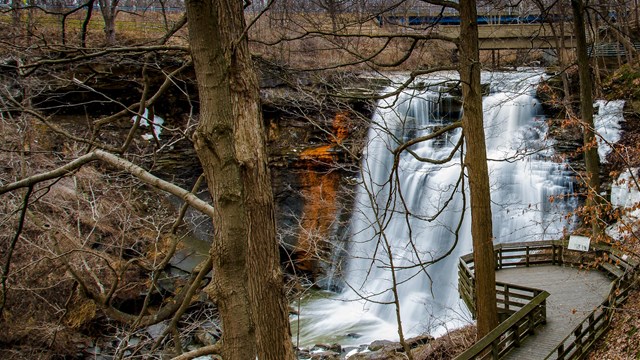
Brandywine Falls in winter

©LYNETTE SPRAGUE-FALK

Brandywine Falls
The Cuyahoga Valley's waterfalls are among the most popular attractions in the national park. Brandywine Falls is a 60-foot waterfall is the centerpiece of the falls area, but not its only source of interest. Carved by Brandywine Creek, the falls demonstrates classic geological features of waterfalls. The falls once powered a thriving village, later industry, and eventually an artist's colony.

Hike the Brandywine Gorge Trail, recently improved with a new bridge crossing Brandywine Creek.

8176 Brandywine Road, Sagamore Hills 44067 (81° 32.264' W) (41° 16.580' N)


Towpath Trail outside Canal Visitor Center

NPS Collection

Towpath Trail outside Canal Visitor Center.

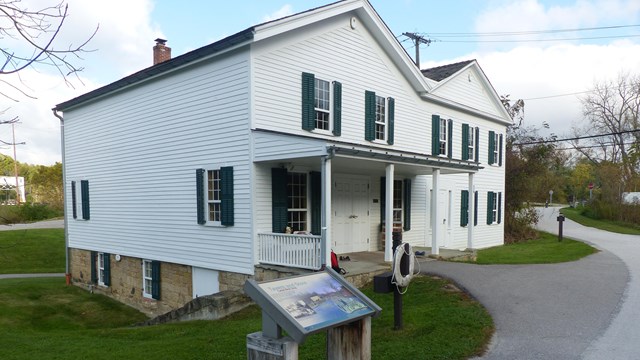
Canal Visitor Center
The building known as the Canal Visitor Center has stood at Lock 38 for over 150 years. It has been a tavern, a store, a residence, a boardinghouse, and even housed a blacksmith shop at one time! Moses Gleeson purchased the structure about 1837, hoping to capitalize on the Ohio & Erie Canal traffic. By 1852 he expanded the building to resemble its current facade to serve the increasing traffic on the canal.


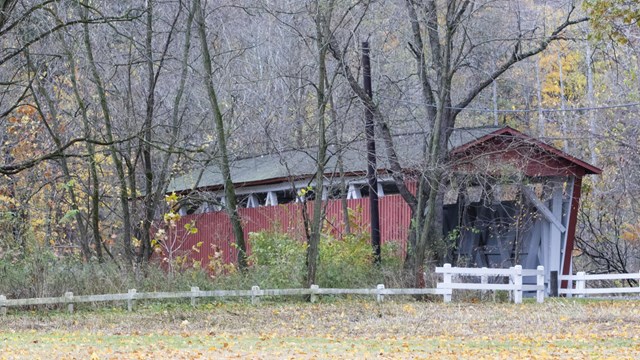
Everett Road Covered Bridge.

©TOM JONES

Everett Road Covered Bridge

Everett Road Covered Bridge
Crossing over Furnace Run, the Everett Road Covered Bridge is the only remaining covered bridge in Summit County. In the 19th century, it was one of over 2,000 in Ohio, the state that led the nation in covered-bridge construction.

2370 Everett Road, Peninsula 44264 (81° 34.865' W) (41° 12.265' N)

Learn more and hear stories about Everett village.


Frazee House

NPS/STIAN RICE

Frazee House

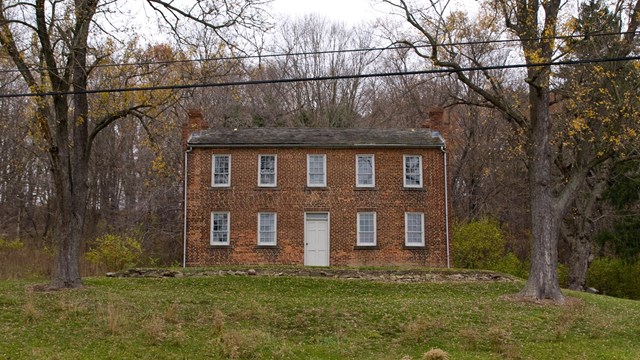
Frazee House
The Frazee House is a two-story Federal-style building that holds within its handmade bricks and hand-hewn beams stories of the Frazee family, who built the house around 1825. Read our Frazee House site bulletin to learn more.

Frazee House is closed for stabilization repairs until further notice.

7733 Canal Road, Valley View 44125 (81° 35.544' W) (41° 21.155' N)


Jaite Mill

NPS COLLECTION

Jaite Mill 
The Jaite Mill brought work, family, and community together when Charles Jaite purchased land on Riverview Road in 1906, and developed a company town with homes, a general store, a post office, and a railroad station. The mill changed hands three times until it fell silent in December 1984. Read our Jaite Mill site bulletin to learn more.

Learn more about historic mill towns in the Cuyahoga Valley.


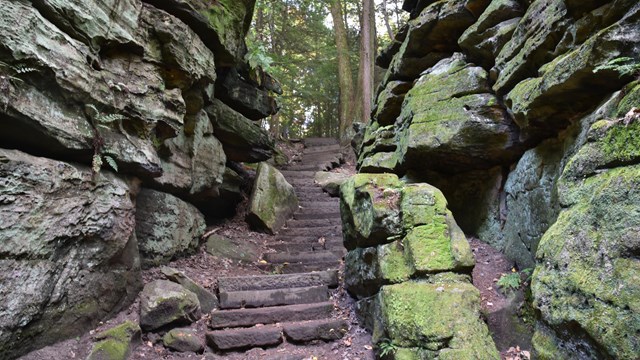
Hikers at Ledges

NPS Collection

Hikers at the Ledges.

Ritchie Ledges
The Ritchie Ledges are witnesses to change - from creation out of Sharon Conglomerate millions of years ago, to landscapes wrecked by humans and to preservation today. The Ledges drew many visitors in the 19th century who came here to recreate and play. One of those, wealthy industrialist Hayward Kendall, purchased the area and set it aside to become the Virginia Kendall Park.

The Civilian Conservation Corps created the park you see today, building trails and shelters throughout the area. Once again, visitors come here to play, relax, and recreate.


Stanford House.

NPS/Ted Toth

Stanford House

Stanford House
At the Stanford House, visitors can immerse themselves in the valley's rich farming history. George Stanford built the house in the 1830s after inheriting the farm from his father. The Stanford family followed the patterns of many local farmers in the 19th century, growing enough food to support themselves while also taking advantage of the growing markets for dairy products. The Stanford House now serves as lodging for visitors of the national park.

Click to plan your stay at the Stanford House.


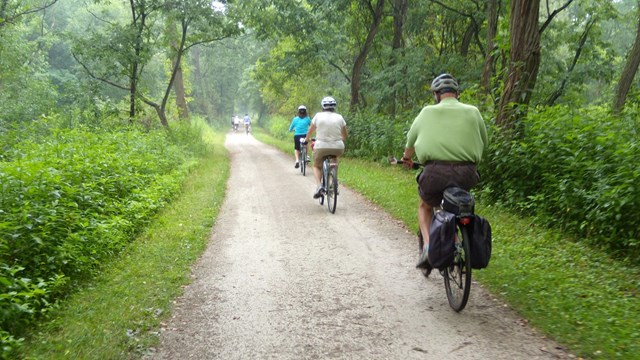
Cyclists on Towpath Trail.

©TOM JONES

Towpath Trail
The Towpath Trail is a multi-purpose trail developed by the National Park Service, and is the major trail through Cuyahoga Valley National Park. This trail follows the route of the historic Ohio & Erie Canal, which connected the natural resources of the United States interior with its markets on the eastern seaboard. From the trail you can make connections to many of the natural and historic sites in the park and to other trails that intersect it along the way.

Visit our Ohio & Erie Canal Towpath Trail web page for more information and a photo gallery.


Alexander's Mill (Wilson's Mill).

©Tom Jones

Wilson Feed Mill (Alexander's Mill)
In the 19th and early 20th century, mills and other industry emerged along the river in the Cuyahoga Valley. Alexander's Mill, later named Wilson Feed Mill, started as a grist mill in 1855. The Wilson family purchased the mill in 1900, and later generations continue to operate the business today.

You are exiting the National Park Service website

Thank you for visiting our site.

You will now be redirected to:

We hope your visit was informative and enjoyable.

Last Updated: February 02, 2012 at 10:55 MST