




Davis Chaco's Night Sky InitiativeSince 1991, Chaco Culture NHP has offered astronomy in its public interpretive programs. Programs emphasize the practices of the Chacoan people a thousand years ago, as well as modern approaches to viewing the same night sky they viewed--in a remote environment with clear, dark skies, and free from urban light pollution. Astronomy also provides an opportunity to protect park resources. The park retrofitted all park lighting to reduce light pollution and enhance night sky viewing. In 1993, the park designated the night sky as a critical natural resource to be protected and has worked on efforts to reduce the threat of urban light pollution in the Southwest. The park's natural nighttime darkness, commitment to reducing light pollution, and ongoing public outreach led to its certification as an International Dark Sky Park by the International Dark-Sky Association on August 19, 2013. Chaco Culture National Historical Park is the twelfth park worldwide and the fourth park unit of the National Park Service to receive the designation. The park established an on-going partnership with the Albuquerque Astronomical Society (TAAS) in 1991. In January 1997, TAAS member John Sefick brought his astronomy equipment to Chaco. He was so impressed with the skies above Chaco that he donated a domed observatory and equipment to the park. The Chaco Night Sky ProgramThe park began constructing a permanent observatory at the visitor center in 1997. In May 1998, the park dedicated the Chaco Observatory. The observatory added a new dimension to Chaco's interpretation of astronomy and now serves many different people:
In 1999, the National Park Foundation awarded Chaco Culture NHP and TAAS an Honorable Mention in the category of education at its Partnership Award Ceremony in Washington, D.C. Ancient Connections--Modern ConnectionsThe Chacoan people were intimately aware of all their surroundings. They were close observers of the skies and seasonal cycles, and their observations gave them the invaluable ability to time their agricultural and ceremonial events, which were central to their survival. Today, Puebloan descendants carry on many of these same traditions. Visitors are drawn to the park to learn about the monumental Chacoan sites, to view the pecked and painted images on canyon walls, to observe scattered pieces of pottery, and to ponder the greatness of the Chacoan world. It is natural to wish for a connection with the people who flourished in this stark and challenging place. The night sky, so clear and brilliant at Chaco Canyon, is a special connection that we all share, as we look to the skies to better understand our place on earth. Chaco's night sky programs are generally offered in the summer, depending on staff availability. Contact the park to verify dates and times, and/or check the calendar for any upcoming night sky programs. To see images taken from the park's observatory visit the photo gallery. ScheduleSummerEvening night sky programs are usually presented during the summer months, dependent on staff availability. Please view the calendar for specific program dates and times. The programs usually begin with staff presentations on archaeoastronomy, cultural history, and other topics, and are followed by telescope viewing of celestial objects. Spring EquinoxProgram is presented at Casa Rinconada, a Chacoan great kiva, at sunrise. Join park staff to observe the alignment of the building with the equinox sunrise. Summer SolsticeSunrise program is presented at Casa Rinconada, a Chacoan great kiva. Join park staff to observe the sunrise and the solstice marker of light inside the kiva. Autumn EquinoxProgram is held at Casa Rinconada, a Chacoan great kiva, at sunrise. Join park staff to observe the alignment of the building with the equinox sunrise. Winter SolsticeObserve a winter solstice alignment. Park at the Pueblo del Arroyo parking area and walk 1/8 of a mile to Kin Kletso. Experience the winter solstice sunrise at this Chacoan great house.
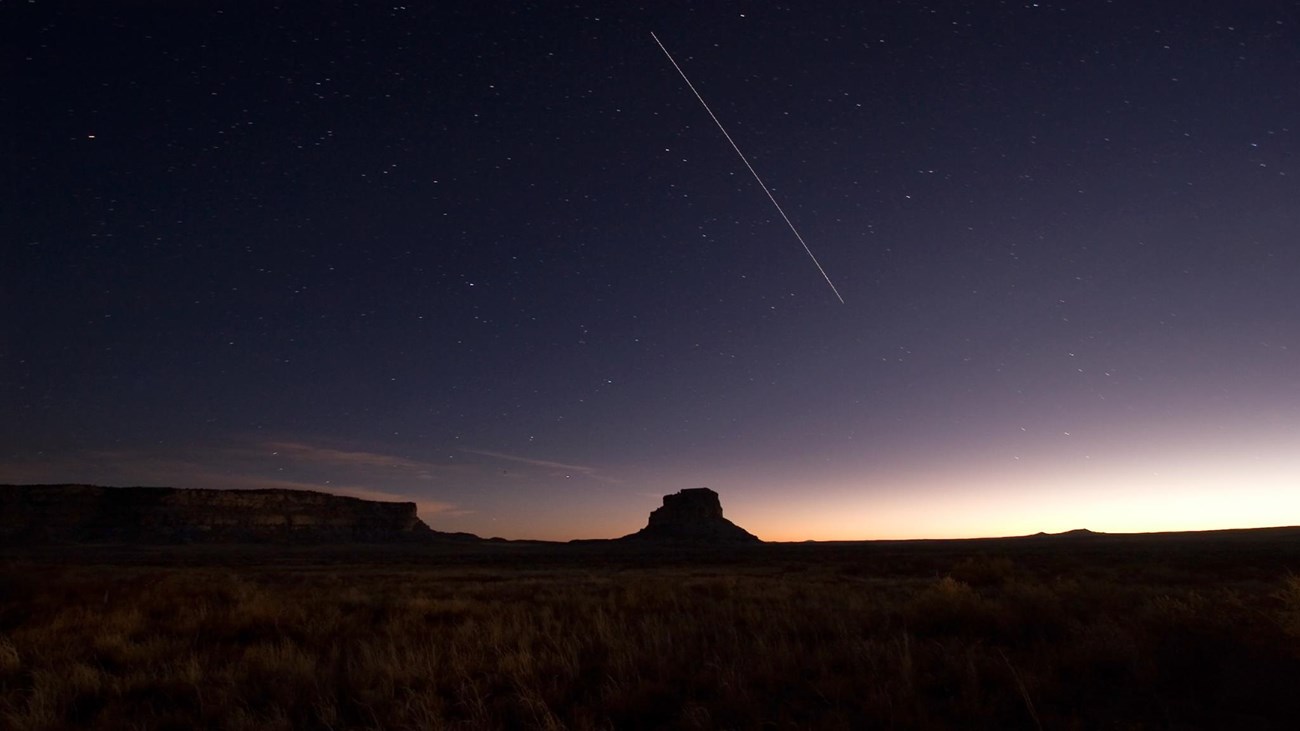
International Dark Sky Park
On August 19, 2013 Chaco Culture was officially designated an International Dark Sky Park. |
Last updated: August 9, 2025