




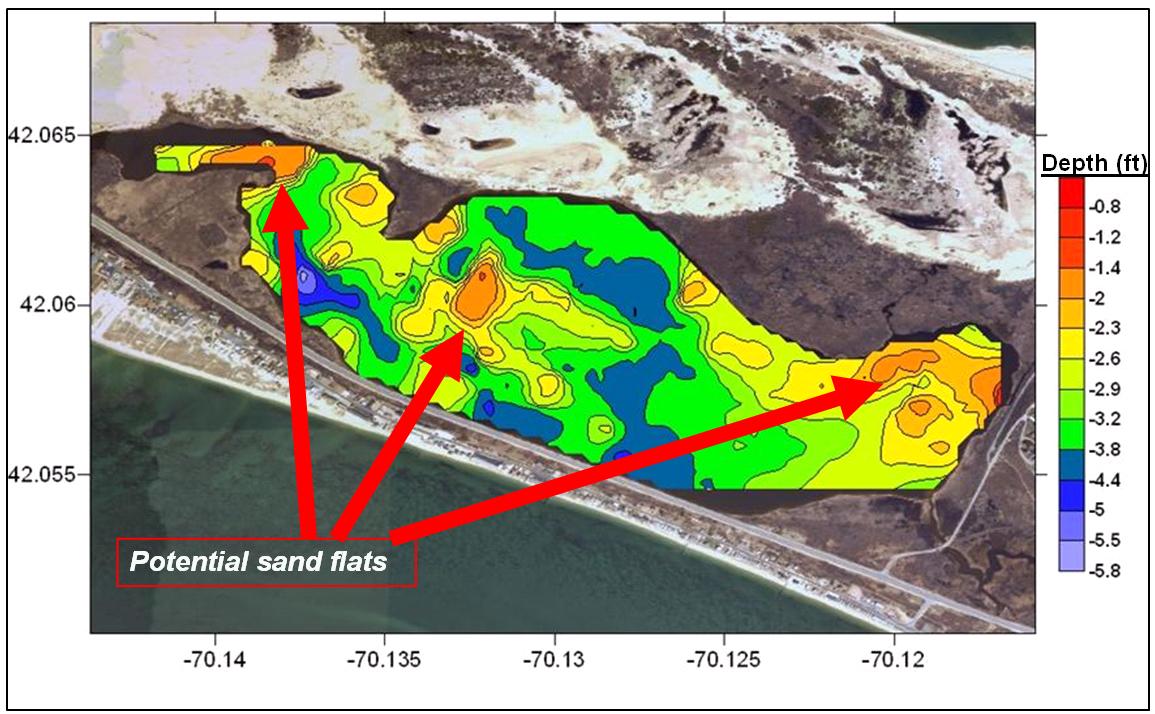
Despite the significant gains in species diversity, water quality, and overall ecological health of East Harbor, impairments still remain. However, these problems need not be permanent - more complete restoration could expand saltmarsh plant communities, eliminate the periods of low dissolved oxygen that impact benthic communities, and reduce the potential for nuisance alga blooms Modeling more complete habitat restoration Hydrodynamic modeling (large image) indicates that the maximum degree of tidal restoration that is possible will produce a modest area of exposed sand flats at low tide, indicated by orange and red shades in the above map. Intertidal flats promote the natural setting of shellfish beds. 
What would happen with increased sea water exchange?
In general, the long-term effects of tidal restoration on the local human community and visitors are expected to be positive, with greatly improved water quality and abundant marine resources. That said, the Seashore does acknowledge the possibility that greater tidal exchange might impact barrier beach sediment dynamics along the Cape Cod Bay shoreline (Beach Point area). This issue will be the subject of intensive study and the results will dictate whether further restoration is feasible. To restore East Harbor back to a healthy, salt marsh lagoon is to restore our natural heritage in this part of Cape Cod.
|
Last updated: February 26, 2015