
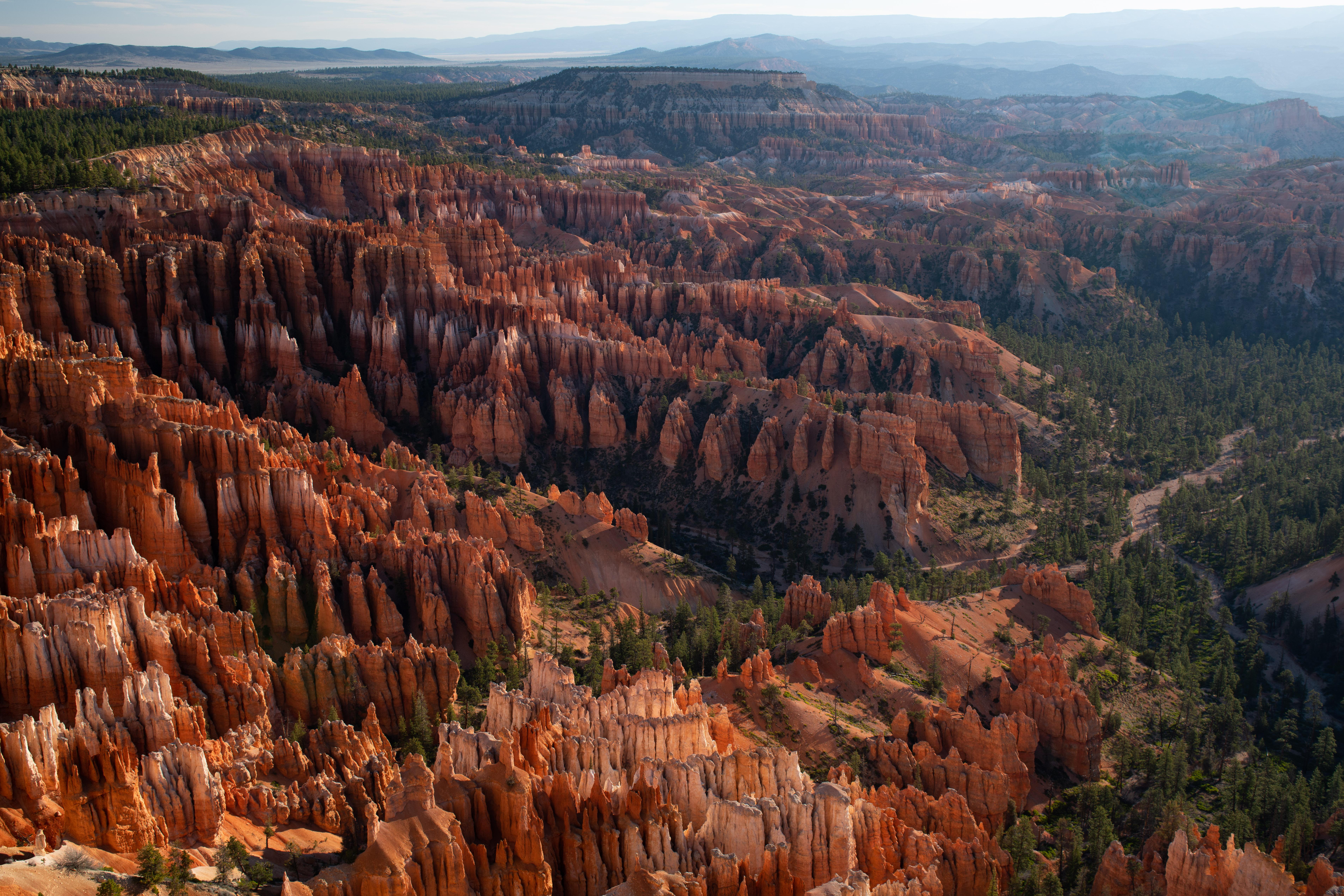
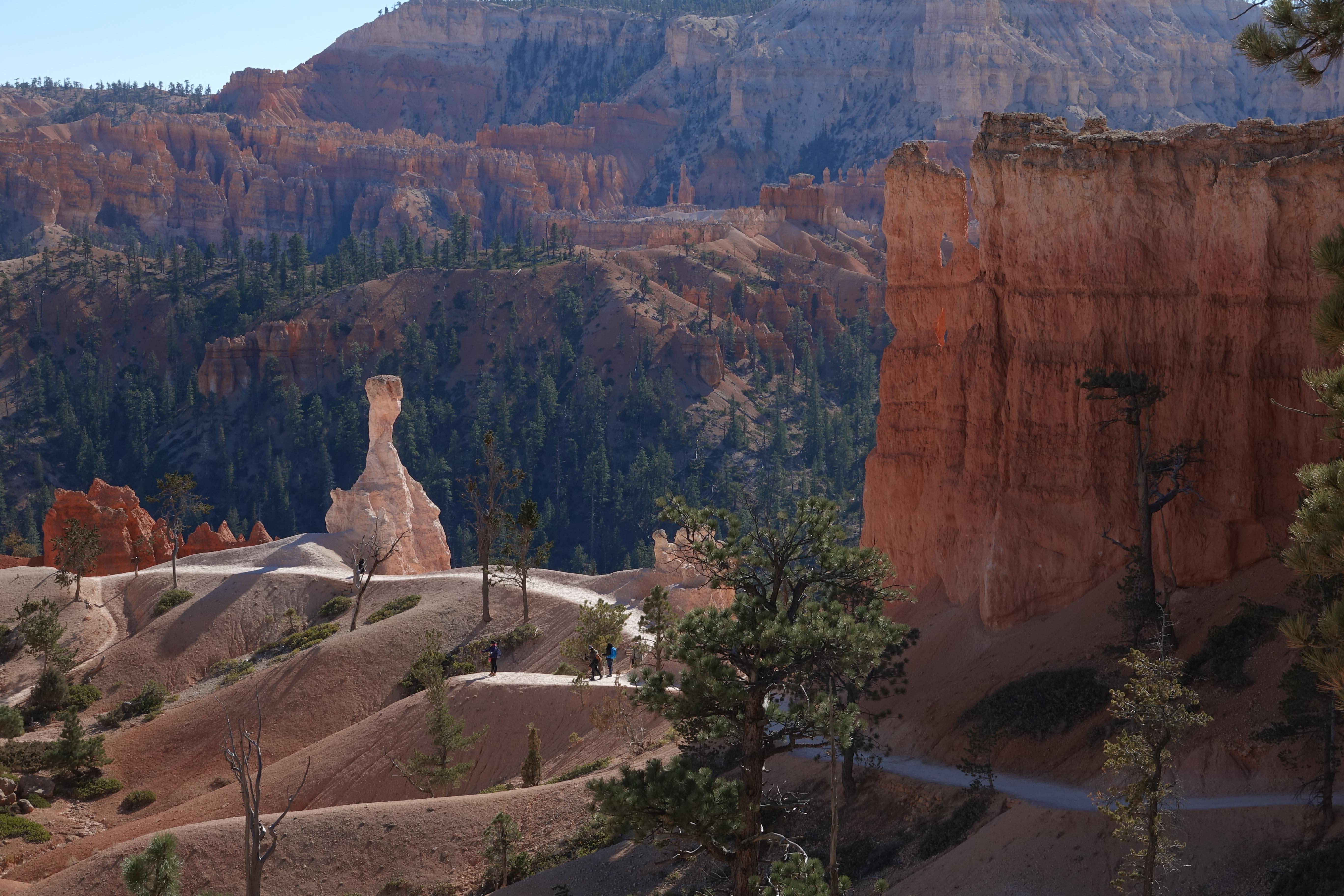
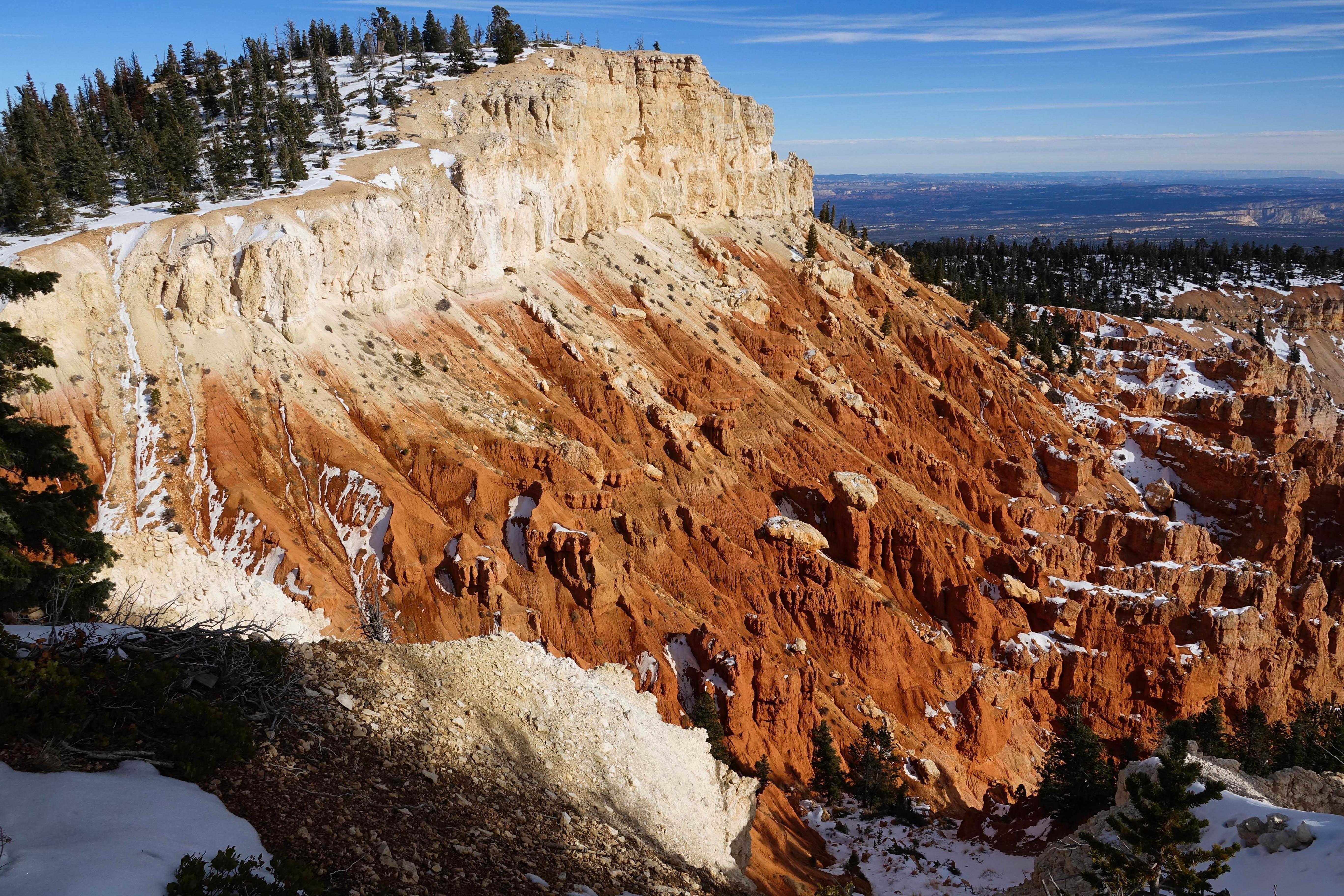
Hoodoos and forest mixed together
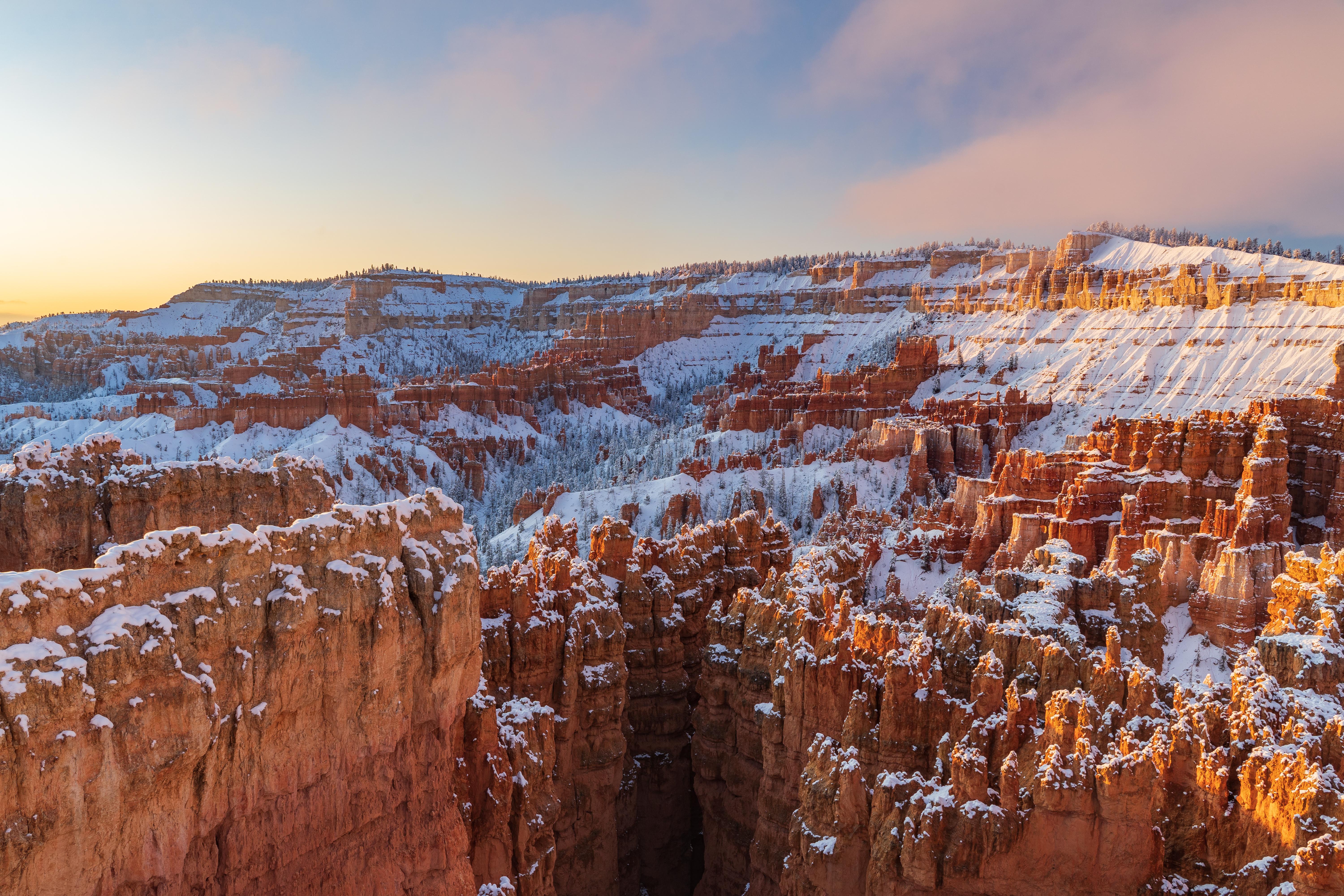
Bryce Canyon, famous for its worldly unique geology, consists of a series of horseshoe-shaped amphitheaters carved from the eastern edge of the Paunsaugunt Plateau. The erosional force of frost-wedging and the dissolving power of rainwater have shaped the colorful limestone rock of the Claron Formation into bizarre shapes, including slot canyons, windows, fins, and spires called "hoodoos".
Read MoreFeatures
-
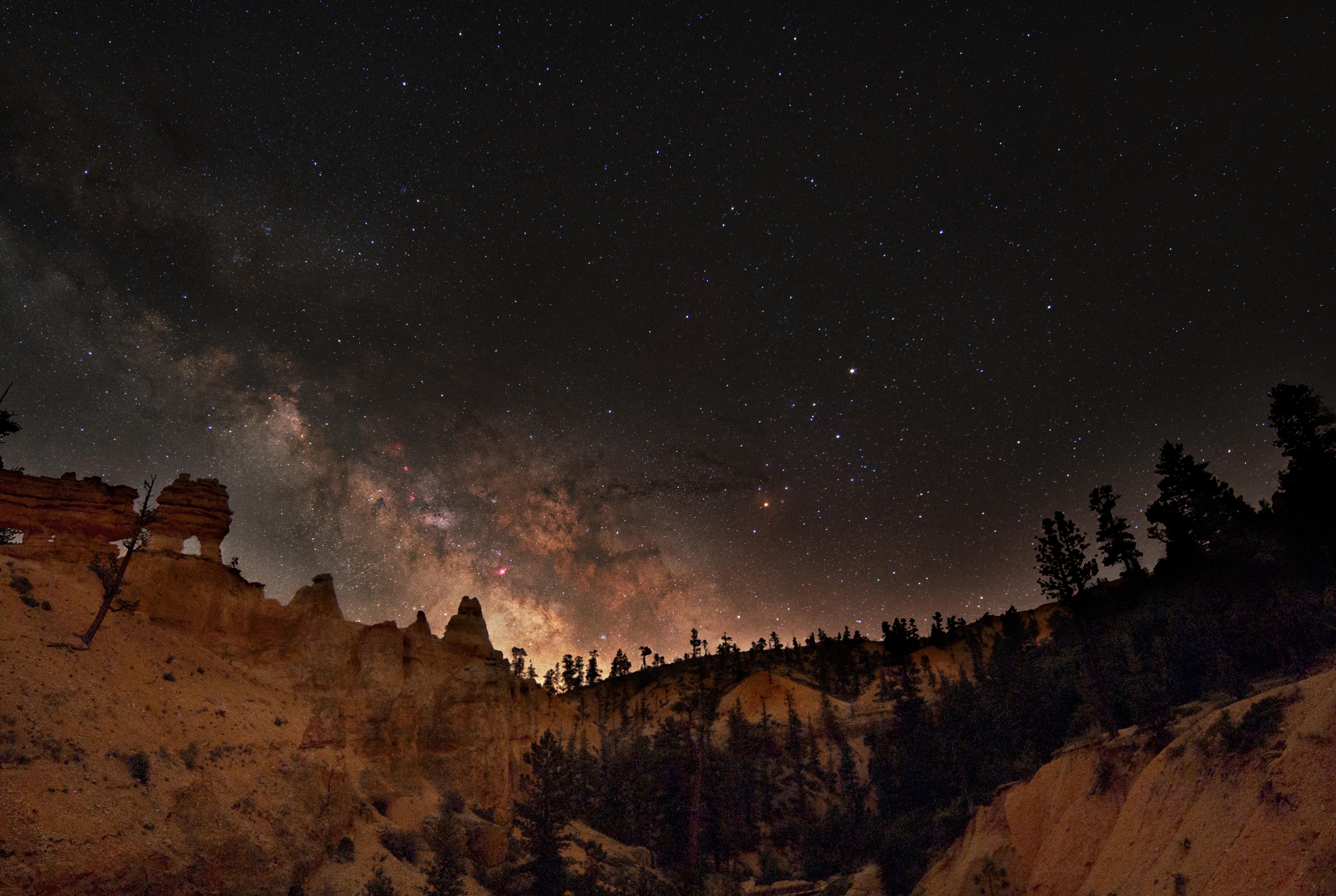
Astronomy and the Night Sky
Each year we offer an Astronomy Festival to celebrate the night skies. This year's event is May 17 - 20, concluding with an annular solar eclipse.
Read More -
Nature & Science
In addition to its spectacular geology, Bryce Canyon is home to many species of birds and mammals, as well as a wide variety of plants.
Read More -
Geology Festival
With activities and programs for all ages, join us for Bryce Canyon's 3rd annual Geology Festival on July 27 and 28, 2012.
Read More -
Early Pioneers - Ebenezer and Mary Bryce
In the 1870s Ebenezer Bryce built a logging road that ended at the red cliffs now known as Bryce Canyon, one small part of the park's human history.
Read More -
Park Newspaper
Help plan your visit by downloading our park newspaper. Available in English, Chinese, French, German, Italian, Japanese, Korean, and Spanish.
Read More
Did You Know?
Bryce Canyon, first designated Bryce Canyon National Monument on June 8, 1923; reached National Park status on September 15, 1928. More...