



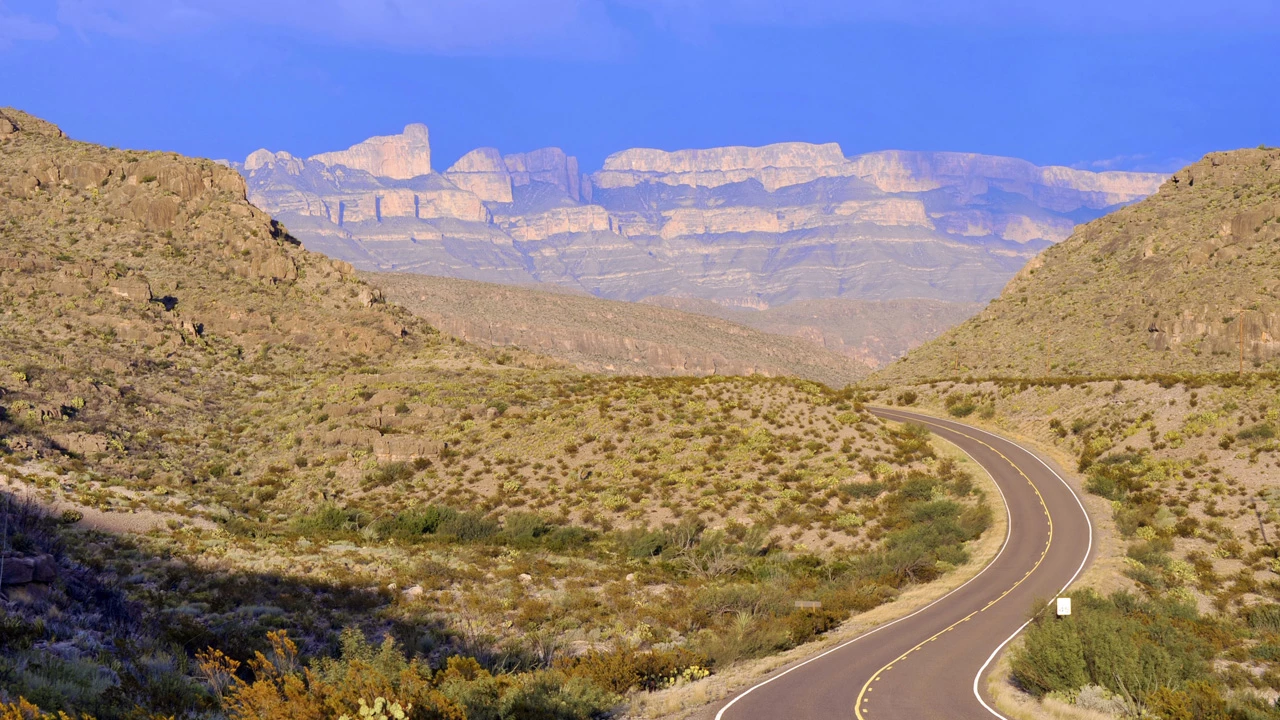
NPS / M. Schuler 
Paved RoadsMore than 100 miles of paved roads throughout Big Bend National Park showcase not only gorgeous vistas, but also invite you to marvel at the geological splendor, contemplate the lives of early settlers, and observe the incredible diversity of plants and animals that call this home.Taking a scenic drive can be an ideal way to explore the park if you have limited time or if weather is not conducive for other activities. 
Improved Dirt RoadsEnjoy the shift from khaki-colored desert to a forest of giant yuccas on the Dagger Flat Auto Trail, or contemplate the harsh lifestyle representative in the primitive, long-since-abandoned structure of Luna's Jacal on the Old Maverick Road. Big Bend's improved dirt roads are accessible for most vehicles, but some are rougher than others and road conditions deteriorate quickly with a passing storm. Please inquire about current conditions before venturing out along one of these roads. 
Primitive Dirt RoadsMiles of primitive dirt roads lead across washboards and boulders, through canyons and creek beds, past old settlements and cemeteries. In addition to marvelous panoramic vistas, many of these roads access hiking trails, primitive roadside campsites, and the river. Primitive dirt roads are maintained for high-clearance vehicles only, and may require a 4WD. They may be rocky with areas of soft sand that are unsafe for sedans or RVs. Rain can make roads difficult to drive or impassable. Always inquire about current road conditions. |
 |
|
Last updated: May 29, 2020