 |
 |
  |
|
|
|
|
Big Bend National Park
Hiking the Outer Mountain Loop
|
|
|
|
|
|
 |
 |
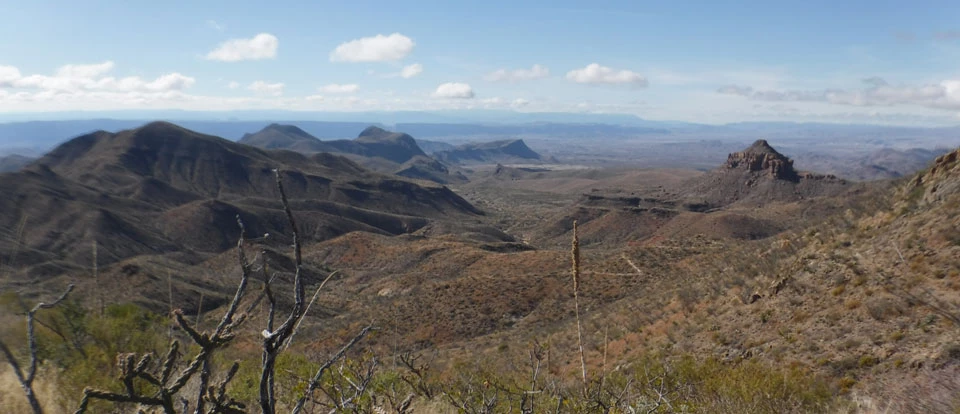
| The South Rim as seen from the Dodson Trail |
 |
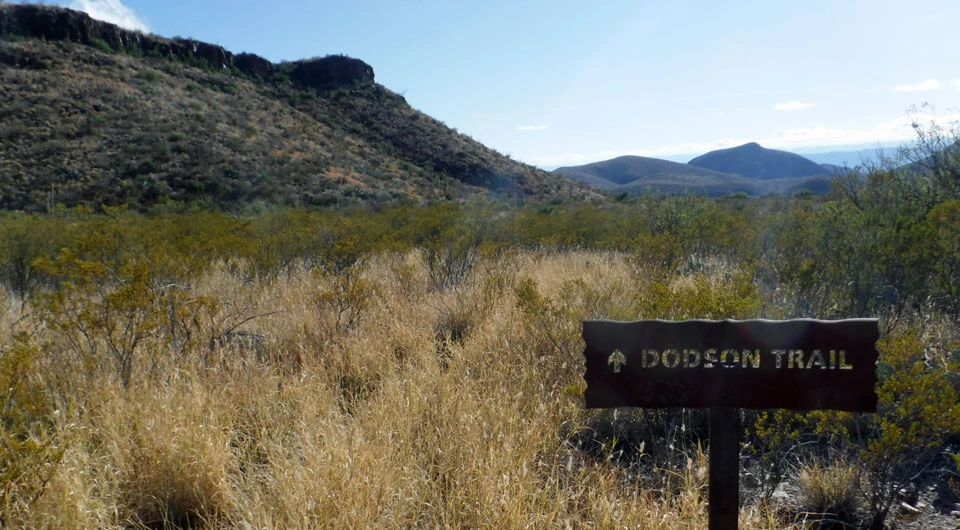
The "Outer Mountain Loop" refers to the 30-mile circuit formed by combining the Pinnacles, Juniper Canyon, Dodson, Blue Creek, and Laguna Meadows Trails. Although you can start/end this trip in the Chisos Basin, Juniper Canyon, or the Homer Wilson Ranch, most hikers begin from the Basin and hike the trail in a clockwise direction. Sections of this trail are extremely steep and there is almost NO flat and level hiking. The loop is Big Bend's signature multi-day backpacking trip and takes you through a wide variety of habitats and scenery, from piñon/juniper/oak woodlands of the Chisos, to stark and rugged desert in one of the most wild and remote corners of the United States.
Difficulty: Strenuous; severe elevation changes and primitive trail
Distance: 30 miles (side-trips to the South Rim or Emory peak can add up to five additional miles).
Time: Allow at least three days
Please do not attempt this hike during the summer months! From early May until early October, it may be physically impossible to carry enough water to safely hike this trail.
|
|
Let's Talk About Safety Concerns along the Outer Mountain Loop
Each year, park rangers are called to respond to multiple medical emergencies along this route. Most are the result of severe dehydration and heat stroke. Visitors have died here. This is a hike for experienced desert backpackers only, and would be a very poor choice for an "introductory" hike to Big Bend. Remember, this hike will always be there. Only after you have explored some of the other strenuous hikes in the park (South Rim, Marufo Vega, Smoky Creek, etc.) and feel the utmost confidence in your abilities, should you plan a trip across the Sierra Quemada (the burnt land) of the Outer Mountain Loop. It will take you a minimum of 3 full days of hiking to complete this entire loop. Side excursions to the top of Emory Peak and/or a visit to the South Rim will add a day. Backcountry permits are required for all overnight backpacking in Big Bend NP.
No, cell phones will NOT work here. Always have a friend who knows your itinerary and will call park dispatch at 432-477-2251 if you are overdue.
Please do not attempt this hike during the summer months! From early May until early October, it may be physically impossible to carry enough water to safely hike this trail.
|
 |
| NPS/Eric Leonard | | The water cache box is located 100 yards below the Homer Wilson trailhead. |
 |
Water
Regardless of what you may have heard from friends or read on other websites, water is ALWAYS a concern on this trail. Many hikers find that they are woefully unprepared for the severe heat, rugged hiking, and lack of water and shade along this route. The only locations for water (seasonal and intermittent-do NOT depend on them) are in the Boot Spring/Canyon area, and where the Fresno Creek drainage crosses the Dodson. Other springs that are indicated on topo maps are very ephemeral and probably do NOT exist.
Cache and Carry
Caching water at one or two locations along the loop, in addition to packing all you can carry before setting out on your hike is the key to sucess on the Outer Mountain Loop.
Carry what you can
We recommend that you carry a minimum of one gallon of water per person per day. Plan on carrying a two-day supply (two gallons=sixteen pounds) when possible.
Caching at Juniper Canyon
Water can be cached at the end of the Juniper Canyon Road. This road often requires a four-wheel drive vehicle. This site is not used as often because it is more difficult to reach.
Caching at Blue Creek
Please do not plan on hiking this trail without first caching water at the Homer Wilson/Blue Creek Ranch.
An animal proof storage box is now available for caching extra water. When caching water, remember:
- Do not store water in the ranch house or any other historic structure. Use the cache box.
- When caching water, make sure to mark each bottle with your name and the date you plan to pick up the water.
- It's a cache box, not a trash box; always pack out empty bottles and other cached items.
|
|
|
 |
|
|
|
|
|
 |
|
Did You Know?
Poisonous snakes found in Big Bend National Park include the western diamondback rattlesnake, the Mojave rattlesnake, the blacktailed rattlesnake, the rock rattlesnake, and the Trans Pecos copperhead. The most commonly seen snake is the nonpoisonous western coachwhip, or red racer.
more...
|
|
|
|
Last Updated: November 16, 2006 at 14:59 EST |