
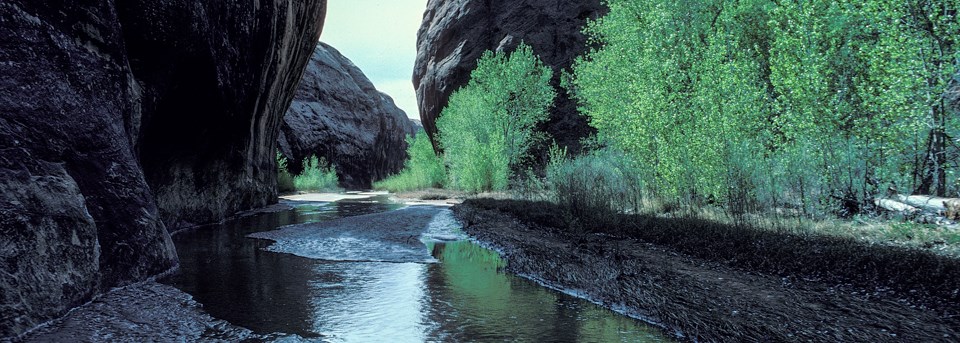
NPS/Tom Gray Of the non-native plant species in Arches, tamarisk is often seen as the most troublesome. This water-loving, Mediterranean plant arrived in North America in the 1800s. It was used initially as an ornamental shrub, and was later planted by the US Department of Agriculture to slow erosion along the banks of the Colorado River in Arizona. Spreading upriver at roughly 12 miles per year, tamarisk is now established on all of the Colorado’s tributaries. Once established, dense tamarisk stands increase fire frequency, lower plant and animal diversity, and significantly alter stream hydrology. Tamarisk consumes a great deal of water, and rarely provides food and shelter necessary for the survival of wildlife. Mature cottonwood communities are declining because shading inhibits the growth of their seedlings. Courthouse Wash in Arches is one of several sites where the National Park Service has made an effort to control tamarisk. Similar control experiments have been established in nearby areas, mostly in small, tributary canyons of the Colorado River. Read More |
Last updated: July 29, 2021