Skip to SearchSkip to NavigationSkip to BodySkip to Footer
National Park Service LogoU.S. Department of the InteriorNational Park ServiceNational Park Service
National Park Service:  U.S. Department of the InteriorNational Park Service Arrowhead
Agate Fossil Beds National MonumentYellow iris along Niobrara River
view map
text size:largestlargernormal
printer friendly

Fossils and much, much more.

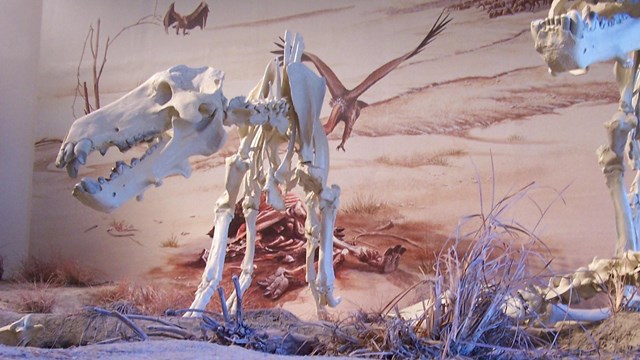
During the 1890s, scientists rediscovered what the Lakota Sioux already knew - bones preserved in one of the most complete Miocene mammal sites in the world.

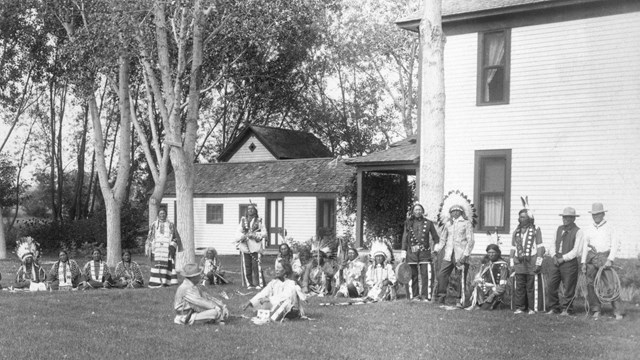
Yet, this place called "Agate" is a landscape that reflects many players – from early animals roaming the valleys and hills, to tribal nations calling the High Plains home, to explorers passing through or settling in the American West.

 
Artist in Residence, Sherman Bear Ribs and his wife, Diane Comes Out Holy, will be at Agate Fossil Beds, July 3rd - 5th.

Artists-In-Residence Program

Sherman Bear Ribs is a first time artist in Agate Fossil Beds' Artist-in-Residence program.  Bear Ribs learned how to bead from his wife, Diane Comes Out Holy, and they work together on many different items. Comes Out Holy makes decorated leather dolls in much the same way that they were made in the 1800's.  They also make turtles for infant girls, lizards for infant boys, dreamcatchers, earrings and other items.

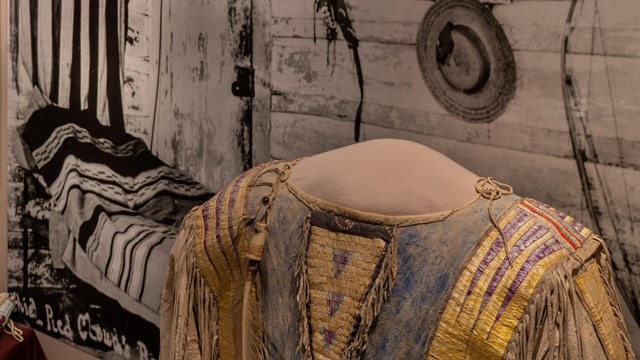
Each summer, the staff at Agate continue the legacy of rancher James Cook by inviting American Indian artists back to the Niobrara Valley. In the past, artists have brought skills handed down to them such as creating beautiful bead and quill work, hide paintings, ledger art and decorated gourds.
more...

 
Turtle egg shells, eggs dug up, maybe by raccoon.

Things To Do

Agate offers a wide variety of activities for its visitors. From the dramatic displays to the breath-taking trails - there's something for everyone.

Snapping turtles have been seen from the bridge that crosses the Niobrara River on the Fossil Hills trail. Visitors can also be aware that the turtles can be seen crossing River Road. They are laying their eggs on the gravel shoulders of the road where the sun will help warm the soil so the eggs will hatch. Many of the nests are dug up by raccoons or other predators.  The picture shows one of the dug up nests.
more...

 
This picture was taken June 29th is of the recovering burn area.

Successful Prescribed Burn

Crews from the National Park Service Northern Great Plains Fire Management Area and the Harrison Volunteer Fire Department were successful in conducting a prescribed burn on the 28th and 29th of May. The Carnegie Unit burn which can be seen from the visitor center windows is on the east end of the monument and 420 acres were burned. The picture to the left was taken June 29th and shows the burn area greening up.  The lighter areas are the Needle and thread grass which is mature and just about ready to drop its' seeds.
more...

 
Pincushion cactus hides in the grass until its' brilliant blooms appear.

What's going on?

The prairies are alive with wildflower blooms. The Pincushion cactus is usually overlooked as it hides in the grass, on the other hand there is no way that the plant can hide when its' beautiful flowers bloom. 

The Yellow Flag, still blooming along the Niobrara River, was planted by James Cook's father-in-law at the ranch house near Hwy 29 and the flower has migrated down the length of Niobrara as it flows through the park. A "plant box" in the main room of the visitor center contains pressed plants, descriptions and blooming information about many of the plants seen in the park. Plant identification signs have also been placed near many of the blooming plants on the two walking trails. Rocky hilltops are covered with a variety of flowers in white, yellow, blue and purple and the trails are open from sunrise to sunset.
more...


Write to

301 River Road
Harrison, NE 69346

E-mail Us

Phone

Visitor Center and Museum
(308) 668-2211

Fax

(308) 668-2318

Climate

Agate is generally sunny and dry in the summer, with occasional afternoon thundershowers, and windy and cold in the winter. Wear comfortable clothing appropriate to the season. Hats are useful against exposure to the sun. Good walking shoes are recommended for use on the hiking trails.
Skip to SearchSkip to NavigationSkip to BodySkip to Footer
Windmill head, typically on a 10-12 foot tower.  

Did You Know?
The windmills seen in neighboring pastures are still used to pump water into stock tanks for cattle to drink. Some of these wells are 250 to 300 feet deep and provide a good source of water as long as the wind blows.

Last Updated: June 29, 2009 at 13:30 EST