



Last updated: August 20, 2026
Thing to Do
Blue Ridge Hills & Hollows
Village to Village Press
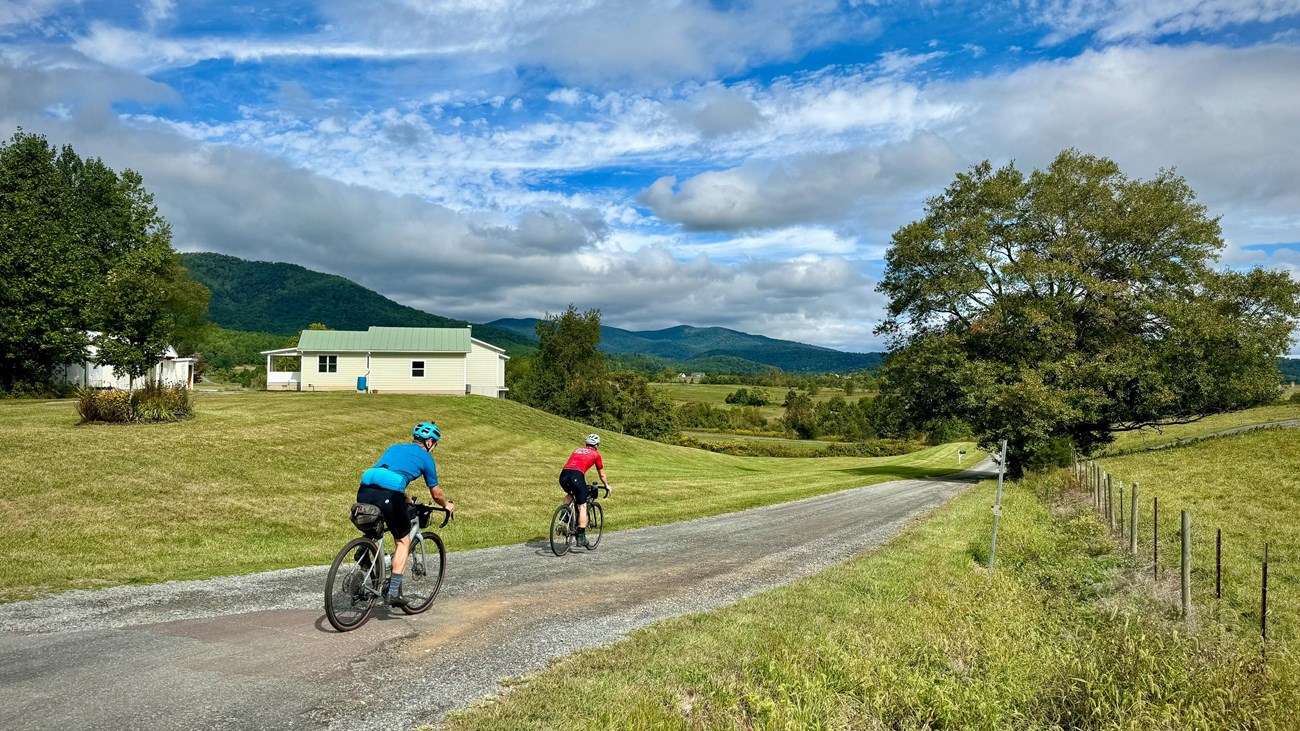
The Blue Ridge Hills & Hollows Bikepacking Route is a 300-mile mixed surface cycling experience that connects visitors to the history, landscapes, and communities of Virginia's Blue Ridge Mountains. Looping around Shenandoah National Park, the route links eight memorials created by the Blue Ridge Heritage Project that commemorate the families displaced during the park's establishment in the 1930s.
As part of the Chesapeake Gateways Network, the route combines outdoor recreation with place-based interpretation, inviting cyclists to explore the headwaters of streams that flow into the Shenandoah, Potomac, Rappahannock, and James River watersheds before reaching the Chesapeake Bay. Traveling by bicycle encourages visitors to experience the landscape at a slower pace while passing through rural communities, agricultural valleys, forested hills, and scenic mountain roads.
Interpretive materials, digital resources, and memorial sites share stories of Indigenous peoples, early settlement, mountain communities, and the lasting effects of park creation on local families. Along the route, visitors gain a deeper understanding of how geography, waterways, and cultural traditions have shaped the region over time.
Clear navigation resources and trip planning information help cyclists travel safely while connecting with local communities and services throughout the route. By combining recreation, history, and stewardship, the Blue Ridge Hills & Hollows Bikepacking Route encourages visitors to discover how the Blue Ridge Mountains and their headwaters are an important part of the greater Chesapeake Bay watershed. Visitors are encouraged to learn more through their website.
As part of the Chesapeake Gateways Network, the route combines outdoor recreation with place-based interpretation, inviting cyclists to explore the headwaters of streams that flow into the Shenandoah, Potomac, Rappahannock, and James River watersheds before reaching the Chesapeake Bay. Traveling by bicycle encourages visitors to experience the landscape at a slower pace while passing through rural communities, agricultural valleys, forested hills, and scenic mountain roads.
Interpretive materials, digital resources, and memorial sites share stories of Indigenous peoples, early settlement, mountain communities, and the lasting effects of park creation on local families. Along the route, visitors gain a deeper understanding of how geography, waterways, and cultural traditions have shaped the region over time.
Clear navigation resources and trip planning information help cyclists travel safely while connecting with local communities and services throughout the route. By combining recreation, history, and stewardship, the Blue Ridge Hills & Hollows Bikepacking Route encourages visitors to discover how the Blue Ridge Mountains and their headwaters are an important part of the greater Chesapeake Bay watershed. Visitors are encouraged to learn more through their website.
Details
Duration
1-8 Hours
The experience is self-guided and flexible in duration. Visitors may engage with the route for a short outing of one to two hours, a half or full-day ride exploring selected segments, or a multi-day bikepacking trip. Completing the full Blue Ridge Hills & Hollows route typically takes 4–7 days by bicycle.
Activity
Biking
Biking, Gravel cycling, and Bikepacking
Pets Allowed
Yes
Activity Fee
No
Entrance fees may apply, see Fees & Passes information.
Location
40 Celt Rd, Stanardsville, VA 22973
Starting location can vary, visitors have access to over 300-miles of mixed surface trails
Reservations
No
Season
Year Round
Time of Day
Day
Accessibility Information
The Blue Ridge Hills & Hollows route is designed as an open and flexible outdoor experience that can be accessed in multiple ways. The route primarily follows public roads and community spaces and is free and open to the public. While the route is designed for gravel cycling, visitors can experience many of the interpretive locations using different modes of transportation.Electric bicycles (e-bikes) can also make the route more accessible for riders who may need assistance with elevation or distance. Because the experience is self-guided and flexible, visitors can choose shorter segments or visit individual sites rather than completing the full route.
Tags:
chesapeake bay ,
biking,
chesapeake,
chesapeake bay,
chesapeake gateways,
chesapeake gateways experience,
education and science,
environmental literacy,
heritage,
history and heritage,
on the land,
public access,
scenic views,
stewardship,
trails and tours,
travel,
virginia,
water,
watersheds,
youth