



Last updated: January 13, 2026
Lesson Plan
The Spark at Ticonderoga
Lesson One of Forging Freedom (Noble Train of Artillery) Unit Series
Download Lesson Plan
173KB
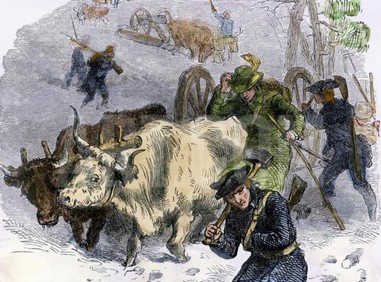
Engraving by F.O.C. Darley showing oxen and soldiers hauling cannons through snow from Fort Ticonderoga during the Revolutionary War.
F.O.C. Darley
- Grade Level:
- Upper Elementary: Third Grade through Fifth Grade
- Subject:
- Social Studies
- Lesson Duration:
- 60 Minutes
- State Standards:
- CCSS.ELA-LITERACY.RI.5.3 – Explain the relationships or interactions between two or more individuals, events, ideas, or concepts in a historical text.
CCSS.ELA-LITERACY.RI.5.7 – Draw on information from multiple print or digital sources to locate answers - Additional Standards:
- D2.His.2.3-5 – Compare life in specific historical time periods to life today.
D2.His.5.3-5 – Explain connections among historical contexts and people’s perspectives at the time.
D2.His.14.3-5 – Explain probable causes and effects of events and developmen - Thinking Skills:
- Understanding: Understand the main idea of material heard, viewed, or read. Interpret or summarize the ideas in own words. Applying: Apply an abstract idea in a concrete situation to solve a problem or relate it to a prior experience. Analyzing: Break down a concept or idea into parts and show the relationships among the parts.
Essential Question
What kind of leader risks everything for an impossible plan, and why did Henry Knox’s bold idea succeed when it seemed destined to fail?
Objective
I can:
Explain why Henry Knox’s plan to move the cannons from Fort Ticonderoga was risky.
Describe the challenges of transporting artillery through mountains, rivers, and snow.
Identify how Knox’s leadership and determination helped the patriots gain an advantage in Boston.
Connect the success of Knox’s plan to the larger outcome of the Revolutionary War.
Background
In December 1775, Henry Knox arrived at Fort Ticonderoga in northern New York with a bold idea. The fort, once a key French stronghold during the French and Indian War, had been abandoned by the British earlier that year, leaving behind dozens of heavy cannons, mortars, and other artillery pieces.
At the time, the Continental Army besieging Boston desperately needed artillery to challenge the British inside the city. Knox, a 25-year-old former Boston bookseller with a passion for military science, believed he could solve this problem by hauling the cannons from Ticonderoga to Boston, a distance of nearly 300 miles.
The plan seemed impossible: some cannons weighed over 5,000 pounds, the route crossed frozen rivers and mountain ranges, and winter weather would make travel dangerous. Many thought it could not be done. Yet Knox’s confidence, energy, and determination impressed General George Washington, who gave him the responsibility.
This lesson focuses on that moment of decision at Ticonderoga: when Knox first surveyed the artillery, sized up the challenge, and convinced others to attempt what looked like an impossible mission.
Key Points:
- Fort Ticonderoga was full of valuable artillery abandoned by the British.
- The Continental Army in Boston lacked cannons to break the siege.
- Henry Knox, though young and untrained, believed he could move the guns.
- His proposal marked the start of the “Noble Train of Artillery.”
Preparation
Materials:
- Projector or screen to display images of Fort Ticonderoga and Revolutionary War artillery
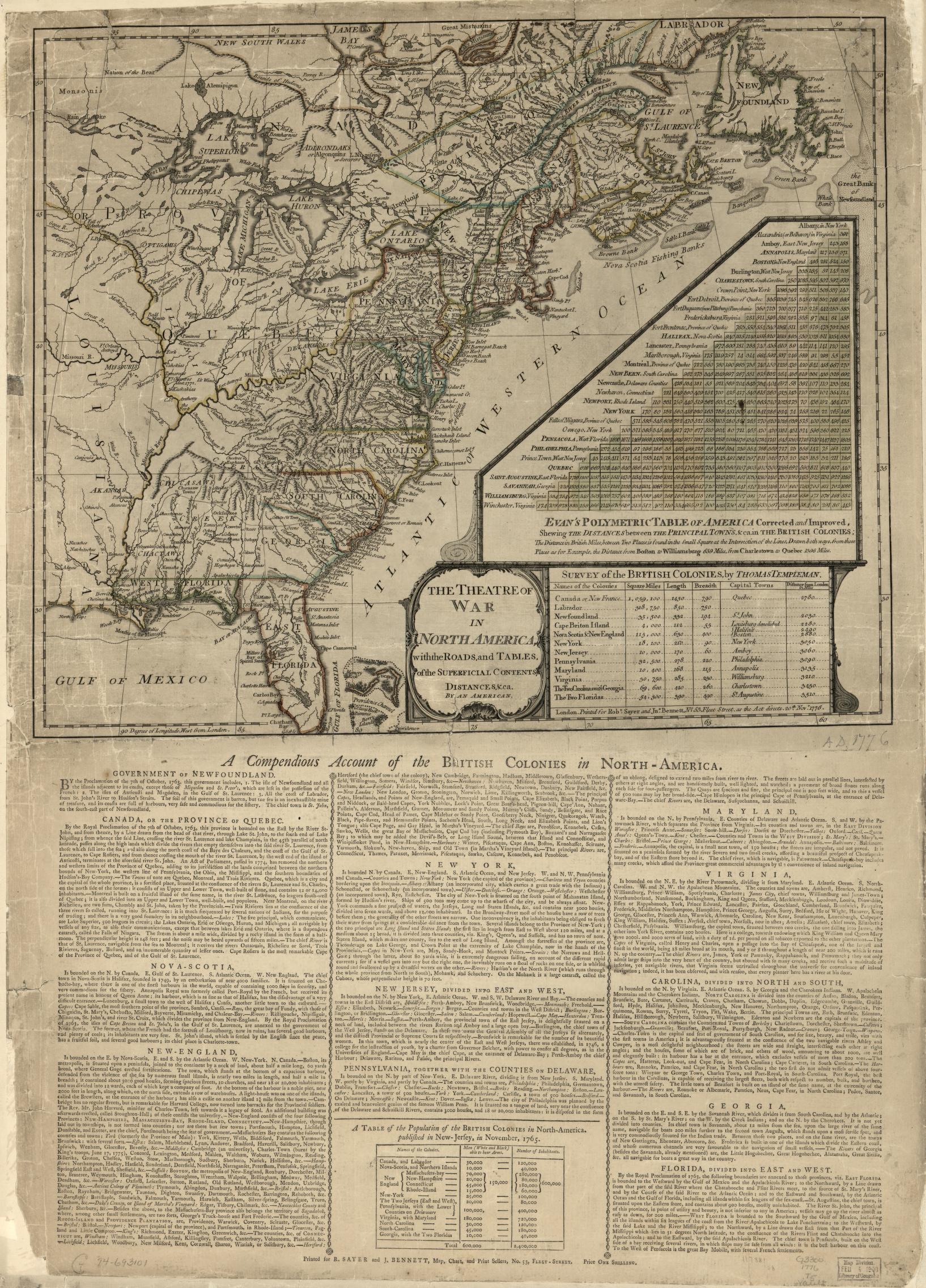
- Map of the northeastern colonies highlighting Fort Ticonderoga and Boston
- Primary source excerpts from Henry Knox’s letters (teacher handout or slide)
- Student copies of blank maps for annotation activity
- Chart paper or whiteboard for listing student predictions and ideas
- VR headset(s) or computer access for students to experience the Fort Ticonderoga setting (if available)
- Access to NPS-provided images, quotes, or digital resources on the Noble Train of Artillery
- Review the background information on Henry Knox and Fort Ticonderoga.
- Select a powerful Knox quote or dramatic painting to launch the lesson.
- Prepare map activity sheets so students can mark possible obstacles along Knox’s route.
- Print or display primary source excerpts from Knox’s December 1775 letters for analysis.
- Set up VR experience or test digital content before class.
- Identify 2–3 key discussion questions to guide student reflection (e.g., What would make this plan seem impossible? What might give Knox confidence?).
Materials
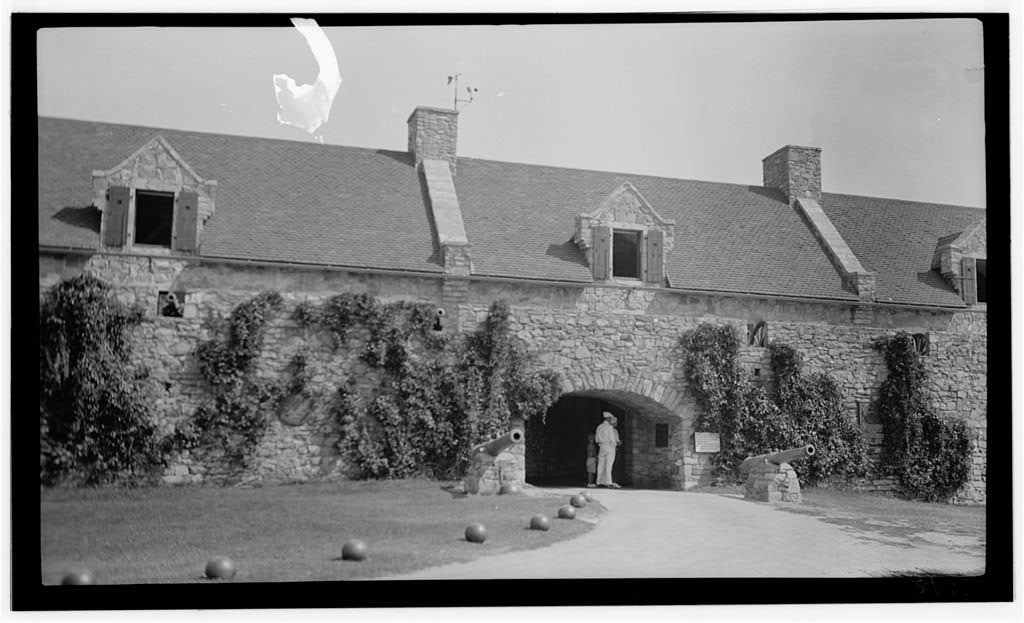
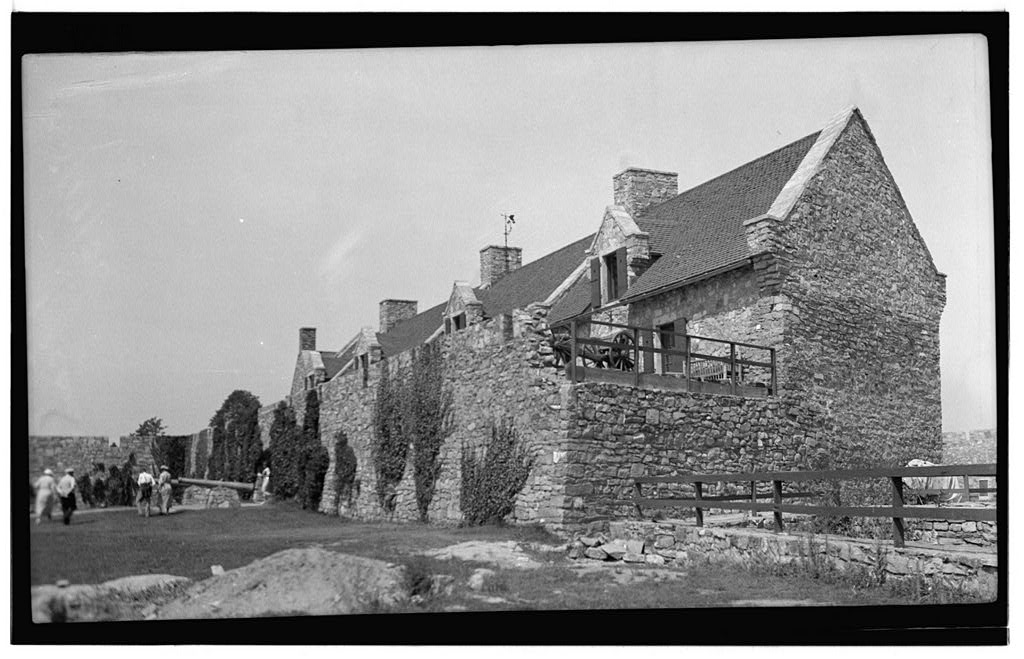
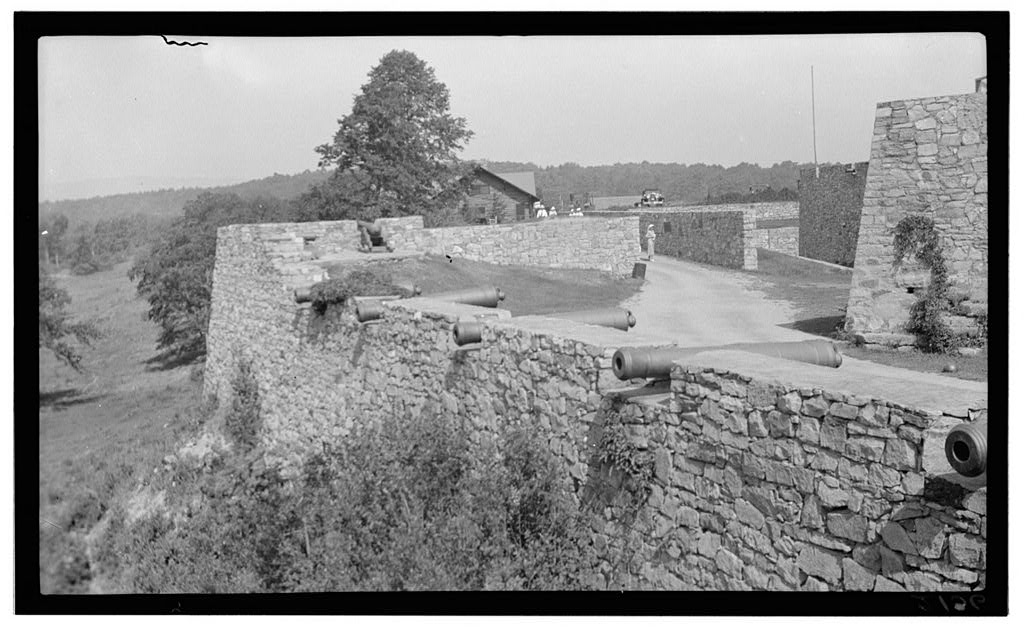
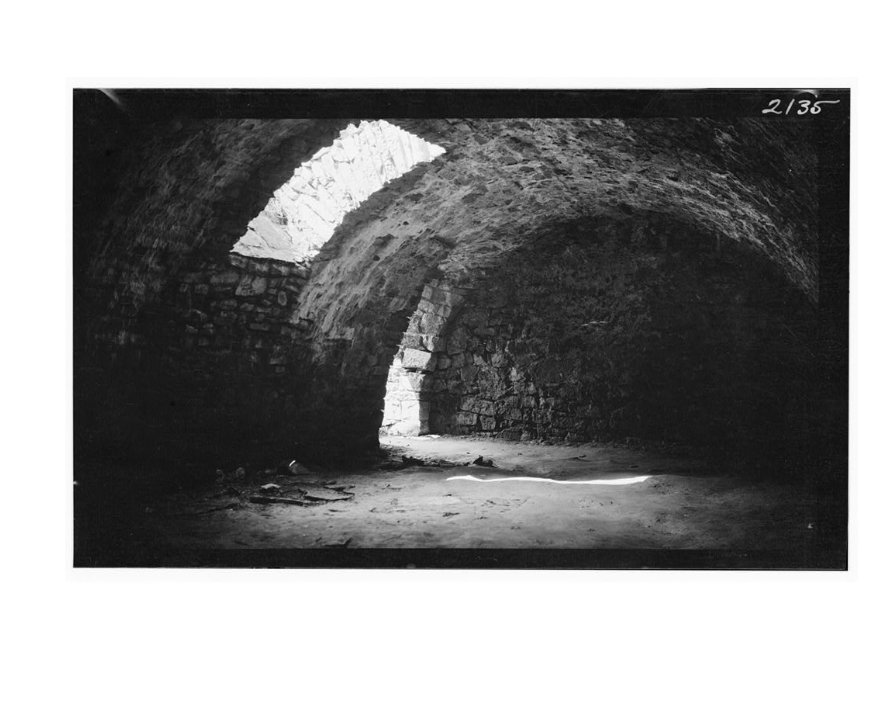
Download Fort Ticonderoga Image 1
Download Fort Ticonderoga Image 2
Download Fort Ticonderoga Image 3
Download Fort Ticonderoga Image 4
Download Student Map Annotation Activity
Procedure
Activity 1: Launch
- Step One: Teacher displays an image of Fort Ticonderoga in winter (or a dramatic painting of cannons). Ask: “You are 25 years old. Your army desperately needs cannons. Before you are dozens of them, each weighing thousands of pounds. But to reach Boston, you must haul them across frozen lakes, rivers, and mountains. Would you even try?”
- Step Two: Students turn and talk with a partner: one reason they might say yes and one reason they might say no.
- Step Three: Invite 2–3 students to share out. Record answers on board under “Reasons to Try / Reasons Not to Try.”
Activity 2: Mini Lesson – Who Was Henry Knox?
- Step One: Briefly introduce Henry Knox with 3–4 visuals (portrait, map showing Fort Ticonderoga, Boston under siege, and an image of artillery).
- Step Two: Explain: “Henry Knox wasn’t a general yet, he was a bookseller who taught himself military science. Washington trusted him to attempt this dangerous plan.”
Activity 3: VR / Visual Exploration
- Step One: Show students the VR scene (in headsets or online), and show Fort Ticonderoga in winter. Prompt: “Look closely: What do you see that would help the plan? What do you see that would make it harder?”
- Step Two: Students record 3 observations: one helpful, one harmful, one question.
- Step Three: After 5 minutes, regroup. Teacher charts student answers in two columns (Helps / Hurts).
Activity 4: Map Exploration
- Step One: Distribute route maps from Ticonderoga to Boston.
- Step Two: Students mark obstacles (mountains, rivers, frozen lakes, distances), and note why each one might be difficult.
- Step Three: Have them circle one spot where they think Knox will face the biggest challenge.Step Four: Invite 2–3 students to share their predictions.
Activity 5: Wrap Up
- Step One: Ask students: “What made Knox’s plan seem impossible? What gave him confidence to try anyway?”
- Step Two: Students share their thoughts and ideas.
Vocabulary
Artillery – Large, heavy weapons such as cannons and mortars used in war.
Cannon – A big gun on wheels or mounted in place, used to fire heavy iron balls long distances.
Mortar – A short, wide cannon designed to fire projectiles in a high arc, useful for hitting targets behind walls.
Fort Ticonderoga – A military fort in New York, first built by the French, captured by the British, and later abandoned — where the cannons were found.
Siege – A military strategy in which an army surrounds a city or fort, cutting off supplies to force surrender.
Logistics – The careful planning and organization needed to move supplies, people, or equipment.
Revolutionary War – The war fought between the American colonies and Great Britain (1775–1783) for independence.
Noble Train of Artillery – The name later given to Henry Knox’s daring journey moving the cannons from Fort Ticonderoga to Boston.
Henry Knox – A 25-year-old Boston bookseller who became a Continental Army officer and proposed moving the cannons.
Additional Resources
360 Video of Fort Ticonderoga:
https://youtu.be/KJbio8n74d0?si=3rMUWBVJ1mHjwVEa