



Last updated: July 20, 2026
Lesson Plan
Personal Experiences in the Engine Room - Hercules STEAM Unit Lesson 7
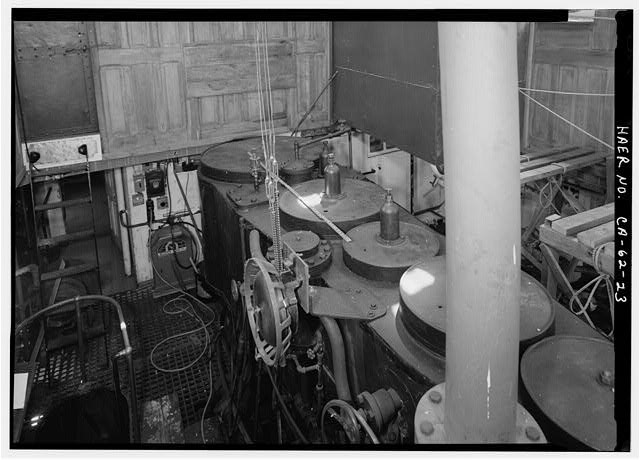
A view of the Hercules three-cylinder engine system from the main deck of the ship.
Photo NPS
- Grade Level:
- Upper Elementary: Third Grade through Fifth Grade
- Subject:
- Literacy and Language Arts,Social Studies
- Lesson Duration:
- 30 Minutes
- Common Core Standards:
- 4.SL.1, 4.SL.2
- Thinking Skills:
- Analyzing: Break down a concept or idea into parts and show the relationships among the parts. Evaluating: Make informed judgements about the value of ideas or materials. Use standards and criteria to support opinions and views.
Essential Question
What was it like to work in the engine room of a steamship?
Objective
In this 40-minute lesson, students will be able to analyze primary sources and synthesize the information to explain the experience of an oiler in the engine room.
Background
Work in the engine room was dangerous. The shifts were long. Oilers in the engine room had to make sure that the engine was properly lubricated. They oiled the machines every hour and checked on them frequently by putting their fingers into the rotating parts. If their fingers were blue, then the system was fine. If their fingers were black, then there was a big problem. Being an oiler was very important; if their jobs were not done properly then the towboat could catch on fire or explode.
Preparation
- Print materials for the gallery walk and place around the classroom.
- Provide students with post-it notes.
- Print worksheets.
Materials
Primary and secondary source materials for gallery walk activity.
Download Gallery Walk Materials
PowerPoint with guiding questions and reflections for Lesson 7.
Slide for creating a collective journal entry
Lesson Hook/Preview
What was it like to work in the engine room of Hercules?
Check out this video to see Hercules' engine in motion: Steam Tug Hercules STEAM UP! TV show TUGS!
Then, we'll dive into the writings and photos of engineers who worked on Hercules and other steamships to learn about their lives and jobs.
Procedure
- Review Exit Ticket from previous lesson: What is the transfer of energy in the engine room?
- Classroom share: What do think it was like to work in the engine room?
- Introduce activity: Today, they will have the opportunity to be historians again. They will be reading and observing primary sources to learn about the experience of working in the engine room.
- Gallery walk: provide post-it notes for students to write observations and stick to primary sources; allow students to review/re-read each other's writing.
- Independent Jot: What did you observe? What do you wonder?
- Classroom share: What did you observe? What do you wonder?
- Shared writing: As a class, work together to create a diary entry from the perspective of someone who worked in the engine room.
Vocabulary
- historian: a person who studies artifacts to learn more about the life during that time period.
- artifacts: primary and secondary sources from or about a period of time in the past.
- primary sources: objects, letters, pictures, writing, etc., from the time period of the action or event being studied.
- secondary sources: articles, books, pictures, etc. made after that time period which summarize, analyze or given opinions on the topic. Secondary sources often use primary sources for information.
Assessment Materials
Individual ReflectionIndividual Reflection Page
Supports for Struggling Learners
- Review vocabulary beforehand (included in powerpoint).
- Strategically partner students so that they are provided with additional supports.
- Sentence frames (included in powerpoint).
Enrichment Activities
Students may write their own diary entry from the perspective of someone who worked in the engine room.
Related Lessons or Education Materials
This is lesson 7 of the Hercules STEAM unit.