



Last updated: March 20, 2026
Lesson Plan
Ice, Iron, and The Hudson:
Lesson Two of Forging Freedom (Noble Train of Artillery) Unit Series
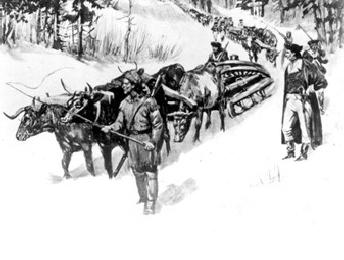
Knox’s sleds of cannon inch across a frozen Hudson River under winter skies.
None, none
- Grade Level:
- Upper Elementary: Third Grade through Fifth Grade
- Subject:
- Social Studies
- Lesson Duration:
- 60 Minutes
- Additional Standards:
- CCSS.ELA-LITERACY.RI.5.7 – Draw on information from multiple print or digital sources to solve a problem.
D2.His.5.3-5 – Explain connections among historical contexts and people’s perspectives at the time.
Essential Question
How do people solve problems when the weather, land, and tools work against them?
Objective
I can…
Describe the challenges Henry Knox and his team faced while transporting artillery along the frozen Hudson River.
Explain how creative thinking and problem-solving helped overcome natural obstacles.
Compare possible methods of transportation (sleds, skids, boats, roads) and weigh their advantages and disadvantages.
Apply engineering design thinking by creating and testing their own transport solutions.
Background
In late December 1775, Henry Knox began moving captured artillery south from Fort Ticonderoga toward Boston. Much of the journey followed the Hudson River valley. The river offered a potential shortcut, but in winter it became both an opportunity and a hazard. Ice might hold sleds one day but crack the next. Banks were steep, and thaw conditions could turn paths into slush.
Historians have little first-hand record of this portion of the journey, but it is believed to be among the most perilous. Boats could be used in stretches, yet freezing water and heavy weights made them dangerous. Sleds or skids could cross ice, but only if it was thick enough. Roads provided an alternative, though often slower and steeper.
Teachers should emphasize this lesson as one of problem-solving and resilience: Knox’s success depended on constant adaptation, teamwork, and creative thinking.
Preparation
Materials Needed
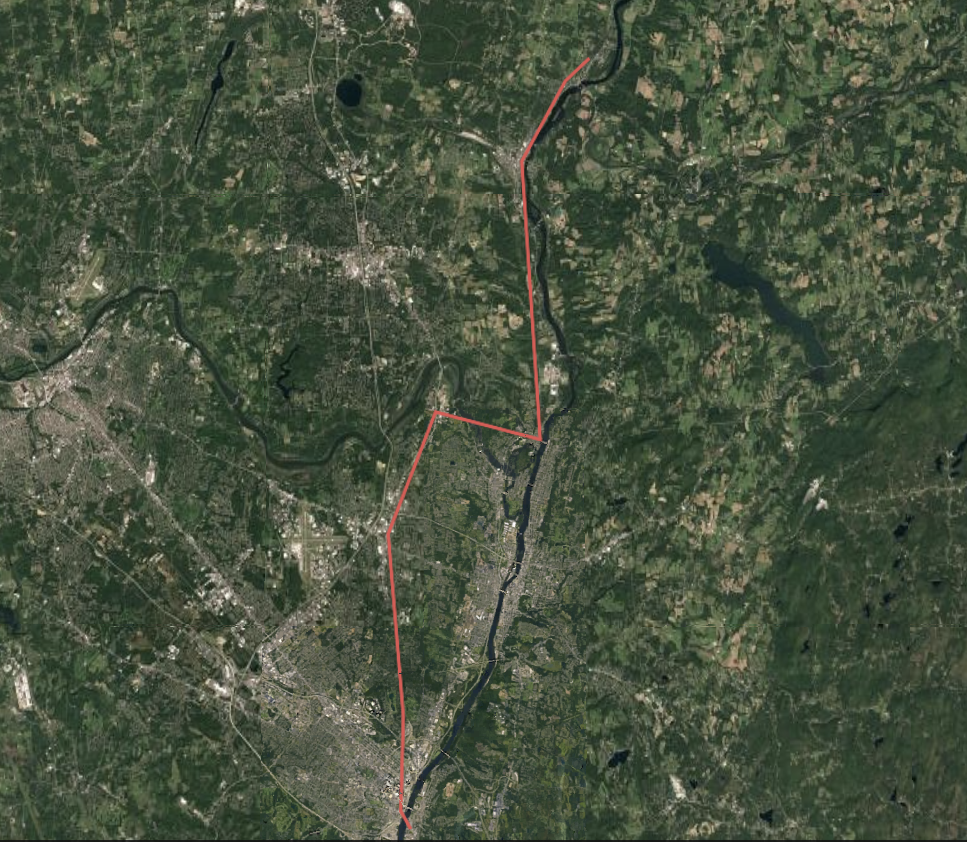
- Map of Hudson River route (Saratoga → Albany)
- VR clip or winter river photos
- STEM materials: paper, tape, popsicle sticks, rubber bands, string, small weights (washers/coins/erasers), foil or smooth tray (as “frozen river”)
Teacher Prep Steps
- Review background on Knox’s Hudson crossing and potential transport methods.
- Select images or VR scenes to set the stage for the launch.
- Prepare excerpts or short descriptions of transport methods for group analysis.
- Organize materials for STEM challenge stations.Set up testing area for “frozen river” simulation.
- Develop guiding questions: What makes this method strong? What could go wrong?
Materials
Lesson Hook/Preview
After leaving Fort Ticonderoga, Henry Knox’s “Noble Train” followed the frozen Hudson River south toward Albany. This portion of the journey was among the most dangerous: ice was unpredictable, terrain was treacherous, and moving heavy cannons required ingenuity and teamwork. Though no detailed journals survive from this stretch, historians piece together how Knox’s men may have used sleds, skids, boats, and winter roads to accomplish the task.
In this lesson, students step into the problem-solving mindset of Knox’s men. They take on an engineering challenge: designing their own “cannon hauler” to test across a slick surface. The lesson highlights creativity, resilience, and the determination needed to turn impossible conditions into success.
Procedure
Activity 1: Launch (5 minutes)
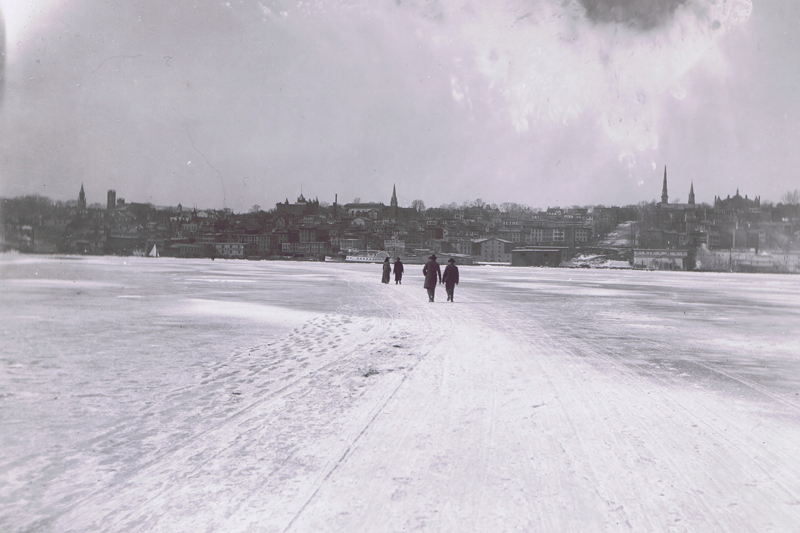
- Step One: Show students a winter river scene (frozen Hudson, ice chunks, snow banks). Ask: “Would you rather drag a 5,000-pound cannon across deep snow—or risk crossing a half-frozen river? What could go wrong either way?”
- Step Two: Students turn and talk, then share 2–3 risks for each choice.
- Step Three: Record ideas on the board under “Snow Route” / “River Route.”
Activity 2: Mini Lesson – The Hudson in Winter (10 minutes)
- Step One: Display reconstructed route map from Saratoga to Albany. Emphasize rivers as “roads” in winter, but dangerous if conditions weren’t right.
- Step Two: Teacher explains: “The Hudson was both a shortcut and a danger. Ice could hold a sled one day and crack the next. Boats could carry cannons, but they could freeze or break under weight.”
- Step Three: Students jot a note: “The Hudson helped because… / The Hudson hurt because…”
Activity 3: VR / Visual Immersion (10 minutes)
- Step One: Show a VR clip and images of the frozen Hudson River. Prompt: “Where might the soldiers find danger? Where might they see opportunity?”
- Step Two: Students record 3 observations: one Danger, one Helpful Feature, and one Question. Step Three: Regroup and chart their answers (Dangers / Helpful Features).
Activity 4: STEM Design Challenge (20 minutes)
- Step One: Introduce challenge: “Design a sled or transport system that can move weight across a slick surface.”
- Model “frozen river” with foil, tray, or tape strip.
- Step Two: Provide materials: paper, tape, string, popsicle sticks, rubber bands.
- Step Three: Students build prototypes in pairs or teams.
- Step Four: Test designs by pulling across the “river.” Measure:
-
- Distance before tipping/sliding off. Stability (did it carry the weight?).
- Efficiency (fewest materials for longest haul).
Activity 5: Reflection & Redesign (10 minutes)
- Step One: Teams reflect: “What worked? What failed? How might Knox’s men have felt in freezing cold?”
- Step Two: Allow quick redesign/modification.
- Step Three: Retest and share results.
- Step Four: Close with discussion: “What does this tell us about how people solve problems when nature works against them?”
Vocabulary
- Hudson River – A major river in New York, partially frozen in winter, central to Knox’s route.
- Sled – A vehicle that slides on snow or ice, pulled by animals or people.
- Skid – A flat platform used to drag heavy objects across the ground or ice.
- Ingenuity – Creative problem-solving and clever ideas.
- Terrain – The natural features of the land (slopes, rivers, snow, ice).
- Engineering Design – The process of imagining, building, testing, and improving solutions to a problem.
Additional Resources
Google 360 Video:
https://www.youtube.com/watch?v=5zyMADc-_f0&list=PL4AxPVtTYHmvDMMb07ke1sSP-tA38Kxp6&index=3