



Last updated: July 13, 2026
Place
Winter Kitchen
NPS
Quick Facts
Amenities
1 listed
Historical/Interpretive Information/Exhibits
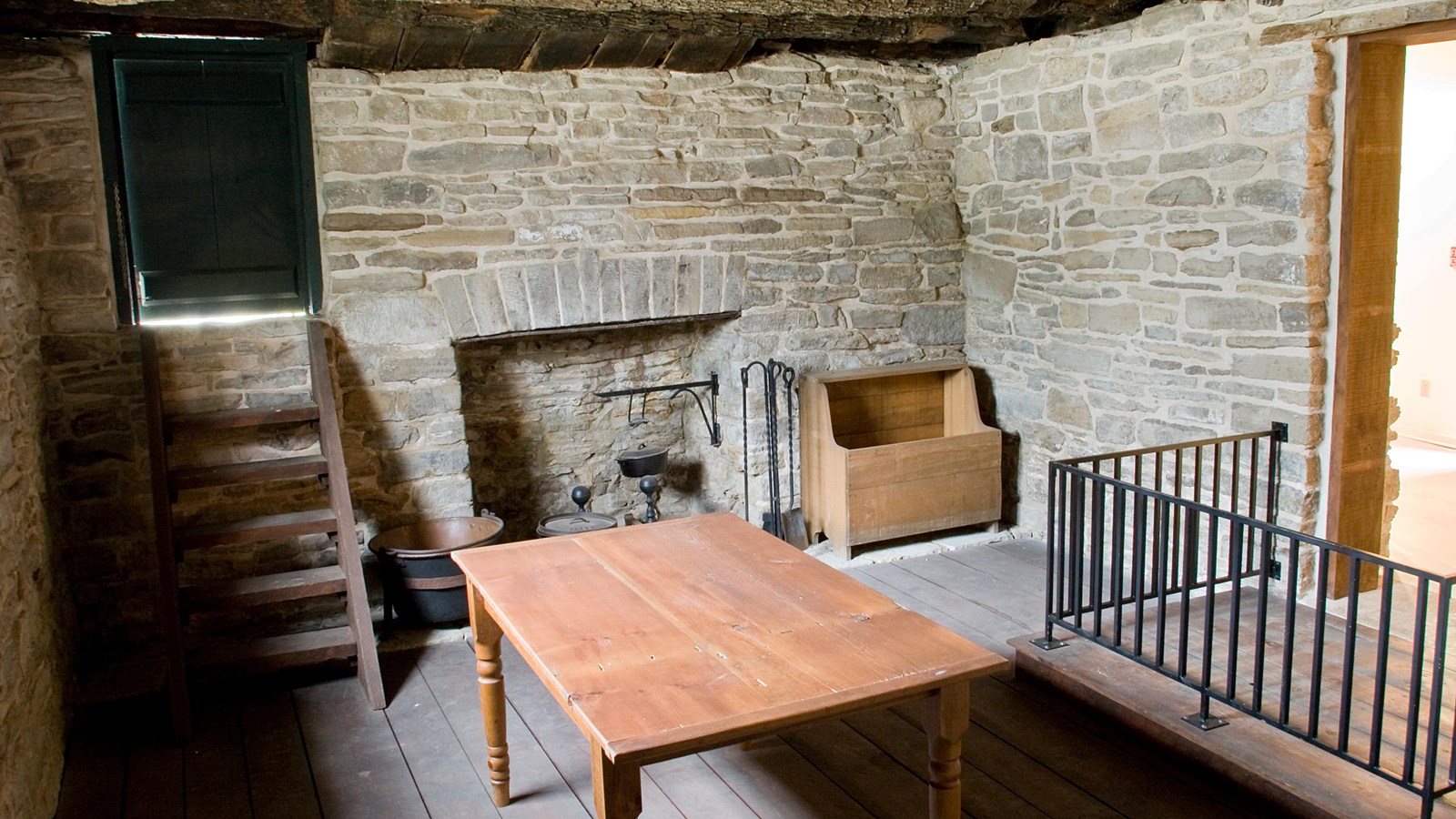
You are now in the winter kitchen. This is one of three kitchens on the property. As the name indicates, during the colder months of the year the enslaved cooks made meals here. Before the installation of modern kitchen with the cast iron stove in the 1860s, fire was an important part of cooking at White Haven. During the winter, a fire in the winter kitchen could provide extra heat for the rest of the house. In the summer months, to avoid additional heat, meal preparation moved to the stone summer kitchen, detached from the house.
The winter kitchen is one of the locations that enslaved cook Mary Robinson would prepare meals in. Julia noted in her memoirs that she was especially good at making seafood dishes, a reminder of the Dent family’s origins in Maryland. Enslaved laborers were often forced to enter the home through different doors than their owners. You can see the small door that enslaved cooks had to exit through in the winter kitchen. From there they would have to walk around to the door in the mudroom and then into the dining room. Imagine trying to keep a meal warm in the winter while having to take it through freezing weather—not an easy task.
The enslaved population of White Haven is an important part of the park's story, but it is unknown what happened to each person after the Civil War. At the time of the 1850 census, Colonel Dent reported owning 30 enslaved persons. By the time of the Civil War, that number was down to seven. By the end of the war, the remaining seven had likely ran away or the Dent family auctioned them off to someone else.
What we do know is that archaeologists have found several religious items in the winter kitchen. These items help provide insight into the lives of the enslaved African-Americans at White Haven. To learn more about African-American religious tradition in St. Louis, check out this article on hoodoo in St. Louis.